
Topeka lawmakers may keep ignoring us, but we must continue to make our voices heard | Opinion
Like many Kansas City residents right now, you may be feeling helpless. Powerless. Unheard by your representatives, your neighbors or your family members. As President Donald Trump and Elon Musk blaze across government departments, accumulating wealth and ignoring court orders, it’s hard to believe they (or anyone sitting in positions of power) are listening.
So what can we do?
As a writer and artist, I believe stories hold power, too. It’s easier to understand someone if you can imagine yourself in their shoes. So I’ve been asking people in my community:
How have you been feeling heard (or unheard)?
What creative actions are you taking to resist feelings of helplessness?
What has made you feel most empowered?
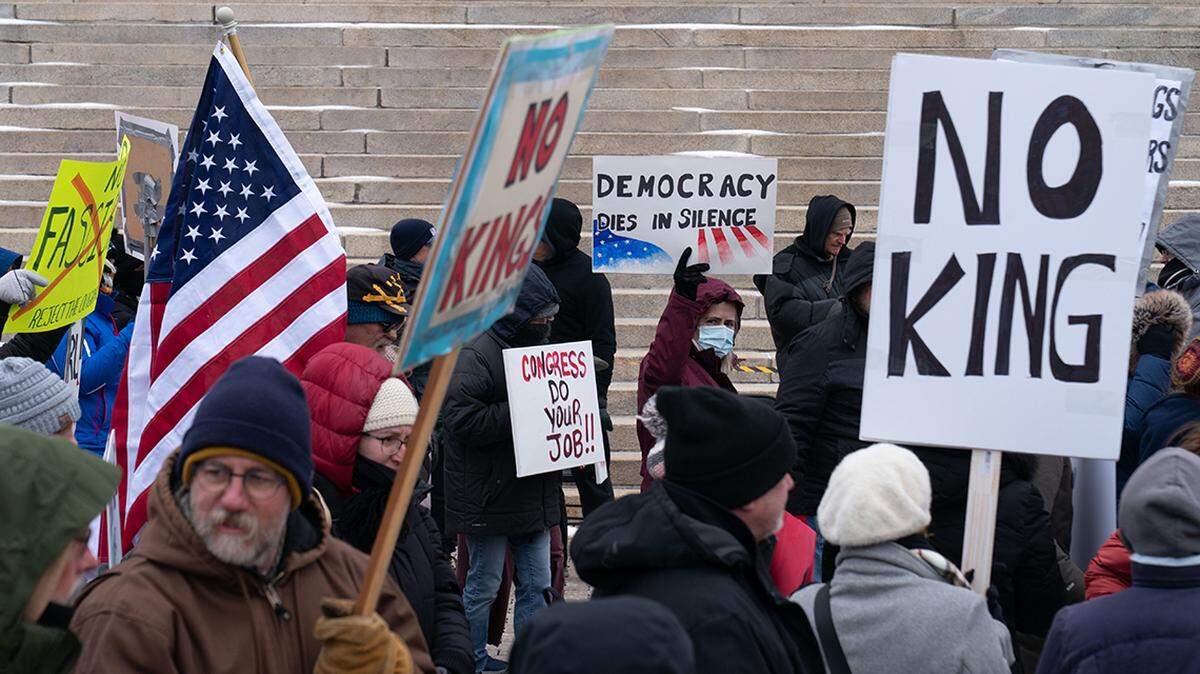
I recently attended the Presidents Day protest in Topeka, organized by the 50501 movement. Despite temperatures that (in the words of my weather app) “felt like” below zero, it was a passionate gathering of around 100 community members.
After some words from local leaders, we began our demonstration on the steps of the Capitol, shoulder to shoulder. It wasn’t hard to make a friend, if you were willing to slip a quick introduction in between chants. I spoke with a firefighter from Lawrence who was excited to see so many people banding together for a common goal. For her, it was a wake-up call.
“It’s hard to feel heard when what’s happening at the state and federal level is the exact inverse of what I feel a community deserves,” she told me. “Maybe in order to be heard, I need to be louder.” The experience encouraged her to commit to becoming more informed and involved with local government.
To avoid feeling burnt out and overwhelmed, her approach comes with a caveat:
“Don’t try to drink from a fire hose when it comes to all the political headlines. Find a handful of sources you trust, and try to set aside time to stay informed. Find someone you can vent to — let it all out, then reset. That’s been the game changer for me.”
Lawmakers ignored more than 250 voices
More recently, I spoke with Jill, a local mother of a transgender teenager. For her and her loved ones, the target on gender affirming care hits closest to home. “Our family has had to make many difficult decisions in order for my daughter to stay healthy,” she shared, “including relocating her when gender affirming care was banned for youth in Missouri and helping her graduate high school early.”
Jill is not convinced that constituents are truly being heard on many of the topics passing through the Kansas Legislature, citing Senate Bill 76 as a recent example. “Over 250 individuals and organizations testified in opposition to this bill,” she told me, compared to the mere handful that showed up in favor. “And yet it overwhelmingly passed (26-14) across party lines.”
Jill described listening to other congressional hearings. When it comes time to justify their votes, she noted the ways our state senators and representatives often ignore not just constituents, but even expert testimonies.
Who has a voice, then? What drives the decisions if not the personal stories, the research, nor the sheer number of people showing up to advocate for the issue?
Whose opinions are they taking into account, if not the most dedicated residents, willing to show up and bare their personal accounts in that room?
What do we do when our elected officials stop listening — or worse yet, stop acting on what they hear ringing in their chambers, their overflowing inboxes, their earnest streets? If they willingly invalidate the system that carried them to their positions of decision-making power, their authority will weaken.
“I would love to have a conversation, one on one, with the lawmakers that have been making these decisions,” Jill mused. “I think a lot of opinions can be changed by truly getting to know the challenges that people on the other side are facing. I have proposed those conversations, but no one has taken me up on it.”
As for what’s been helping, she recounted a recent concert experience with her younger teenage son. At the beginning of the band’s set, they “acknowledged the angst we were feeling with our government and invited us to do a collective primal scream.” Apparently, this was very cathartic — she highly recommends it.
For creative actions other than full-throated howling, Jill suggests reflecting on your personal skill set. “Maybe you don’t feel comfortable going to a protest, but could you provide snacks or water for organizers? Can you contribute money to marginalized groups? If you’re not part of a marginalized group, spend time talking to members of that group — get to know their personal struggles, find out if there are ways you can help — then share what you learned with others in your circle.”
Federal employees’ Alt National Parks Service
Another woman I know has been writing and reflecting on the actions of her ancestors. “I come from a place of violence, where my people were oppressed. I remember their strength and courage. I’ve been writing a lot, cooking and thinking of how food connects us with the land. Somehow that’s been helping,” she told me, smiling. “I have also been listening to a lot of Billie Eilish.”
In my own efforts to stay informed, I am inspired by the work of the Alt National Park Service (find them on any social media platform, including Bluesky). Their coalition of anonymous federal employees has grown from 50,000 to more than 100,000 members in the few months I’ve been aware of them. Seeing an organized, determined group gives me hope for further coordinated efforts like theirs.
Personally, I’ve felt most grounded while at my local community clay studio, surrounded by people who continue to show up and express themselves creatively. It feels good to get my hands dirty and spend time sharing everyday stories, struggles and hopes.
You may find that sense of connection while working in your garden, organizing a neighborhood cleanup or getting involved with a local mutual aid group. We must invest time in those places where we feel heard and loved.
A neighbor recently told me, “It’s all the same work.” After coming back from a monthlong visit to the West Bank, she shared that she felt more connected than ever to her mission: creating a future where equity, justice and dignity are fundamental birth rights for all.
“I just realized, what we’re doing here in KC is no different than what we were doing in the West Bank. It was effective solidarity work because we were on the ground there. When I returned, I realized that I’m on the ground here, on Turtle Island (an Indigenous name for North America), serving a community that is deserving of and starved of those same fundamental rights. From Palestine to Turtle Island, we all have a role in fighting for justice and safety for all.”
The work is all connected. Keep sharing stories. Find your home base, take care of each other and continue to resist.
Caroline Meek is a poet and clay artist living in Wyandotte County. She teaches pottery classes at EPIC Clay Studio, a program of Community Housing of Wyandotte County.