
Reckless USAID cuts aren’t just to ‘foreign aid’ - they’ll hurt Kansas City, too | Opinion
The American people deserve to know that U.S. foreign assistance effectively advances their security and prosperity.
Unfortunately, a stream of recent headlines — some accurate, others not — depicting inefficient or misguided programs at the U.S. Agency for International Development has eroded many Americans’ confidence in the value of foreign aid.
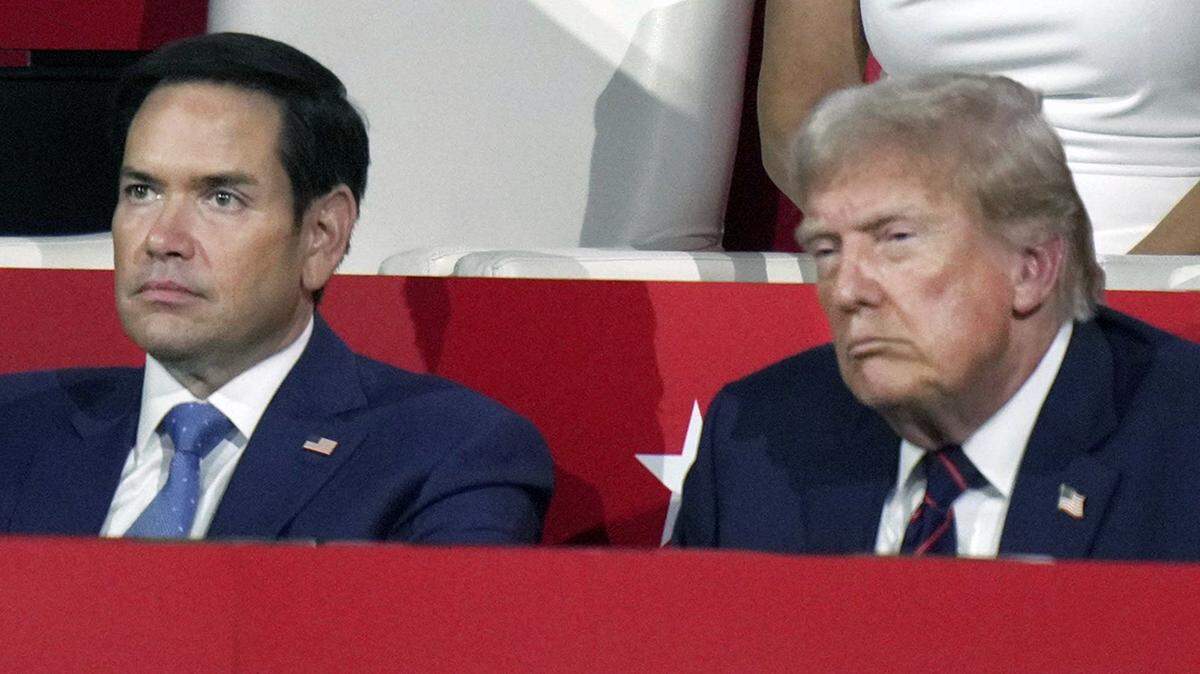
However, Secretary of State Marco Rubio has made matters worse by announcing that 83% of USAID programs will be cut after just two months of the Trump administration’s legally dubious 90-day review of foreign aid, with Elon Musk and the new Department of Government Efficiency or DOGE.
Two things can both be true. First, as with other government spending, it is clear that taxpayer dollars have supported some foreign assistance programs that do not make Americans safer or more prosperous. At the same time, most foreign aid benefits American workers, supports American troops, strengthens American alliances and keeps America’s rivals at bay — and all for roughly 1% of the federal budget.
Foreign assistance should receive robust support and close scrutiny. The only thing worse than spending taxpayer dollars on programs that do not work would be eliminating the many more programs that do.
While press coverage has focused on affected USAID employees and partners in Washington, foreign aid depends on communities in the Kansas City area and across the United States.
Soon after the freeze was announced, farm industry leaders warned about the steep costs for American farmers whose crops feed millions through the Food for Peace program, which Kansas’ own President Dwight Eisenhower signed into law. Meanwhile, a 130-year-old Jewish refugee resettlement organization was forced to suspend most of its operations in 17 states across the country, including the Midwest.
These are just two examples that underscore why the administration’s rushed review was a missed opportunity to continue support for foreign aid that delivers results. U.S. foreign assistance is hardly “foreign,” because the vast majority of State Department and USAID partners are based in the United States, spanning faith groups, large companies and small businesses.
Foreign aid programs also help safeguard those who serve the United States in uniform. Ensuring that the U.S. military remains a national security tool of last resort requires that it is not the only one available. That is why Gen. Jim Mattis famously told members of Congress in 2013, “If you don’t fund the State Department fully, then I need to buy more ammunition.”
U.S. foreign assistance programs are not just an alternative to military power. American service members, diplomats and aid workers work side by side to strengthen U.S. alliances and partnerships. In Vietnam, U.S. support for treating toxic chemicals at an airbase from the Vietnam War era has advanced military cooperation between our two countries. In the Philippines, Washington has earned local support for U.S. military access at key Philippine bases by using that access to deliver humanitarian assistance after devastating typhoons. These examples show that effective international assistance can be inspired by American idealism and rooted in American realism.
America’s rivals agree. Recent headlines about misdirected USAID programs are concerning, but they hardly compare to the massive corruption that China exports through its Belt and Road Initiative, or the predatory violence of Russian mercenaries in Africa. Chinese President Xi Jinping and Russian President Vladimir Putin would love to see America leave a vacuum for Beijing and Moscow to fill with dangerous alternatives.
Restoring public support requires policymakers on both sides of the aisle to sustain and scrutinize foreign aid programs in equal measure. Today’s debate presents an opportunity to put U.S. development assistance on a stronger trajectory. For the sake of our national security, it is an opportunity that America’s leaders cannot afford to miss.