
How Bob Dylan’s words from decades ago ring louder than any politician today | Opinion
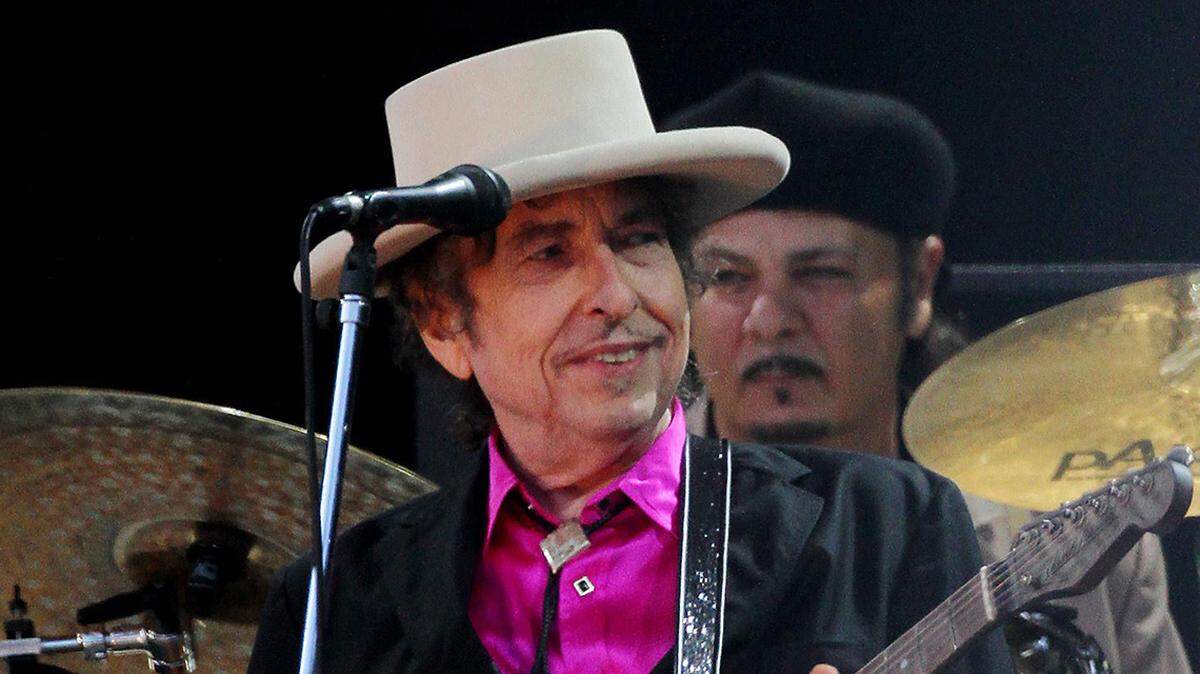
I have tried unsuccessfully since the beginning of the new administration to write everything I’m feeling: the anger, the fear, and the heartache of what is happening in this country — and this world. But, I have seen far more eloquent expressions of these emotions. So I decided to focus on my studies, work and passions in life, trying to always take the optimistic route. But then last night, as I was working in my Kansas City kitchen with my music on, shuffling through old archival clips of a young Bob Dylan, I first heard this 1962 recording of “A Hard Rain’s A-Gonna Fall.”
Here’s the information I know: Dylan wrote the song in 1962, and this performance was from that year. It had to be an early rendition, as evidenced by the slight variation in lyrics that are somewhat different from the ones we are familiar with today. But this version is my favorite. Why? Because you can hear the emotion, the fury, the fear and even the hope that was the world of the 1960s in the way Dylan sings the lyrics. While many don’t consider Dylan the best vocalist (and who am I to argue?), I was struck by how nearly perfect he sounds here. Perhaps it is because this was a public performance. But knowing what I know now about Dylan, he didn’t care too much about maintaining a pristine public image. Instead, I surmise it is because these are the words he likely identified with the most. Everything a kid barely older than 20 felt in 1962 was poured into this song, rendering it perhaps the most profound and prophetic masterpiece of his early catalog.
Egos lead to sorrow
Dylan scholars and other historians attribute the apocalyptic imagery of the song to the context of the Cuban missile crisis. But I want to take it broader. The world that the young musician conjures up in his vivid lyrics is not one of instant nuclear destruction, but of abandonment and gradual, slow, painful decay. It harks back to a line in one of his earlier compositions, “Song to Woody,” in which he tells Woody Guthrie, the singer who gave voice to the “forgotten man” of the Great Depression, that this world is “hungry, tired and torn/It looks like it’s a-dyin’ yet it’s hardly been born.” And in “Hard Rain,” we understand exactly what he means. He views the world as being abused by men who seek to benefit themselves and not their surroundings. Their egos and their pathetic grasp for power and domination have led to unbearable suffering and sorrow.
That, in itself, makes the song incredibly profound and ageless. However, the framing device Dylan uses adds an extra layer. The narrator is talking to his son — to the future generation. In this recording, Dylan’s voice is heavy with emotion, exhaustion and even regret. Regret that the wide-eyed optimists of the youth in the 1960s lived amid the fear and doom that washed over Cold War-era America. It is almost as if he is forcing the powerful figures who ushered in this destruction era to feel remorse for the pain they caused. Making them reckon with the idea that they may have ruined the future for millions. Thus, the entire song is a series of questions and answers between generations whose outlook on the world varies significantly.
The “blue-eyed son” is the purity of the youth. The faces of tomorrow and years down the road are not surrendering their world without a fight. It is too precious and full of such simple beauty and is too often marred by suffering. So — what does this have to do with our current state of affairs in America? The current administration is turning a blind eye to the suffering it is causing. Some may think the people (the current administration) responsible for the destruction of our democracy and people’s quality of life are aware, and that voters mandated the actions, and— as much as I would like to maintain any sliver of faith I have left in humanity — I can’t see a full-fledged argument against it.
Plea for empathy
We are indeed living in times driven by fear and division. But, if we are strong enough, loud enough, and can unite against this administration’s cruelty and protect one another, grieve together, work together and fight back together, hope will prevail. I do not necessarily believe in fate or a “predetermined — meant to happen” sort of thing. However, I think my attachment to Bob Dylan and his music came at the right time in my life. And I think the fact that my generation is being introduced to the power of Dylan right at this moment in our history is deeply poetic. He was — and is — the melodic voice of American adolescence, in pain, joy and everything in between. That’s why he will always matter in the zeitgeist of American attitudes.
So why did this song strike me so differently this time? Because it speaks to the power music and other forms of popular culture have in representing the collective consciousness of the era in which they were composed. And because — perhaps for the first time — I heard Dylan’s plea for empathy. He was able to put himself in the mindset of past generations and embrace all the wisdom and weaknesses while speaking on his own. For over half a century, his lyrics have bridged generational divides, offering a nuanced understanding of human’s capacity for suffering and their resilience.
In the early days of 2025, a year already marred by divisiveness, bigotry, and tragedy, “A Hard Rain’s A-Gonna Fall” speaks louder than any politician ever could. The song, penned in its era of social turmoil, is the proverbal anthem for a fractured world seeking clarity, compassion, and the ability to move forward in the spirit of unity and change.
This story was originally published March 18, 2025 at 5:06 AM.