
As UPS pulls back from rural America, businesses need the US Postal Service even more | Opinion
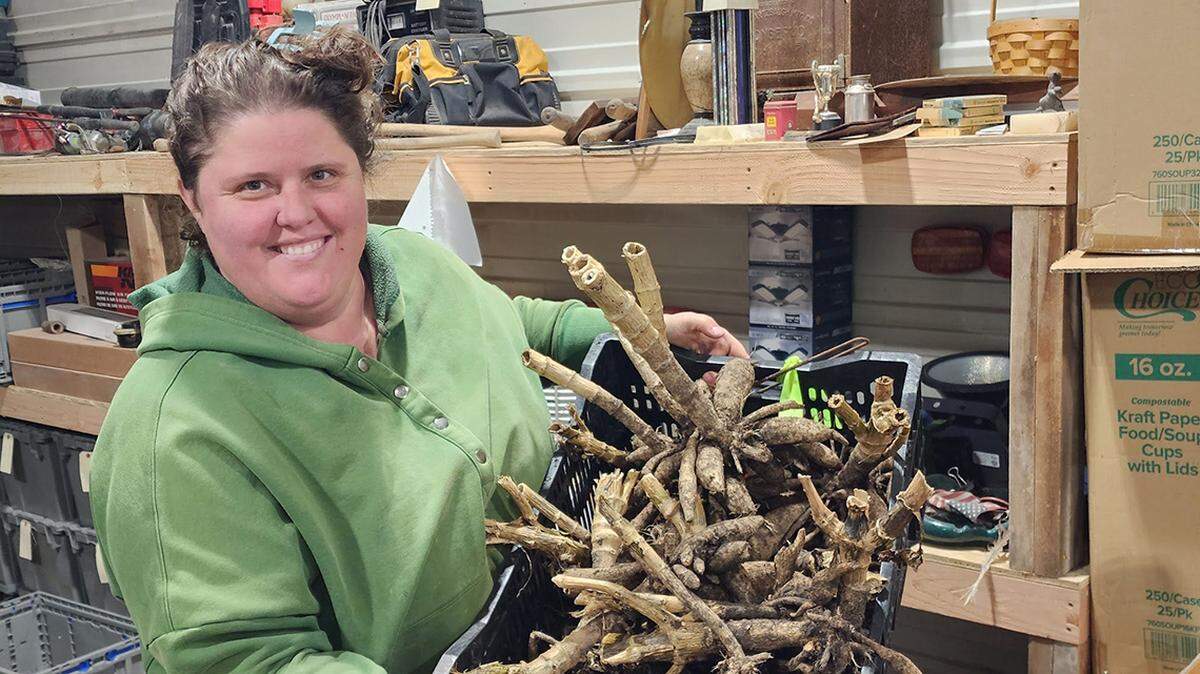
On a chilly day last November, I watched my friend Meredith Nunnikhoven of Barnswallow Flowers in Oskaloosa, Iowa, quickly and purposefully separate dahlia tubers in a multipurpose machine shed at her farm. I was there to visit so she could tell me about the harmful impact of United Parcel Service’s decision to close more than 200 service centers in rural America, including the one she uses. “The company is consolidating locations as part of its ‘Network of the Future’ initiative, which aims to reduce UPS’ reliance on manual labor in its package sortation operations and save $3 billion by the end of 2028,” reported trade publication Supply Chain Dive.
Meredith is a fifth-generation farmer south of Oskaloosa in rural Mahaska County. Oskaloosa, with a population of about 11,500, is the county seat, and home to William Penn University. The lighting of your local sports stadium was likely manufactured and installed by Oskaloosa-based Musco Lighting, and Clow Valve, also of Oskaloosa, likely manufactured the fire hydrant near your home. Oskaloosa is also known for U.S. Rep. John F. Lacey, who worked closely with President Theodore Roosevelt to establish the National Park System. Yellowstone Park may not exist today without the dogged work of Lacey.
When I walked into her machine shed, Meredith was on her phone, sitting in a chair sorting dahlias with an untouched soft drink and sandwich on the table in front of her. Behind her was a wall of tools — some of them used by farmers on both sides of her family for generations.
Meredith is a whip-smart, no-nonsense flower farmer with an MBA. Her farm is a masterpiece of natural and human ecosystem management. An irrigation system minimizes water usage. Black fabric between rows and around the plants minimizes weeds. Long, weedy earthen mounds between beds provide cover for predatory insects that eat herbivorous insects that damage flowers. Nothing is planted on the farm that can’t be used, and some land set aside under the federal Conservation Reserve Program is covered by acres of more than 30 native wildflowers and grasses. A windbreak stand of white pine, Norway spruce, and Japanese yew provide habitat for thousands of monarch butterflies during migration. Her chemical-free flower farm is an oasis of beneficial insect support among surrounding fields of corn and soybeans.
With her hands steadily sorting tubers, Meredith told me that none of the apparent alternative options to UPS works, and if the UPS customer service center near her closes, she will have to drive to Indianola two counties away to ship her products, which will wreck her business model. No other shipping alternatives work for her or many other small businesses in the area. Or for much of rural America. The U.S. Postal Service doesn’t offer the tracking and insurance options many businesses need. UPS drop boxes don’t take larger packages and don’t offer receipts. UPS pickups aren’t fast enough and are too costly for a small business owner. The closest FedEx is a half hour away in Ottumwa, and its services are not as good as UPS’s, including the fact that it doesn’t take expedited shipments.
Third-party systems often don’t offer receipts, insurance or tracking. Meredith tells me: “As someone who can calculate risk before a dahlia tuber is even grown, the risk of taking an entire year to grow a product that can also die from weather, pests, disease or in winter storage, I can assure you that the risk of leaving packages at third party locations is not worth it.”
Hour’s drive to next closest drop-off
In her machine shed, Meredith paused explaining her situation to me, put the dahlia tubers in her hands down, took a deep breath, and sat back in her chair, overwhelmed and exhausted.
“Take a bite,” I told her, fatherly.
She did, and said, “I haven’t eaten all day. … I’m so frustrated.”
After a moment, she continued. “It’s not like it’s Des Moines or another big city. UPS doesn’t understand that if one drop-off location in Des Moines closes, people will drive a few blocks or miles to the next one. Here I would have to drive an hour to Indianola and then another hour back — imagine that on an icy highway. It doesn’t work.”
After talking with Meredith, I drove a few miles up the road to the local UPS service center. It’s in an industrial part of Oskaloosa. Several UPS trucks were parked there, and the center serves as a package transfer point. I talked with a few customers dropping off packages who owned businesses. None had heard of the pending closure and shared that the closure would certainly hurt their businesses in a serious way. Like Meredith, they needed services provided only by UPS.
The steady customers at the counter were mostly young and middle-aged women who were there to return packages from Amazon. They would walk up, put the packages on the counter and the person behind the counter would scan the packages and put them in a cart behind him. The process was quick, and the women were then off to their next task or home. This scanning for Amazon returns takes place only at UPS offices.
While alternatives such as FedEx, UPS drop boxes, third-party services and the USPS aren’t alternatives for Meredith and many businesses like hers, they are for some rural people. But shipping options aren’t getting better for us. In August, U.S. Postmaster General Louis DeJoy said that rural mail would likely experience a slowdown after the election. These changes will not only hurt existing businesses, but will also stymie new business growth in rural areas.
Delivery an investment, not a cost
Benjamin Franklin was named the first postmaster general by George Washington in 1775. Franklin and our Founding Fathers recognized the need for universal access to mail delivery across the country, regardless of location or status. This is smart government, filling the needs that private industry might not find profitable. If private industry decides not to serve rural America with package delivery, the USPS must.
President Donald Trump is considering privatizing the USPS. As private shipping companies are moving away from rural America, this is the opposite of what should happen. The county plow that cleared the highway in front of Meredith’s farm recently didn’t make money. The fire and police departments that would serve her during an emergency don’t make money. Neither do the public schools that serve the area. Like mail delivery, they are — and should be — a universal service that helps us all in a thriving democracy. It’s not a cost — smart government is an investment that reaps myriad rewards.
Meredith called me after a UPS spokesperson reached out to her to erroneously suggest there was an existing solution to the problem. The call ended with Meredith telling the woman that the only answer was to keep these locations open for rural America. Meredith asked her, “Do you know what girdling a tree is?” The woman said no she didn’t. Meredith told her, “It’s when you take a rope and wrap it so tightly around the circumference of a tree, you strangle its connected life source between the roots and leaves, killing the tree. That’s what UPS is doing to rural America.”
As we closed our conversation, Meredith told me: “And you know all those women returning their Amazon packages? When they learn they have to drive all the way to Indianola to do it, they’re going to be pissed off. And no force on earth is more powerful than angry rural women.”
This story was originally published March 12, 2025 at 6:02 AM.
CORRECTION: This commentary originally included outdated information about FedEx’s service, which the company says now delivers to every address in the United States.