
Trump and Congress won’t show us unity. So it’s up to us all to protect free speech | Opinion
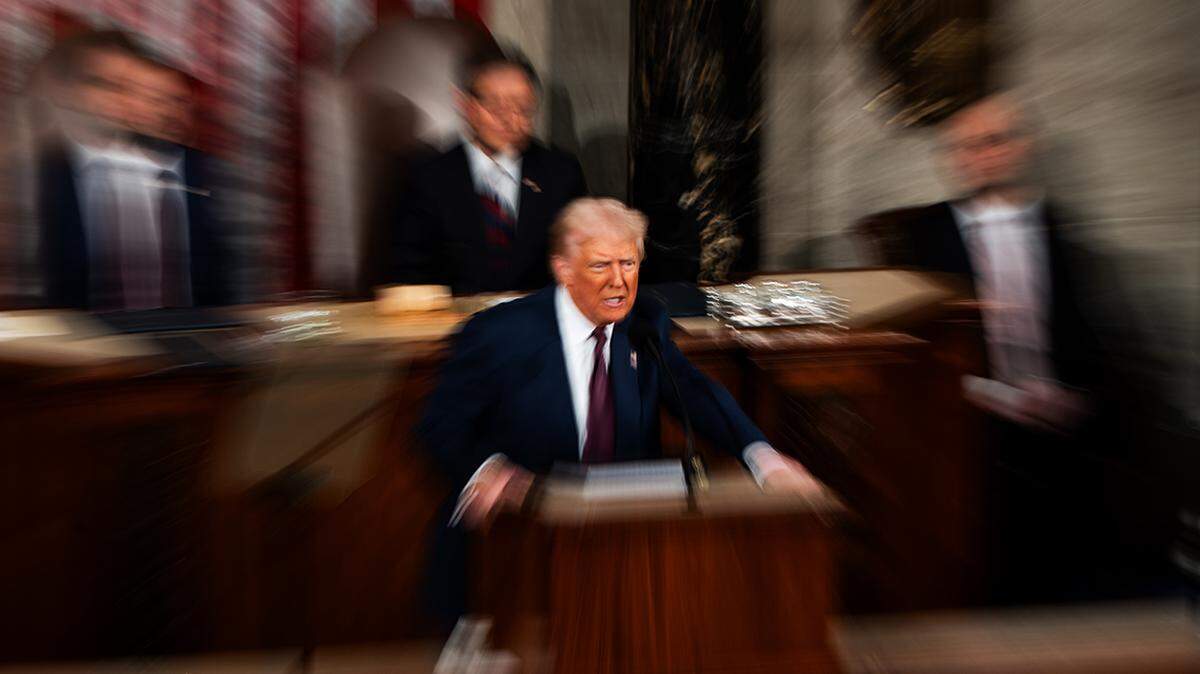
As I reflect on President Donald Trump’s joint address to Congress Tuesday, it is clear that our country continues to grapple with growing divisions that are widening each day. I watched the speech with all the signs, the outfits, the outbursts and I felt the role of free speech has never been more critical — nor more contentious.
At its core, free speech is a pillar of democracy that allows us to express our beliefs, voice dissent and engage in discourse that can lead to growth. In a functioning democracy, the free exchange of ideas is essential to resolve conflicts and develop paths forward. But the growing cultural and political divides we see today challenge this. Social media, in particular, and all its online “free speech” has amplified this polarization, creating echo chambers where Americans can comfortably reinforce existing opinions and shut out opposing perspectives.
The internet, a tool that could so powerfully foster debate and understanding, has instead become a battlefield of free speech, with groups vying for control over the narrative.
On one hand, we’re hearing calls to protect free speech in all its forms, arguing that any form of censorship is an infringement on individual liberty. On the other, concerns about hate speech, misinformation and harassment are prompting demands for more regulation. And because Americans are so polarized, these positions tend to shift based on which party is speaking.
This tension presents Americans with a critical question: How do we collectively protect free speech and remain safe from harmful rhetoric that can spread falsehoods or incite violence?
The risks of unregulated speech are evident. Misinformation and disinformation has spread like wildfire across digital channels, leading to the real-world consequences of political instability, the rise of conspiracy theories and, at times, violence. Misleading and malicious online speech has eroded trust in democratic institutions, research-based evidence and scientific inquiry. In these cases, speech isn’t just free — it can be outright dangerous.
Nevertheless, the answer to these challenges likely isn’t as simple as more regulation or censorship. Indeed, history shows us that path often leads to authoritarianism, where the state or private entities hold too much power over what can and cannot be said. Free speech is a right that should be protected, even when its speech we detest. As Supreme Court Justice William Brennan wrote: “If there is a bedrock principle underlying the First Amendment, it is that the government may not prohibit the expression of an idea simply because society finds the idea itself offensive or disagreeable.”
I believe our answer lies in education, critical thinking and the cultivation of civil discourse that encourages open-mindedness and accountability. Empathy matters, too. A civil society requires not just freedom to speak, but the willingness to listen. If we are to bridge divisions, we have to engage with opposing viewpoints without animosity. Free speech is not always a tool to win arguments — it’s a path to meaningful conversations that promote understanding and awareness.
A civil society is one that allows ideas to flourish, but also one where citizens create a culture that prioritizes responsible dialogue over division. If the president’s joint address on Tuesday is any indication, our Congress is not there yet. As citizens, it has to start with us. If unity isn’t happening in the U.S. Capitol, then let it happen in our own public squares, in whatever digital or physical form they come.
Free speech is not just a legal or philosophical concept — it is a vital social responsibility.
This story was originally published March 7, 2025 at 5:01 AM.