
Slashing medical research money would hurt babies in Kansas City - and far beyond | Opinion
Reducing funding for the National Institutes of Health hurts us all: physicians, scientists and patients. Many of my colleagues at Children’s Mercy and other Missouri and Kansas hospitals are worried about these potential cuts.
In recent weeks, the federal government has proposed large-scale reductions in financial support to medical institutions around the country. These cuts undermine our ability to conduct the vital scientific research needed to better treat and hopefully cure illnesses. Reducing investment in these vital disciplines threatens our national reputation as a world leader in science and medicine.
The NIH is the largest funder of biomedical research in the world. Only top scientists undertake the arduous process of applying for an NIH grant, and only about 1 in 6 will receive an award. As a physician and researcher who has worked on NIH-funded studies, I know a grant is a career highlight and provides a front-row seat to how federal investments in research saves lives.
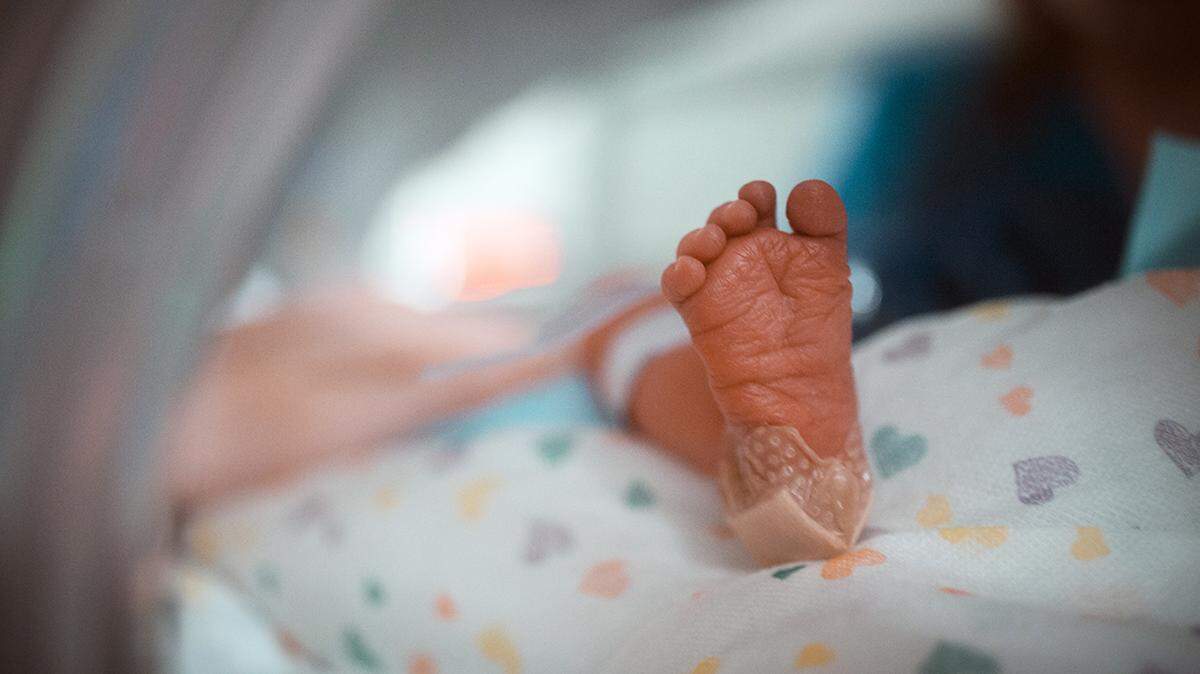
Reducing NIH funding ignores that investments in science are remarkably effective. Consider premature infants. In 1963, President John F. Kennedy’s son Patrick was born at 34 weeks. Few treatments existed for premature babies, and he lived for only a day and a half. In just 62 years, survival rates for infants like Patrick Kennedy are now 99%. Infants born as early as 22 weeks — missing almost half of their gestation — can survive roughly 50% of the time. Advancements funded by the NIH have resulted in better mechanical ventilators for premature newborns, more effective therapies and reduced long-term complications for these babies.
Caring for babies overnight recently, I informally counted 17 different lifesaving treatments I prescribed for premature infants that can be traced to NIH studies. These include medicines that improve immature lung function, stimulate their brains to breathe spontaneously, and protocols to reduce their need for blood transfusions. Scientific progress requires large-scale, sustained investment.
However, scientific research is expensive. To allay costs universities incur as part of research studies, the NIH provides supplemental or indirect payments to cover essential expenses beyond the costs of the pipettes, beakers and reagents required for experiments. These include support for the buildings where laboratories are housed and administrative costs. This money pays electric bills, so it literally keeps the lights on. The funds help maintain expensive research equipment and support all the staff needed for biochemical, radiation safety and data privacy — things you don’t hear about until something goes wrong.
Financing research is a strong investment in local economies. Overall, $808 million come to Missouri from the NIH, and $146 million goes to Kansas. The ripple effects of this funding affects us all. Medical research creates high-paying, stable jobs that draw doctors to our communities. Every dollar in research spending yields almost two additional dollars in economic activity. Cutting NIH funding means reduced purchasing from local businesses. It means unemployed scientists and lab technicians. With these losses, we risk losing both scientific progress and economic vitality.
Sustained losses jeopardize America’s preeminence in science — a status that is already under threat, especially for physician-researchers. When NIH funding is reduced, it becomes financially harder for universities to allow junior physicians to pursue research. Many are shunted exclusively to caring for patients, which is substantially more lucrative and become attractive to medical graduates, who average $315,000 in educational debt.
Over the quarter-century I’ve been practicing, I’ve seen the careers of too many promising physician researchers — and the patient-oriented research studies they conduct — derail under the crushing difficulty of reduced NIH funding.
Our representatives in Congress, independent of party, must protect the United States’ reputation as a leader in biomedical research. Fighting for science ensures that our country remains at the forefront of innovation — helping children and families who rely on us to find the next breakthrough.