
Trump betrays Reagan’s ideals of democracy selling out Ukraine for Russian interests | Opinion
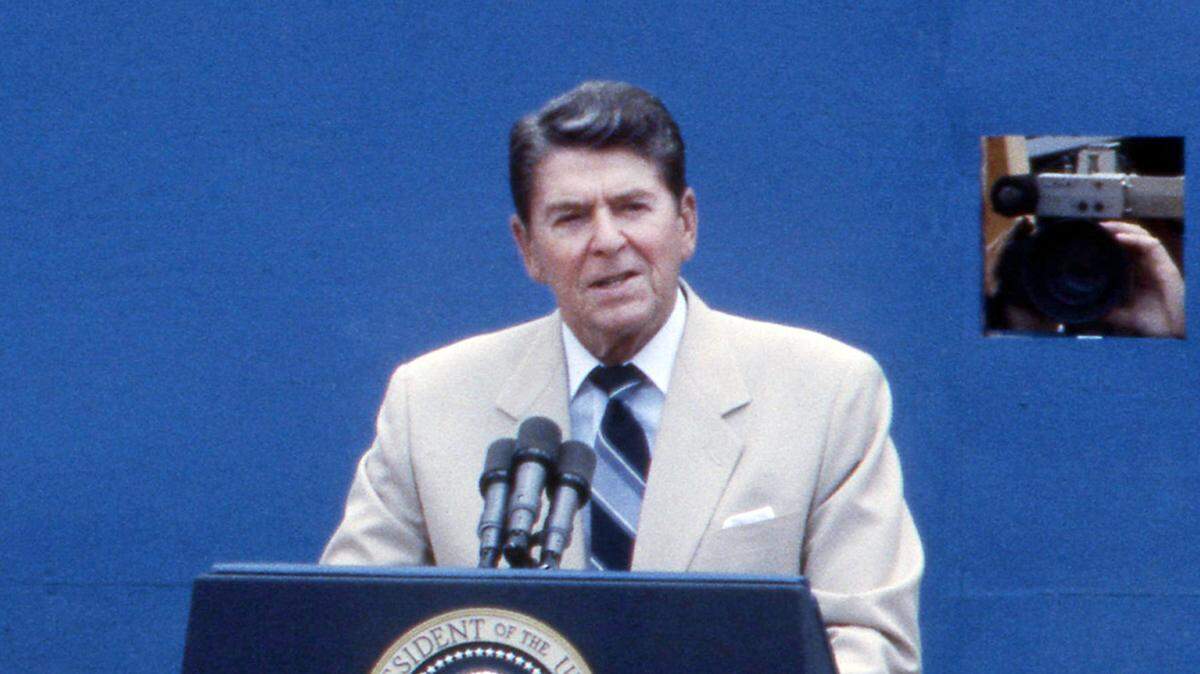
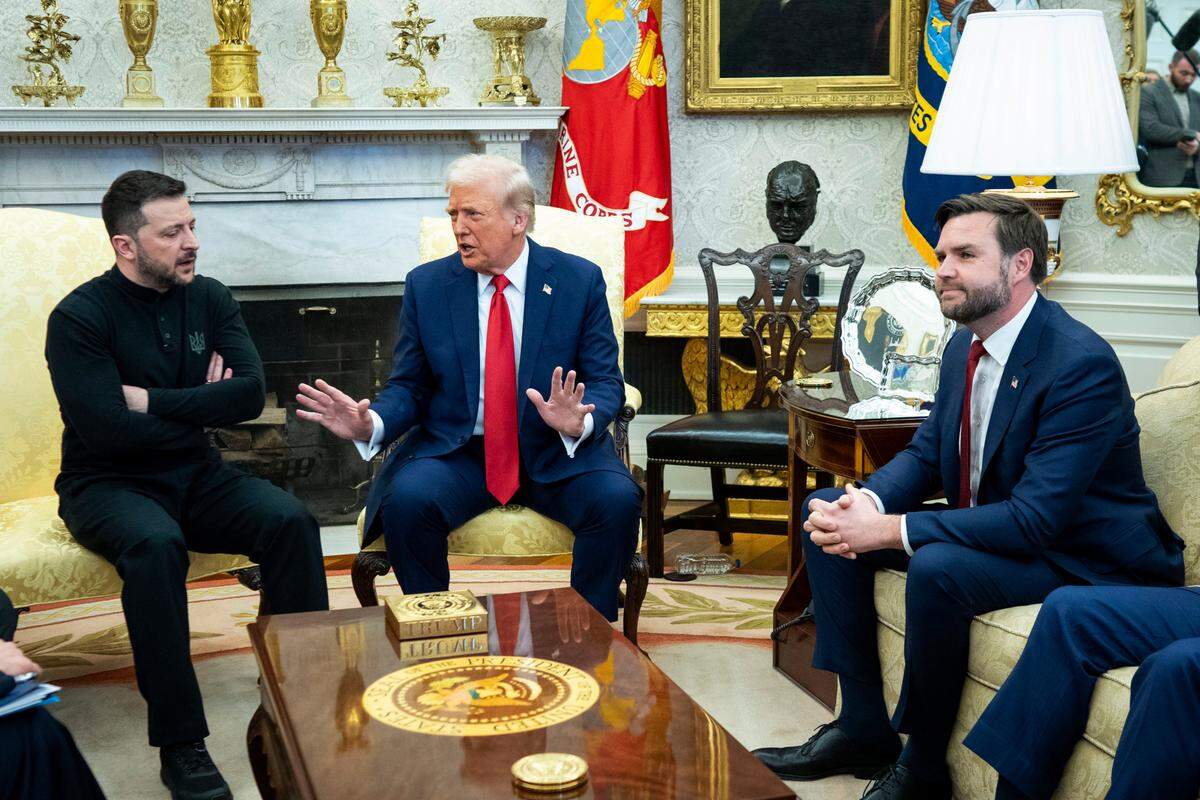
As a student of Ronald Reagan’s rhetoric for more than 40 years, I feel safe in saying the nation’s 40th president would be shocked and appalled by last week’s Oval Office dressing-down of a democratic ally fighting a Russian invasion.
Ukrainian President Volodymyr Zelenskyy was told that he was not sufficiently grateful to the United States and informed that he didn’t have any “cards” to play in negotiations. When he attempted to explain the importance of confronting Russian aggression, he was roundly attacked for not wanting peace. He was even blamed for starting the war.
In place of defense of democratic values, President Donald Trump and others have emphasized the economic and other benefits of making a deal with Russia. The focus on dealmaking and the rejection of promoting democracy is so strong that the National Endowment for Democracy has faced major funding cuts. Even the very meaning of democracy has come under attack by those who labeled the president of Ukraine as a “dictator,” and leading members of NATO and the European Union as undemocratic for imposing a “firewall” preventing far-right parties with members who have praised fascism from attaining governmental power.
Almost 43 years ago, a Republican president took a different perspective. In an an address to members of the British Parliament at Westminster, Reagan argued that the “ultimate determinant” in the Cold War “will not be bombs and rockets, but a test of wills and ideas, a trial of spiritual resolve, the values we hold, the beliefs we cherish, the ideals to which we are dedicated.” While Reagan used the speech to defend his policy of “peace through strength,” his focus was on the battle of ideas between the West and the Soviet Union. At a dangerous point in the Cold War, he thought that there was a way to protect both freedom and peace, a way forward without “deadening accommodation with totalitarian evil.”
Reagan believed that ideas would win the Cold War because it was “the Soviet Union that runs against the tide of denying human freedom and human dignity to its citizens.” He undoubtedly would say the same of Russia today. Reagan pointed to weakness in the Soviet economy — weakness that is mirrored in Russia today — and then expressed a very different view than is common on the right today, noting with pride: “Of all the millions of refugees we’ve seen in the modern world, their flight is always away from, not toward the communist world.”
It is notable that Reagan’s insight remains true. Refugees are not fleeing Ukraine or anywhere in the West for Russia.
Cold War an episode in struggle for freedom
Reagan recognized that democracies could differ on economic and other policies, as they do today, about whether any restrictions on parties with historical ties to fascism are appropriate. In his time, he noted that there was “legitimate disagreement over the extent to which the public sector should play a role in a nation’s economy and life,” but he added that “on one point all of us are united — our abhorrence of dictatorship in all its forms,” a conclusion that efforts to reestablish strong relations with Vladimir Putin’s Russia make clear is no longer true.
Reagan saw the Cold War as an episode in a larger human struggle for freedom. In a passage that he personally added to the text, he wrote that “Since the exodus from Egypt, historians have written of those who sacrificed and struggled for freedom” and then traced that battle from “Thermopylae, the revolt of Spartacus, the storming of the Bastille, the Warsaw uprising” to then present day. He undoubtedly would see the effort to protect Ukraine as part of that historical arc.
Reagan thought that human history moved, often slowly but inexorably, toward democratic values because the desire for a say in one’s life transcends culture and history. He noted that “democracy already flourishes in countries with very different cultures and historical experiences” and then used a powerful rhetorical question to emphasize the universality of human desire for democratic governance. He asked: “Who would voluntarily choose not to have the right to vote, decide to purchase government propaganda handouts instead of independent newspapers, prefer government to worker-controlled unions, opt for land to be owned by the state instead of those who till it, want government repression of religious liberty, a single political party instead of free choice, a rigid cultural orthodoxy instead of democratic tolerance and diversity?” The obvious answer is no one.
Reagan believed that ultimately ideas would determine the outcome of the Cold War, observing that the Soviet Union was “not immune to … reality,” and adding, “Any system is inherently unstable that has no peaceful means to legitimize leaders.” He would say the same about Russia today. Many today would decry Reagan as hopelessly naive. It is this idea that has led to cuts in the National Endowment for Democracy, an organization that was created by those who took very seriously the ideas that Reagan espoused at Westminster.
Perhaps those who view Reagan’s idealistic defense of democratic ideals as terribly simplistic might consider the single line in the address that was demonstrated in less than a decade to be false. After presenting perhaps the most eloquent defense of democracy since President Franklin D. Roosevelt’s “Four Freedoms” address, Reagan concluded with a bit of realism. He recognized that “the task I’ve set forth will long outlive our own generation.”
On that prediction, he was totally wrong. In less than a decade, the Soviet Union was no more and the nations of the former Warsaw Pact were free and beginning to take the steps that would lead many of them to join the European Union and NATO.