
Missouri is still teaching an outdated, ineffective reading method. Time to ditch it | Opinion
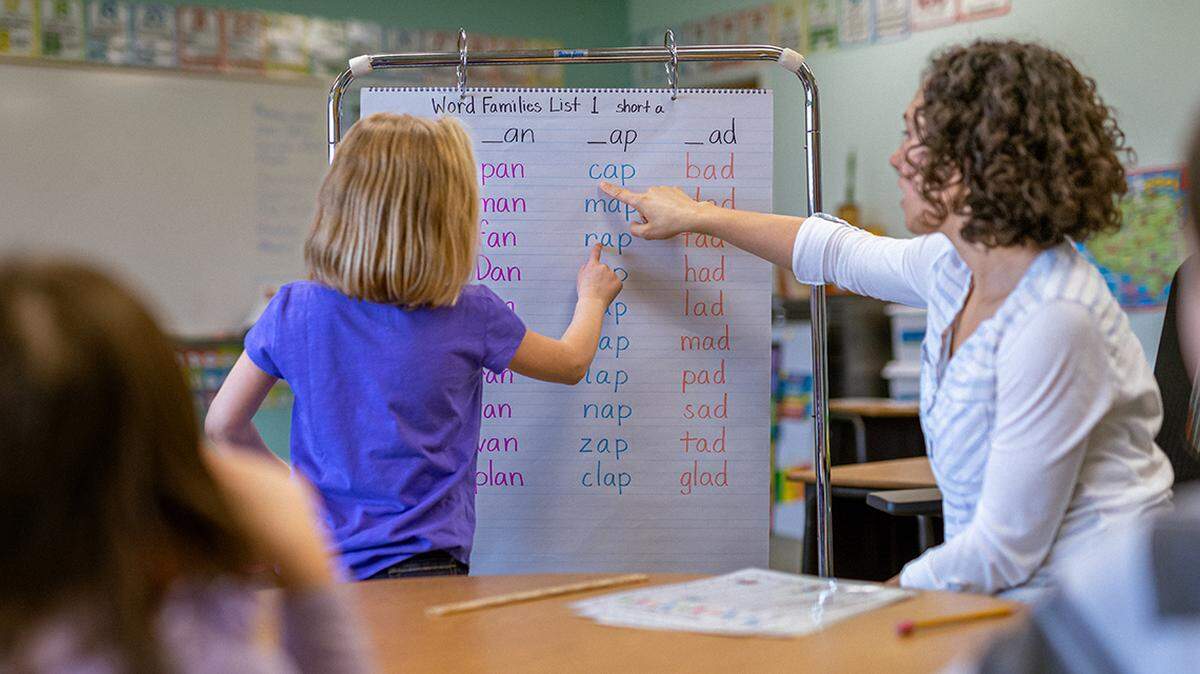
If students can’t read, they will struggle to understand every other subject in school, making academic success — and success beyond graduation — a challenge.
Last month, we got the latest results from the Nation’s Report Card on where Missouri students rank among the country. The results show 42% of Missouri fourth graders and 35% of eighth graders were reading at a “below basic” level in 2024. Only 27% of fourth graders and 26% of eighth graders are “at or above” proficiency.
That translates to roughly 1 out of every 2 fourth graders and 1 out of 3 eighth graders not meeting grade level expectations for reading in Missouri. To put it plainly, that’s not good enough.
Thankfully, there’s a lot that state policymakers can do to ensure students are receiving high-quality literacy instruction that will set them up for success in school and beyond. One of those solutions is ending a controversial practice called “three-cueing” that’s been widely debunked but is still used in classrooms across the state.
Three-cueing was popularized in the 1980s and teaches students to guess words instead of sounding them out.
Three-cueing teaches kids to rely on context clues instead of phonics-based instruction. In the classroom, this would look like a student getting a picture of a lion with the word “lion” written beneath it. Instead of understanding the letters and putting together the word phonetically, kids guess the word “lion” based on the picture they are staring at.
While the intent behind three-cueing was to offer students strategies for understanding unfamiliar words, research has increasingly shown that this approach is not only ineffective, but also harmful to early literacy development.
This can lead to inaccurate guessing, poor decoding skills and, over time, a lack of confidence and competence in reading.
The flaws of the three-cueing system are not just theoretical. Studies have shown that children who rely on guessing strategies perform worse on literacy assessments compared to those who are taught with phonics instruction.
As we learn more about how the brain works and how our kids learn, teaching practices must evolve. The three-cueing system, once widely adopted in classrooms, is now recognized as incompatible with the future of literacy education.
That’s why more states are starting to adopt policies that align with evidence-based instruction such as the science of reading.
The science of reading refers to a body of research on how the brain learns to read, incorporating findings from cognitive science, linguistics and neuroscience. This approach focuses on systematic and explicit instruction of letter-sound relationships, allowing for students to decode unfamiliar words and build them back together. By learning to sound out words, students gain confidence in their ability to read new and challenging texts.
When states adopt early literacy principles with the science of reading, student outcomes improve.
Take Mississippi, for example: In 2013, the state ranked as the second worst in the country for fourth grade reading. Elected officials and policymakers implemented a comprehensive approach that focused on evidence-based curriculum stemming from the science of reading. Using the latest 2024 NAEP data, Mississippi now ranks ninth in the nation in fourth grade reading. This drastic change is often referred to as “the Mississippi Miracle.” It wasn’t actually a miracle — just the product of good policy implemented well.
It’s not just one state’s success story. In a study conducted by the National Reading Panel, children taught with phonics-based approaches were more likely to develop strong reading comprehension skills than those who relied on whole language or cueing systems.
More than 40 years of research has shown that phonics instruction is effective and necessary for developing reading skills. The National Reading Panel’s 2000 report concluded that “systematic phonics instruction produces significant benefits for children of all ages.” These findings were echoed by organizations such as the International Dyslexia Association, which advocates reading instruction based on the principles of the science of reading.
The evidence is clear: It is time for policymakers, school administrators and educators to put aside outdated practices in favor of a more evidence-based, scientifically grounded approach. The science of reading is not just a theoretical framework — it is a proven method that can help all students become strong, confident readers.
In our rapidly changing world, the ability to read is more important than ever. Let’s prioritize our students’ success by adopting an evidence-based approach to literacy that provides them with the skills they need to thrive in the classroom and beyond.