
CFPB protects ordinary Americans from exploitation. Elon Musk wants to shut it down | Opinion
In 2008, the US government used $450,000,000,000 (that’s $450 billion — with a b) of taxpayer money to bail out Wall Street banks that were “too big to fail.” American families who had been swindled and tricked out of their savings and faced the loss of their home were left to fend for themselves. Nearly one 1 of every 5 people with mortgage loans defaulted over the following few years. Six million Americans ended up losing their homes.
The foreclosure crisis exposed how unfair the U.S. financial system had become for ordinary borrowers. Deceptive, predatory loans robbed American families of their savings. Many banks ignored laws to cut corners and speed up foreclosures: forging documents, falsifying records and illegally locking people out of their homes.
The American people demanded that Congress do something to prevent companies from defrauding and stealing from them. Customers are unable to negotiate the terms of companies’ fine print, but a government agency could advocate on behalf of borrowers and consumers and guard against hidden waivers and marketplace traps. Americans needed a watchdog, and in 2010, Congress gave us the Consumer Financial Protection Bureau.
Congress established the CFPB through the Dodd-Frank Wall Street Reform and Consumer Protection Act. The CFPB is the first and only government agency whose priority is market fairness for ordinary, hardworking Americans. Since its founding, the CFPB has been the cop on the beat for consumer finance. It protects households, their savings and budgets from unscrupulous companies.
The CFPB is the epitome of good governance: an agency that improves real people’s real lives in real ways. When companies charged their customers obscenely high fees, the CFPB made them stop. When lenders tricked people into signing away their rights, the CFPB demanded transparency and fairness. The CFPB capped bank overdraft charges, limited junk fees and restricted data brokers from selling our personal information. Recently, the CFPB passed a rule to prevent medical debts from appearing on credit reports. Just last month, the CFPB held a big bank responsible for misleading its customers and cheating them out of $2 billion.
The CFPB improves market fairness, fights for victims of scams and has returned an aggregate of $21 billion stolen dollars to American families. The CFPB watchdog has been tirelessly sniffing out fraud and chasing down thieves for the past 14 years. Its oversight benefits everyone who has a bank account, uses credit or clicks “I accept” online. You don’t need to hire your own lawyer and bring a lawsuit against a big bank that is swindling you, because the CFPB will fight for your rights.
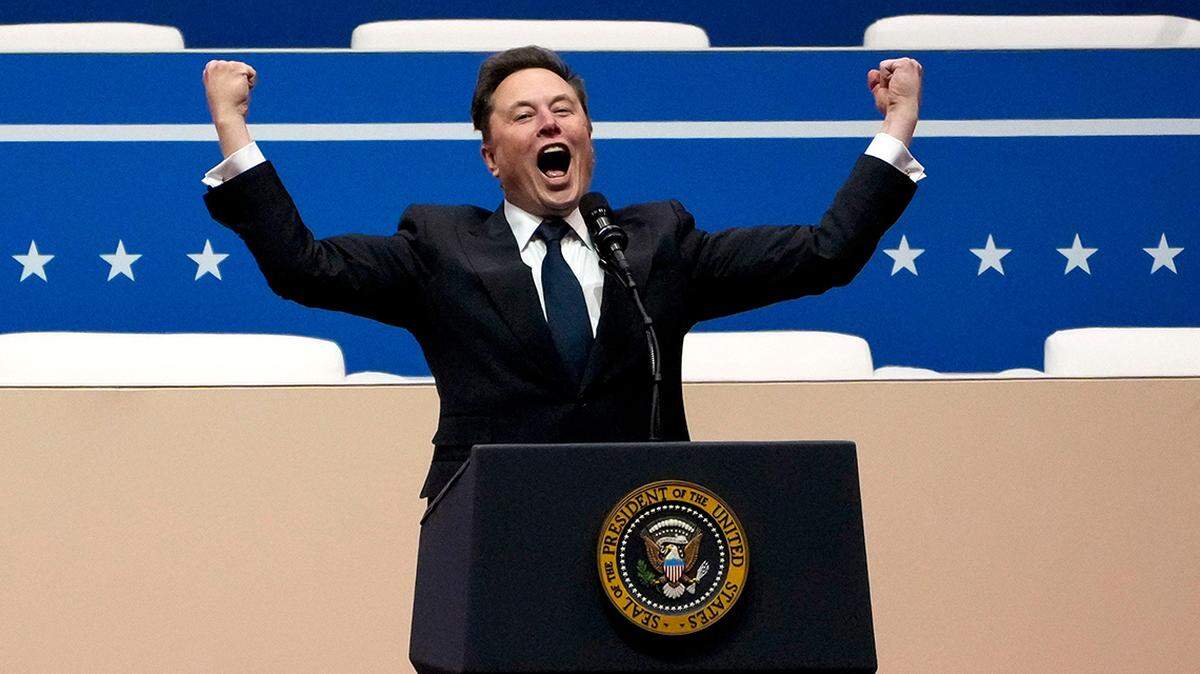
Earlier this month, Elon Musk posted the message “CFPB RIP” on his social media platform X, along with a gravestone emoji. Newly confirmed Office of Management and Budget Director Russell Vought took the reins of the agency and immediately instructed it to “cease all supervision and examination activity.” President Donald Trump has confirmed his intention to eliminate the CFPB.
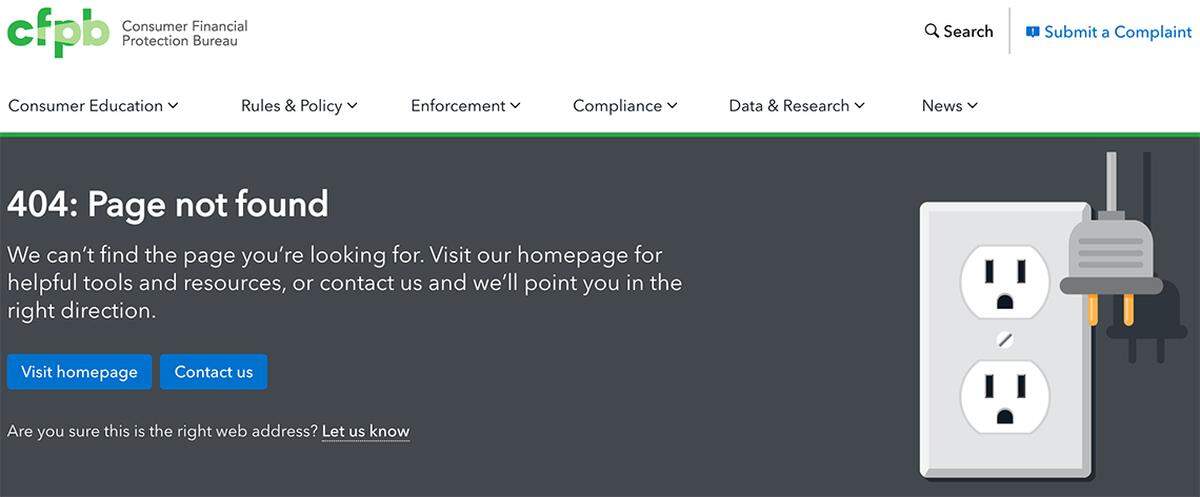
CFPB website gone dark
Shutting down the CFPB’s operations pulled the plug on rulemaking to cap credit card interest rates. Stopping CFPB operations froze pending consumer protection lawsuits in their tracks. With the CFPB shut down, no one is making sure that companies are actually refunding stolen money they had promised to return. Consumers now lack access to financial literacy resources the agency provides, and the Consumer Complaint Database — a portal that has logged 7.7 million customer complaints to date — has disappeared. The CFPB website homepage has gone dark, replaced by a message reading “404: Page not found.”
Destroying the CFPB means the end of oversight for Big Tech financial products. There would be no more “cop on the beat” to make sure that Apple Pay, Venmo and the like do not steal people’s money or unlawfully charge hidden fees. Eliminating the CFPB is particularly beneficial to Musk, who is transforming X into an “everything app” that includes an online payment system called X Money. Deleting the CFPB allows Musk an oversight-free launch for his new digital wallet products.
The CFPB has been a loyal, valuable watchdog for American families. The financial benefits provided to regular, hardworking Americans far exceed its modest operating budget. Who benefits from destroying the CFPB? Only those companies that now can freely take advantage of American consumers through hidden costs and unfair boilerplate terms. Companies that no longer have to comply with the law can inflate their profits on the backs of their overpaying customers. Destroying the CFPB means empowering financial predators, scammers and crooks.
The current CFPB shutdown is completely illegal. The agency was created by an act of Congress, and thus it can only legally be disbanded by an act of Congress. But in addition to its illegality, the CFPB shutdown is dangerous for the millions of American consumers who will lose their financial advocate and bargaining leverage. Companies control contract terms and will have unlimited power to bury waivers, indemnities and additional charges in the fine print. Unscrupulous lenders will profit, but all the rest of us will pay.
Eliminating the CFPB attacks American families and prioritizes billionaire profits over the incomes and savings of ordinary people. Congress and the administration imperil their own constituents by gutting the CFPB. No one should be allowed to summarily shoot the people’s watchdog.