
This Presidents Day, look to Harry Truman’s example of honor and integrity | Opinion
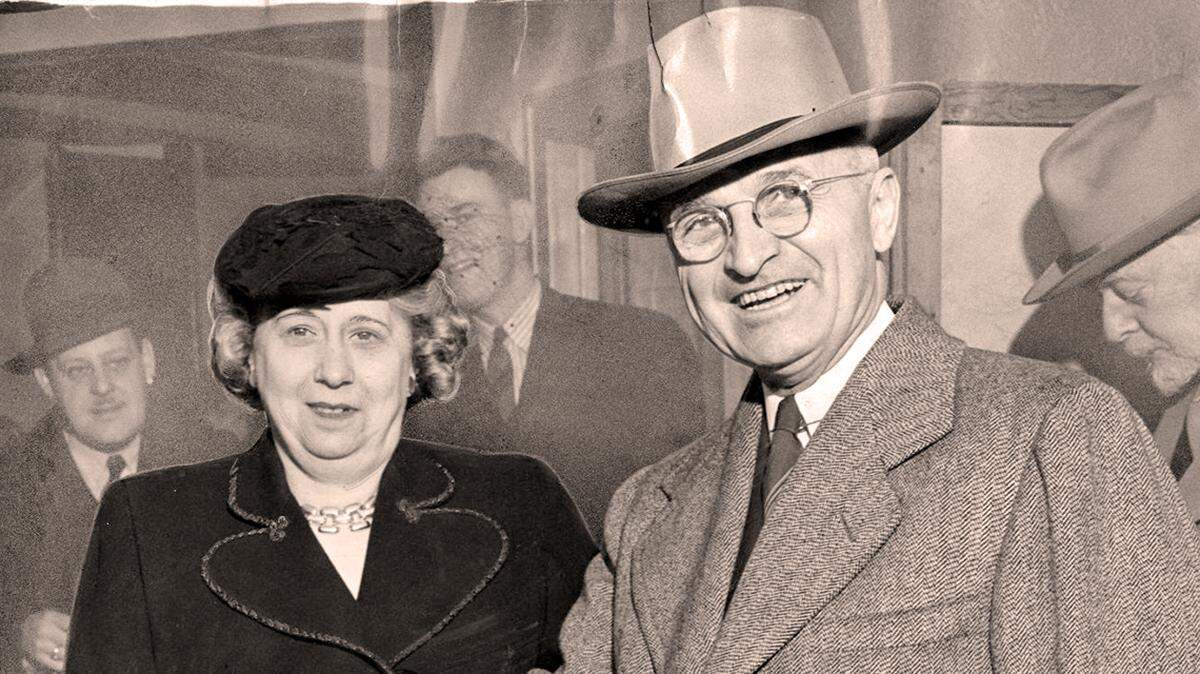
The weight of history presses upon the shoulders of every president of the United States, but not all bear it with equal grace. Some seek the office with an insatiable hunger for power while others, like Harry S. Truman, step forward reluctantly, guided not by personal ambition but by duty. This Presidents Day, at a time when the American presidency teeters between statesmanship and self-interest, it is vital to recall the example of a leader who understood the true nature of the office.
Truman, the 33rd president, assumed office at one of the most pivotal moments in history. Unlike those who seek power for its own sake, Truman did not initially aspire to the presidency. He accepted the vice presidency in 1944 out of a sense of responsibility, not personal ambition. Much like the Roman statesman Cincinnatus — who left his plow to lead Rome in its time of crisis, only to return to his farm when the work was done — Truman embodied the principles of reluctant yet resolute leadership. He was accountable to the people, recognizing that the office he held was not for personal gain but for the service of the nation.
The president is neither a monarch nor an autocrat, but a public servant bound by the Constitution. The founders designed the office with checks and balances precisely to prevent the kind of abuses that arise when power is wielded without constraint. Truman understood this deeply. When he made decisions — whether it was integrating the armed forces, recognizing Israel or resisting communist aggression in Korea — he did so with an eye toward justice and the betterment of the American people, not mere political expediency. He placed country over party, principle over ambition, and the Constitution over personal interest.
A common misconception in modern political discourse is that the primary role of government is efficiency. While efficiency is valuable, it is not the highest ideal of governance. The true purpose of government, as many leaders have argued, is the improvement of human life. Thomas Jefferson once wrote, “The care of human life and happiness, and not their destruction, is the first and only legitimate object of good government.” Truman understood this, which is why h championed policies that sought to lift people up — whether through his continued support of the GI Bill, which helped millions of veterans obtain education and housing, or his ambitious attempt at national health care reform. Though he was unsuccessful there, his work laid the ideological foundation for Medicare and Medicaid, which President Lyndon Johnson later signed into law. Truman believed that a government that fails to serve its people is a government that has lost its purpose.
Furthermore, the president of the United States is not merely the leader of a single nation, but the de facto leader of the free world. This role carries with it immense responsibility, requiring a leader who upholds democratic values and moral integrity. Truman’s support for the Marshall Plan and NATO demonstrated his belief that American leadership should be rooted in principle, not mere transactionalism or brute force. He recognized that the world looks to the United States not just for power but for moral clarity.
Above all, Truman exemplified the necessity of moral integrity in the presidency. He lived modestly, remained loyal to his wife, refused to cash in on his office after leaving it and understood that character mattered as much as policy. When he left Washington, D.C., he returned to his Missouri hometown of Independence without a fortune or corporate board seats, but with the unshakable legacy of a man who did his duty with honor.
In these times, as we witness the erosion of these ideals in the highest office of the land, we must remember the example of Truman. The presidency is not an instrument for self-glorification. It is a burden borne for the good of the people. The Constitution is not an obstacle to be sidestepped, but a sacred trust to be upheld. Government is not meant to be a machine of ruthless efficiency, but a force for human dignity and the common good. And above all, the occupant of the White House must be a person of moral fortitude, for without that, the office itself is corrupted.
As Americans, we must demand nothing less than the principles Truman embodied. If we fail to hold our leaders accountable to these standards, we risk losing the very essence of our republic. Now, more than ever, we must insist that the presidency remain a beacon of service, morality and constitutional duty — not a stage for personal ambition.
This story was originally published February 17, 2025 at 6:07 AM.