
Shooting guns into the air is no way to celebrate a Kansas City Chiefs Super Bowl win | Opinion
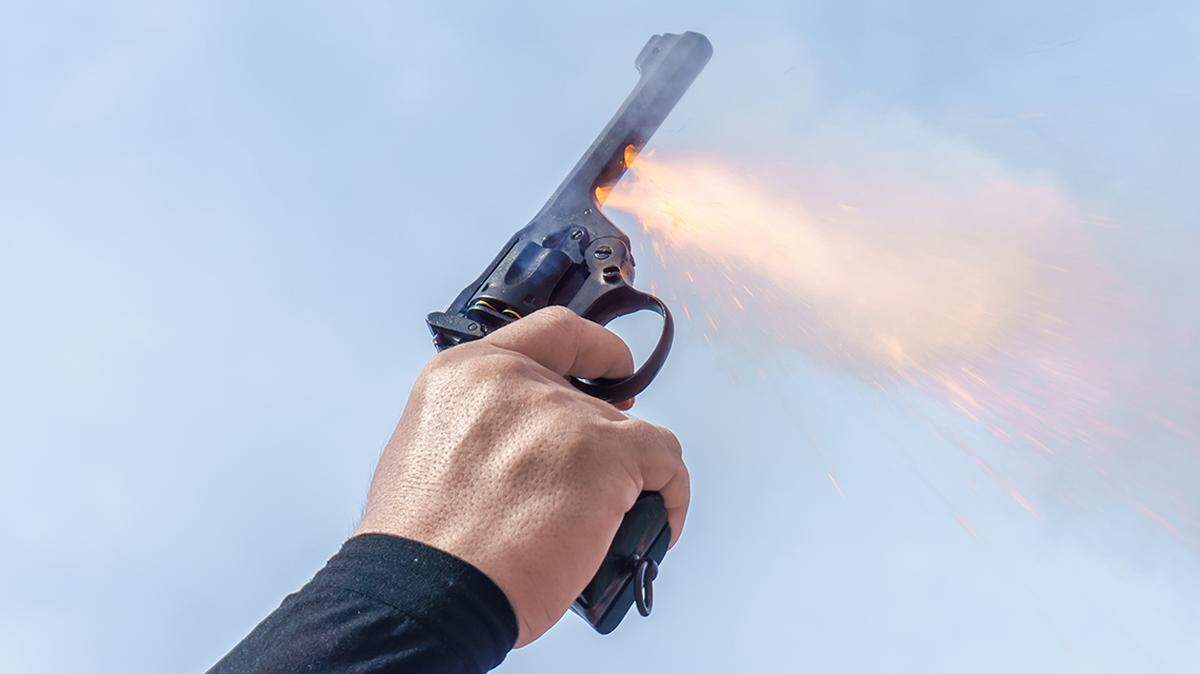
Americans love to celebrate: Independence Day, New Year’s Eve, sporting events. For some reason, loud noise often figures into those celebrations. Usually, that means fireworks but — shockingly — some people turn to firearms. That can cost lives.
This isn’t a new phenomenon. In a recent Second Amendment decision, the United States Supreme Court cited a colonial-era law from New York that placed “restrictions on gun use by drunken New Year’s Eve revelers.” (The penalty was a 20-shilling fine.)
More than 250 years later, celebratory gunfire is still a problem.
Every Independence Day and New Year’s Eve, SoundThinking — the company that makes ShotSpotter, the acoustic gunshot detection system used by Kansas City — detects a spike in gunfire. And, as everyone knows, what goes up — in this case, bullets — must come down. Tragically, they often strike people when they do, often with deadly consequences.
Jennifer Macia, a reporter for nonprofit The Trace, compiled several incidents from this New Year’s Eve. A 10-year old girl killed in Miami. A woman killed as she watched fireworks from her porch. Many others were killed or wounded by falling bullets just as the clock struck midnight and the calendar rolled over to 2025. Tragedies such as these happen every year.
As a former field supervisor at the Bureau of Alcohol, Tobacco, Firearms and Explosives, I oversaw the investigation of a man who celebrated New Year’s Eve by firing an illegal machine gun in a suburb of Las Vegas. That was many years ago, long before the recent dramatic proliferation of illegal machine guns. The threat is undoubtedly greater today.
But it isn’t just holidays that lead to celebratory gunfire. Sometimes, so does a hometown win.
SoundThinking detected a notable spike in gunfire at the precise moment the Super Bowl ended last year. At 10:46 p.m. Eastern Standard Time, the Kansas City Chiefs won in overtime, besting the San Francisco 49ers. There was an immediate hail of gunfire in Kansas City. In the next five minutes, ShotSpotter detected 13 shooting incidents in the city, consisting of 84 rounds fired. In the hour after the game ended, ShotSpotter detected 45 incidents, and roughly 300 rounds fired. There were more throughout the night.
ShotSpotter is also deployed in Las Vegas (where the game was played) and in San Francisco (the home of the team that lost). Interestingly, there was no corresponding spike in those locations. This makes sense. Not many people from San Francisco or Kansas City would travel to Las Vegas with their guns in tow. And for San Franciscans, well, no one celebrates losing.
Tragedies that result from celebratory gunfire have prompted some places to enact laws prohibiting it. After its experience with celebratory gunfire — including after the Super Bowl and other sporting events — Missouri passed such a law, naming it after Blair Shanahan Lane, a young Kansas City girl who was killed by a stray bullet.
It can be difficult to investigate these crimes. Trying to find the person responsible for a bullet that falls from the sky is not easy. Knowing where a gun was fired right before that certainly helps. This method is how West Palm Beach, Florida, dramatically reduced celebratory gunfire in its community.
We can do something about this. By planning ahead, by reminding the public of the dangers of celebratory gunfire, by highlighting the tragedies that occur, by publicizing the consequences if one is caught shooting, by aggressively investigating the crimes when they occur, and by using technology to make those investigations successful, communities can address this senseless and dangerous phenomenon.
This Super Bowl, whichever your team is, root for them — don’t shoot for them.