Farewell, Torey Southwick and Ol’ Gus. You were Kansas City kids’ best friends on TV | Opinion
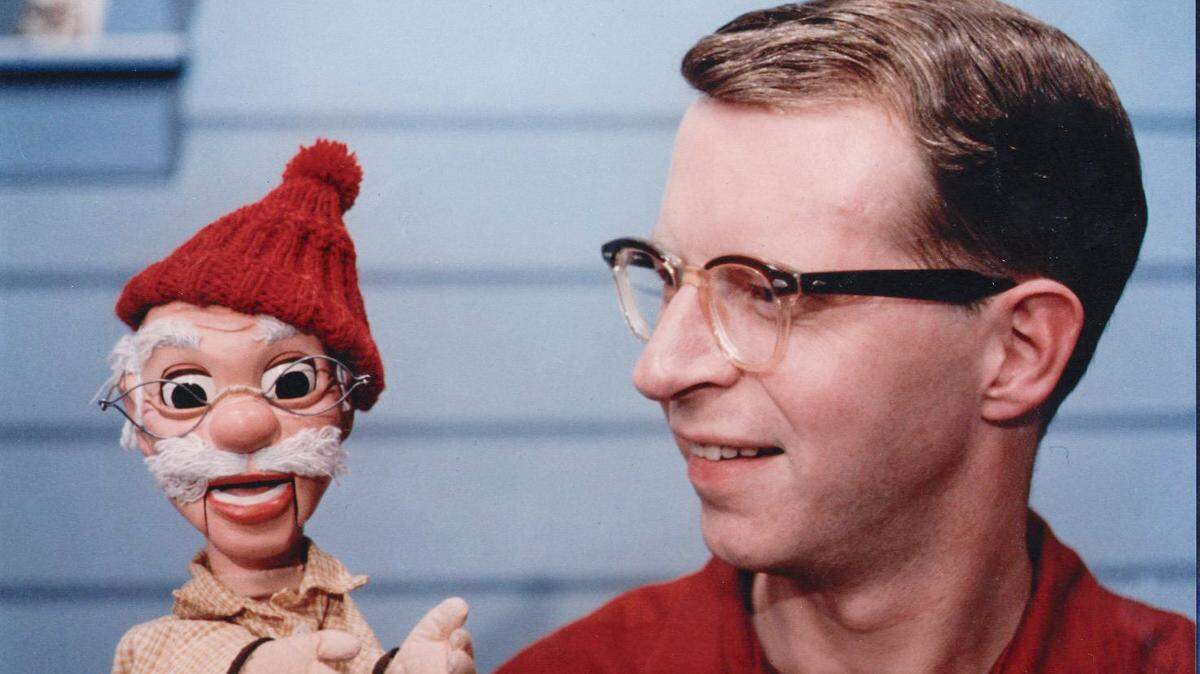
Virtually every baby boomer who grew up in greater Kansas City has lost a surrogate parent. Torey Southwick, who, with his puppet sidekick Ol’ Gus, held down the highest rated children’s show throughout the 1960s on KMBC-TV 9, died last month at age 94 in Bethesda, Maryland.
While the self-effacing Southwick always played it down, he was either the direct model for Roger Miller’s 1965 hit song “Kansas City Star,” or at least representative of the superstar local kids’ show hosts of the era. The song is written in the voice of someone very like Torey who is offered a “better job at higher wages” in Omaha:
“I’m the number one attraction In every supermarket parking lot/I’m the king of Kansas City, No thanks, Omaha, thanks a lot/Kansas City Star, that’s what I are/Yodel-lee-del-lay-hee, you ought to see my car.”
Though bragging was not Torey’s style — he was a normie long before the term was invented — he was, indeed, the king of Kansas City TV for a decade.
At one point, said his daughter, Terri Southwick, “Torey Time” and/or the “Torey & Ol’ Gus” show aired live both weekday mornings and afternoons plus Saturday mornings for a whopping total of 30 hours a week.
KMBC was striking while the iron was red hot. Terri said she found an old ratings book showing the “Today” show with a 29 share (the percentage of households watching TV), “Captain Kangaroo” with 16 — and Torey with 55.
That meant Torey often had nationally famous visitors, from network TV stars Chuck Connors (“The Rifleman”) and Sally Field (“The Flying Nun”) to then-vice president and 1968 Democratic presidential candidate Hubert Humphrey. The spontaneous and humorous interaction between Torey and Humphrey made the national ABC evening news.
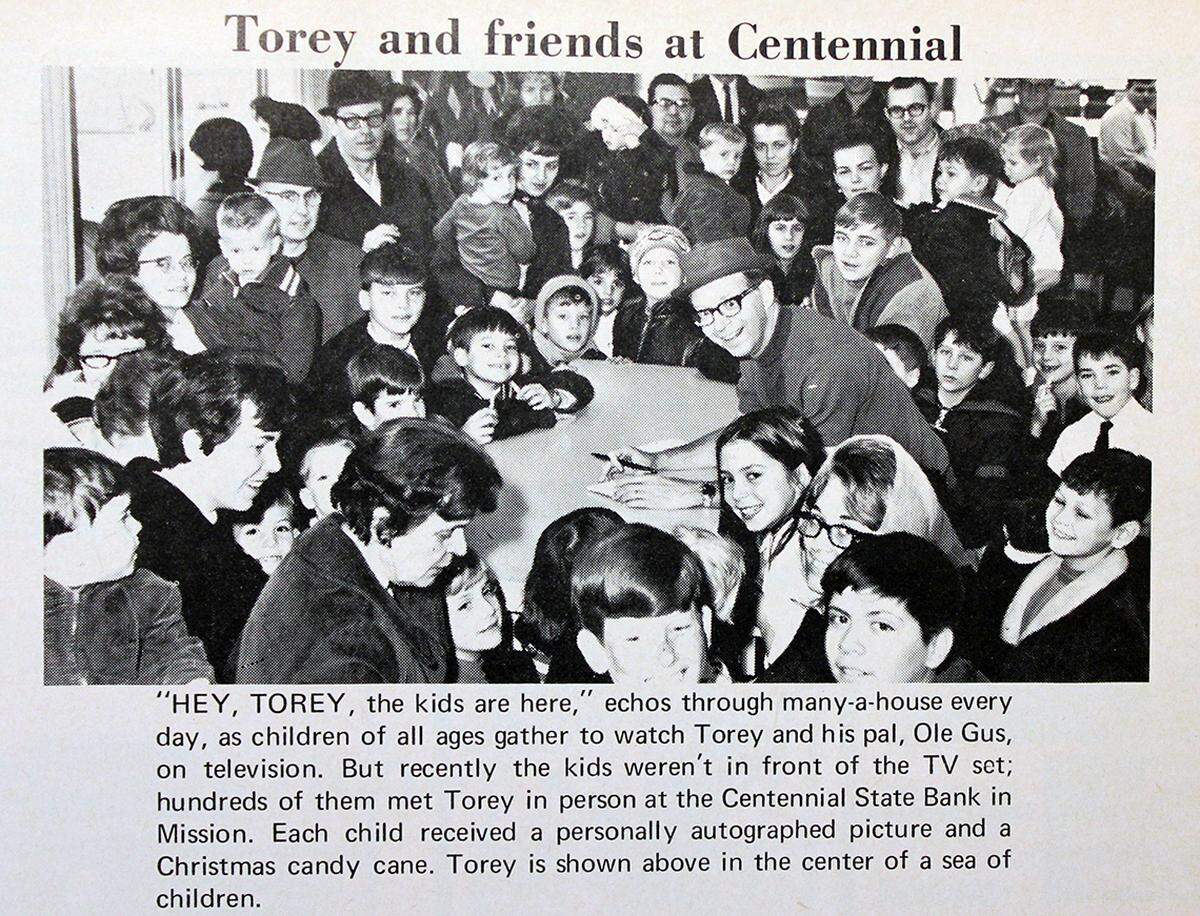
And Torey did, indeed, draw huge crowds to supermarket grand openings and the like.
Terri said her father’s fame meant some sacrifices for her and her sister.
“He couldn’t go the mall with us, or he’d be mobbed,” she said. “If we went to a restaurant after church, he drew a crowd. It made him uncomfortable, but he was always gracious and stayed. We’re like ‘Come on, let’s go.’ But he didn’t want to disappoint a kid.”
Teddy Dibble, who, in 1996 produced for public television affiliate KCPT a documentary titled “Whizzo, Ol’ Gus and Me,” about the children’s TV hosts of local history, said Torey was somehow simultaneously calming and charismatic.
“He had an incredibly gentle and silly persona that was attractive to kids,” Dibble said. “Most of us have probably encountered an adult in our lives who didn’t talk down to you as a kid; who was interested in what you had to say — and Torey presented that way, as well. You had a feeling he liked and respected kids and didn’t find them a nuisance or an annoyance.”
Like most shows of its genre, “Torey Time” presented syndicated cartoons such as “Popeye” and “Rocky and Bullwinkle” interspersed with bits of business by the host. In Torey’s case, he interacted with the puppet — portrayed as his cantankerous, elderly neighbor — and an invited studio audience of kids, including lucky ones — like me — who were called out of the bleachers to play games and contests with a chance to win prizes.
Terri said her father was not a ventriloquist, but did do Ol’ Gus’s voice and manipulated the puppet, using TV trickery to make their interactions appear seamless.
Dibble noted that, with just three network television affiliates in Kansas City during the Torey era, “We all essentially played in the same sandbox. KMBC was very aggressive with kids’ shows and had the two most popular ones with Whizzo the Clown and Torey. It was a source of after-school R & R.”
Such ratings dominance can never be duplicated, Dibble said, in today’s fractured media landscape.
Torey’s wall-to-wall presence created a relationship that endured and that, in some cases, even superseded latchkey kids’ relationship with their own parents. That became clear, Terri said, when her dad connected with some of his old fans through Facebook and they wished him well on his birthday.
“Some of the messages were heartbreaking, like ‘You were my only friend,’” Terri said.