
Kansas City’s old school buildings need to keep up with today’s climate realities | Opinion
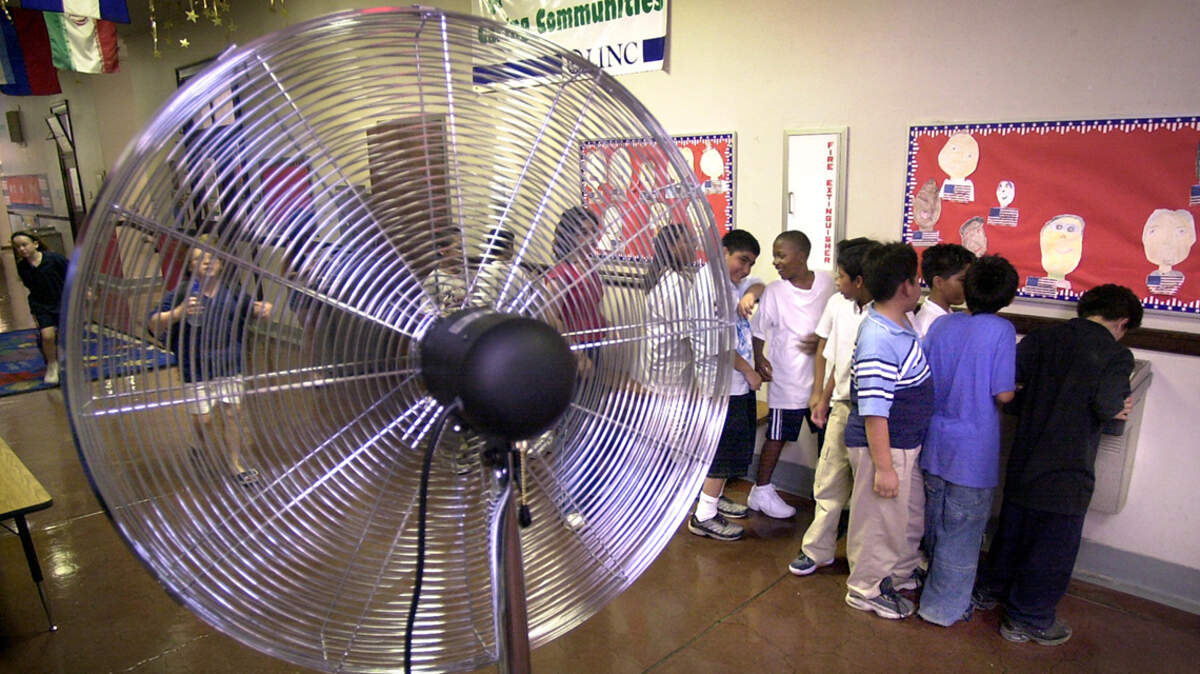
With the winter break beginning for millions of K-12 children around the nation, state leaders should take the time to assess the performance not of student academics — but of the school buildings themselves. And it is clear from how schools weathered wildfire smoke and hot temperatures earlier this academic year that many need improvement.
Last year, several schools in the St. Louis area had to close early during the back-to-school period due to dangerously high temperatures and humidity. The same was true for Kansas City public schools over the same time period. “Many of our secondary schools don’t have AC units in all of the classrooms, and the existing AC units are struggling due to this unusual heat and are not able to maintain a comfortable temperature within our facilities,” Kansas City school officials said.
Poor indoor air quality resulting from wildfire smoke and ash, for example, led to school closures in parts of Southern California and the Southwest this fall and advisories in the Northeast. And excessive temperatures around the nation well into the fall prompted closures because many schools lack air conditioning.
For many of the nation’s 54 million public school children who attend classes in buildings that on average are nearly a half-century old, they don’t have the luxury of learning in buildings built to protect against the new climate realities impacting major chunks of the school year.
According to a survey earlier this year by the federal National Center for Education Statistics:
- Some 38% of school buildings are older than the average of 49 years. Many New Jersey schools are more than a century old.
- Many schools are lacking basic upgrades, with 41% needing to update over half of their HVAC systems and 25% requiring updates to lighting, safety and security systems.
- Fewer than half of schools surveyed ever had a major building renovation.
A common misconception is that indoor air quality is not connected to outdoor air quality, that solid school walls and windows offer sufficient protection against wildfire smoke. But indoor air quality can suffer significantly, especially if a building lacks modern air filtering and other features.
“Local officials often advise people to stay indoors during a smoke event, However, some of the smoke from outdoors can enter homes and buildings and can also make indoor air hazardous to breathe,” the Environmental Protection Agency says. “Because buildings vary in their design and construction, they also vary in their levels of protection against wildfire smoke.”
One particularly worrisome effect of wildfire smoke is that it carries what is known as PM2.5, tiny particulate matter ingested into the bloodstream that scientists believe may negatively impact cognitive function and neurodevelopment, a key concern for K-12 students.
Also especially worrying is that many schools around the country are not equipped for higher temperatures. Nationally, nearly 14,000 schools built when air conditioning wasn’t a necessity in the 1970s are still without air conditioning as extreme heat impacts nearly every state.
The National Bureau of Economic Research found that in K-12 schools, “heat exposure inhibits cognitive skill development and that school air conditioning can mitigate this effect.” And it warned that without the benefit of air conditioning, each 1-degree Fahrenheit “increase in school year temperature reduces the amount learned that year by 1%”
Parents and educators rightly demand learning environments that support education. In the age of weather extremes and wildfire plumes, policymakers at the local, state and federal levels must recommit to addressing the deficits in the nation’s K-12 classrooms. Kansas City area schools are making a good start by proposing a $474 million bond to address infrastructure needs across 31 district buildings, a sum that includes upgrades to heating and air conditioning.
Students spend so much of their young lives inside of schools that it is nothing short of a national imperative to improve the ability of buildings to handle weather extremes.