
Don’t let politicians fill the Kansas and Missouri supreme courts with partisan hacks | Opinion
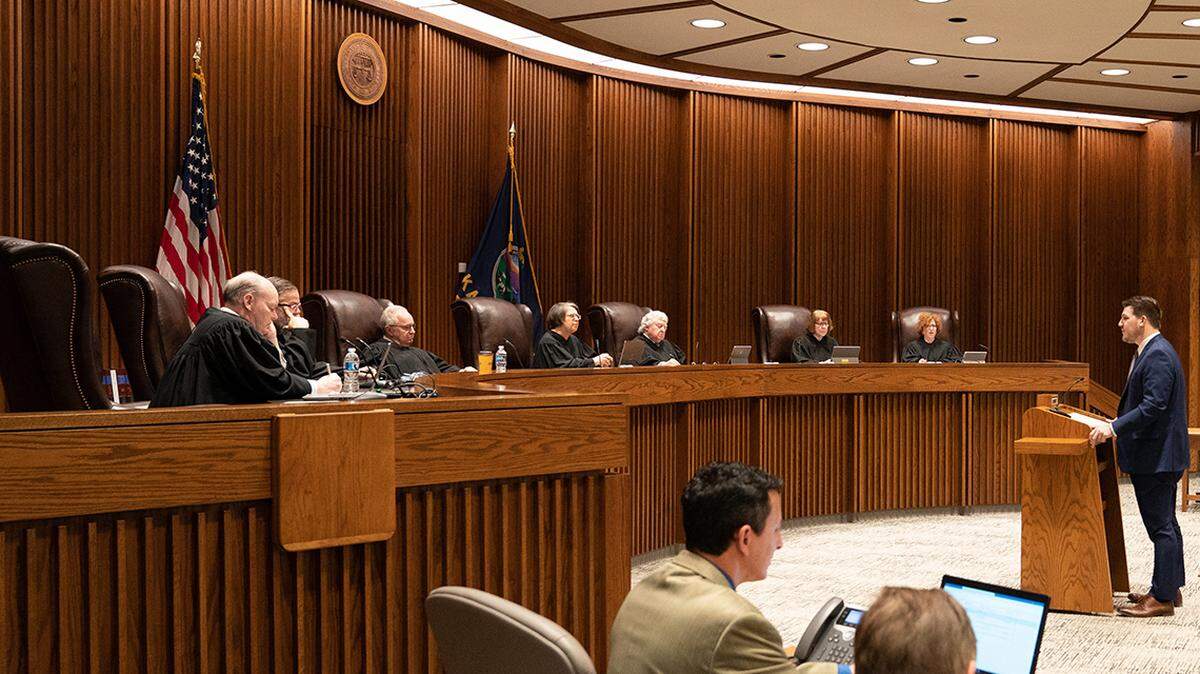
Members of the state supreme courts in Kansas and Missouri are chosen through a merit-based selection process.
In 1940, Missouri voters approved an amendment to the state’s constitution that required all judges be nominated by a judicial commission and then selected by the governor. That procedure applied to appointments to the Missouri Supreme Court. This merit-based selection method became known nationally as the Missouri Plan.
Voters in Kansas approved a constitutional amendment in 1958 establishing a merit-based selection process for appointment to the state’s supreme court. A nine-member Supreme Court Nominating Commission, having considered applicants, would recommend three finalists to the governor. The governor would appoint one of the three nominees to the court.
Missouri and Kansas residents have been well served by these nonpartisan, merit-based judicial selection systems.
That’s why it was disappointing to read in a recent story in The Kansas City Star that politicians in both states are looking at ways to do away with merit-based appointments.
Kansas Attorney General Kris Kobach was reported as having said in September that an amendment to the state’s constitution was “absolutely needed” and that the Kansas Supreme Court “is far to the left of the norm in state courts.”
I strongly disagree. I believe the Kansas Supreme Court has honorably served the state and its residents. Its members are deeply committed to the fair and equal administration of justice.
I would say the same thing about the Missouri Supreme Court.
Make no mistake. The fair and equal administration of justice would be placed at risk if the merit-based selection process for members of the supreme court was abandoned in either state.
Some legislators argue that state supreme court members should stand for election. They argue that elections ensure accountability.
But the reality is that campaigning for a judgeship and the fair administration of justice are a bad mix. Sanford Gordon, a professor at New York University School of Law, put it this way in a February 2024 article: “By injecting politics into the branch of government for which independence and impartiality are indispensable, judicial elections threaten to undermine the rule of law.”
Other legislators assert that the governor should appoint judges subject to confirmation by the state senate. But anyone who has observed the purely political examination to which United States Supreme Court nominees are frequently subjected knows that process would not improve the administration of justice at the state level.
It’s important to note that voters in both Missouri and Kansas are given an opportunity to vote on whether to retain a particular member of the state supreme courts. In Missouri, voters are asked if its judges should be retained. The first retention vote takes place after a member has served for one year. If the vote is favorable, the member serves for 12 years before his or her next retention vote is held.
Members of the Kansas Supreme Court stand for retention in a similar fashion. Once the member has served for one year, he or she stands for retention in the next general election. If the justice receives a majority of the votes cast, he or she remains in office for six years and then again stands for retention.
A 1995 note in the Washburn Law Journal described the benefits of a merit-based selection system in the appointment of district and magistrate judges in Kansas: A qualified attorney not wishing to participate in partisan politics would be encouraged to seek a judicial position in a merit-based system; a merit-based retention election would ensure that a judge stood for retention on his or her judicial record; and minorities and women would have more opportunities for appointment to judgeships.
Those arguments on the merit-based appointment of district and magistrate judges have stood the test of time. I would argue that they apply equally to the appointment of Kansas Supreme Court and Missouri Supreme Court members.
For many years, the merit-based system for appointment of members to the highest courts has ensured that justice is fairly administered in both Missouri and Kansas. It’s critically important that that system be preserved in both states.