
Catholic leader: 2024 election shows Kansans now oppose abortion choice. Is he right? | Opinion
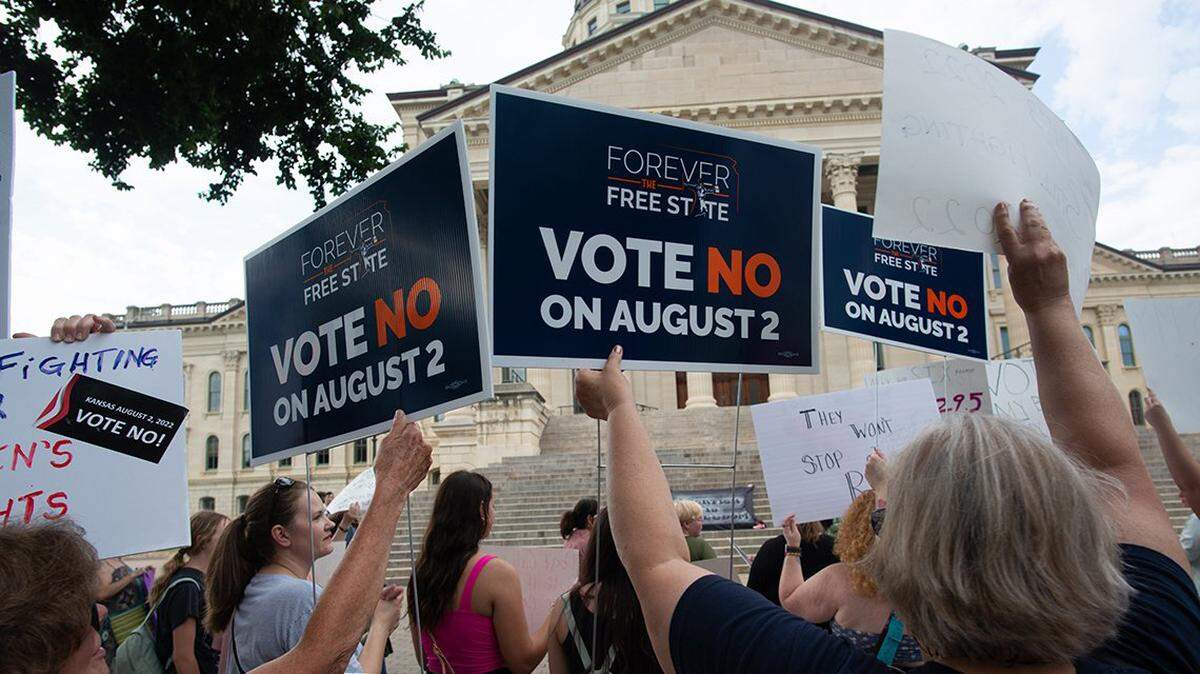
Two years ago, Kansas voters shocked the world: They astonishingly — astonishingly — rejected a state constitutional amendment that would have permitted legislators to ban abortion in the Sunflower State.
But maybe they didn’t really mean it?
Or maybe they have regrets?
Chuck Weber, executive director of the Kansas Catholic Conference, thinks so. He’s pointing to the recent legislative elections — in which Republicans strengthened their supermajorities in both chambers — as a sign that maybe Kansas voters are backtracking from their commitment to abortion rights.
“Governor Laura Kelly gambled big on ‘abortion access’ as an electoral winner in Kansas Statehouse races,” he wrote for The Leaven, the official newspaper of the Archdiocese of Kansas City, Kansas. “Instead, she suffered a remarkable string of political defeats.”
And why does Weber think that happened?
Abortion, mostly.
“Kansans understood that (sadly) abortion access is now virtually unlimited and unrestricted,” Weber wrote. “Abortions in Kansas are skyrocketing.”
In this telling, the Kansas GOP didn’t make gains in November thanks to the economy, or because voters were angry about inflation. Instead, Democrats lost ground because voters here were rebelling against the state’s permissive abortion regime.
Kansas voters took “pro-life values to the polls,” said the headline on Weber’s piece.
That’s an interesting theory.
I’m just not sure it holds up.
Polls: Voters still back reproductive rights
Let’s start by acknowledging that it can be difficult to know the precise meaning of any particular state election in Kansas.
Presidential elections have exit polls that journalists and politicians use to suss out what Americans were thinking when they cast their votes — that’s why we’ve heard so much in recent weeks about the cost of a carton of eggs being a key determinant of Donald Trump’s White House victory.
No such tools exist for local legislative races in Kansas. If a seat flips in, say, Leoti, we have to rely on a lot of informed guesswork.
And the information we have suggests that Kansas voters are still protective of abortion rights — even if they continue to vote for Republican candidates who would take those rights away. (I know, I know: I don’t always get it either.)
A Midwest Newsroom poll released in October found that 49.2% of respondents think it’s a “good thing” Kansas has essentially become a Midwest haven for women seeking abortions. Just under 39% disagreed.
And the Kansas Speaks poll — released by the Docking Institute at Fort Hays State University just before the election — found that “65.4% of respondents agreed that women are in a better position than politicians to make their own choices about whether to get an abortion.” Nearly 55% said the state “should not place any regulations” on abortion.
Kansans may vote for anti-abortion rights candidates. But they seem to be pro-choice.
That shouldn’t be a surprise. Missouri voters last month knocked down the state’s abortion ban while enthusiastically returning Republicans to power in Jefferson City. It’s a weird dichotomy, but it happens.
The funny thing about Weber’s argument is that it’s not really clear that anti-abortion rights Republicans care all that much about the will of the voters.
In Kansas, GOP legislators responded to the 2022 vote by passing new laws designed to make it more difficult and cumbersome to get an abortion here. They’re currently looking for ways to change the ways Kansas Supreme Court justices are chosen, with an eye on reversing the court’s pro-choice rulings. And Attorney General Kris Kobach is working right now in federal courts to end Food and Drug Administration approvals for mifepristone, a drug commonly used for medication abortions.
To be fair, they could hardly do otherwise.
Anti-abortion rights conservatives “believe that abortion is literally murder,” I wrote after the 2022 vote. If you believed that, “would you give up and accept the status quo?”
Would you let mere democracy stop you?
Maybe Weber is right that Kansans voters — enough of them, anyway — have had a change of heart. I suspect he’s wrong. But it doesn’t really matter. When it comes to abortion, voter sentiment matters only when it tells anti-choice Republicans what they already want to hear.