
Trump’s plan to use US military for mass deportations destroys an important boundary | Opinion
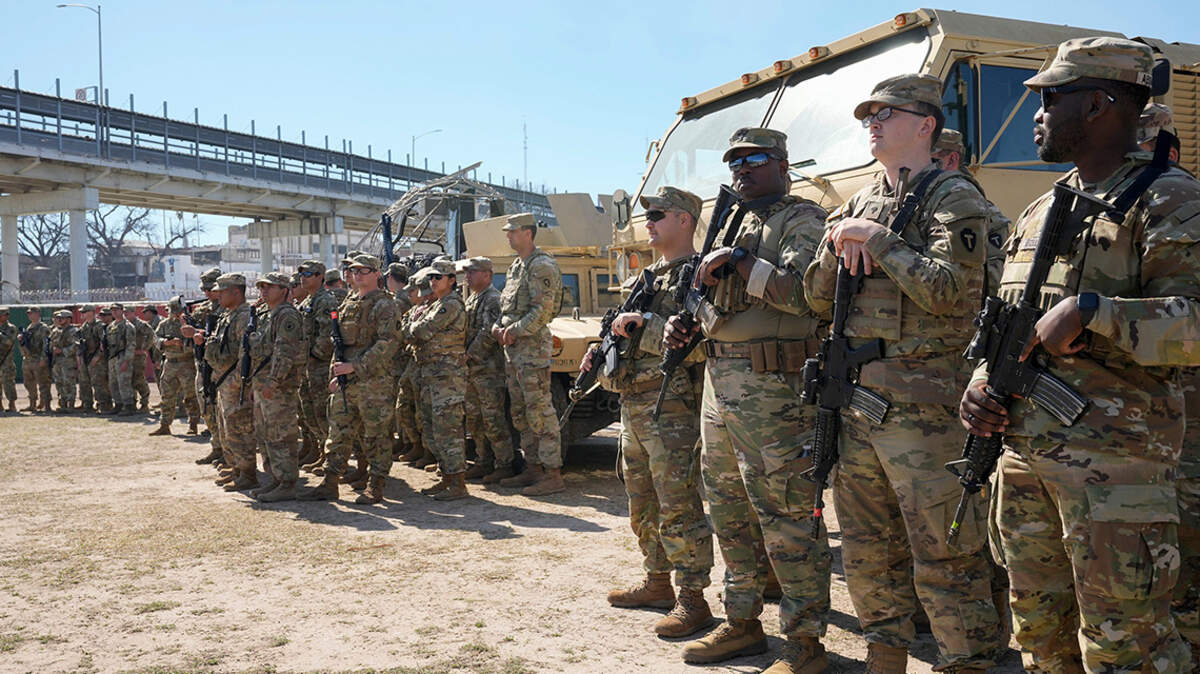
President-elect Donald Trump’s recent confirmation of his plans to use the U.S. military to conduct mass deportations marks a deeply troubling escalation in immigration enforcement policy. This proposal undermines American values and democratic principles. It threatens to inflict irreparable harm on families, communities and the very foundation of our society — including right here in Missouri.
Deportations on the scale proposed by the Trump administration — using military assets to target millions of undocumented individuals — would be a human rights catastrophe. They would undermine civil liberties, violate due process and turn members of the military into enforcers of domestic immigration policies, a role fundamentally at odds with their mission. The impact on Missouri would be profound, as many of our communities include immigrant families who are integral to our economy, culture and social fabric. About 4.1% of the state’s population is foreign-born, and 1.9% of U.S.-born residents here live with at least one immigrant parent.
Historically, the U.S. military has not been used as a tool for domestic law enforcement because of the grave risks that poses to democracy. The Posse Comitatus Act explicitly limits the military’s involvement in civilian law enforcement, and for good reason. Militarizing deportations erodes the boundary between the armed forces and civil society, enabling authoritarian overreach and the targeting of vulnerable populations.
Trump’s plan to involve the military such as the National Guard in mass deportations takes this overreach to a critical point. These actions raise significant constitutional concerns and create a chilling precedent for how power could be misused in the future.
The human cost of mass deportations is staggering. Families would be torn apart, communities would be destabilized and countless individuals would face harm when forced to return to dangerous or unstable conditions. Using military force to execute these deportations would magnify the trauma and fear experienced by immigrant communities, some of whom include U.S. citizens, children and longtime residents who contribute meaningfully to American society.
Furthermore, relying on the military to carry out deportations risks tarnishing the military’s reputation. The armed forces exist to defend the nation, not to police its citizens or enforce controversial immigration policies.
At a time when Missouri and the U.S. face pressing challenges — including the need for affordable housing, health care and infrastructure investment — this proposal would squander billions of dollars on logistics, detention facilities and operations. These funds could be better spent addressing the root causes of migration — such as instability and violence in migrants’ home countries — rather than exacerbating the humanitarian crisis.
We must also consider the economic toll on Missouri. Immigrant communities are vital to industries such as construction, manufacturing and health care. Foreign-born residents comprise 5.6% of Missouri’s entrepreneurial workforce, 10.8% of its STEM workforce and 7.6% of its manufacturing workforce. Removing these individuals en masse would devastate Missouri’s local economies, further compounding the harm to our state.
Leaders and people who believe in the values this country represents must stand up against this dangerous policy. Deportations at this scale, executed with military involvement, are not just logistically implausible — they are morally indefensible. Instead of pouring resources into fear-driven policies, we should pursue comprehensive immigration reform that balances border security with compassion and humanity.
Congress must act decisively to block this plan. Representatives and senators from both parties should recognize that militarizing deportations is not a solution but a crisis in the making. Additionally, Americans must raise their voices — through protests, advocacy and direct communication with their elected officials — to demand that our immigration policies uphold the values of fairness, justice and human dignity.
Militarizing immigration is not an image we should portray to the world. We should embrace humane and sustainable solutions to immigration challenges rather than resorting to draconian measures.
We must reject the militarization of immigration enforcement and reaffirm our commitment to being a nation of laws, compassion and democracy. We must not be silent while Trump pushes this idea into the realm of acceptability. We need to act now to protect the ideals that define us and ensure that the United States remains a land of opportunity for all.