
If Trump gets his way, mass deportations will hit our wallets. Kansas, especially | Opinion
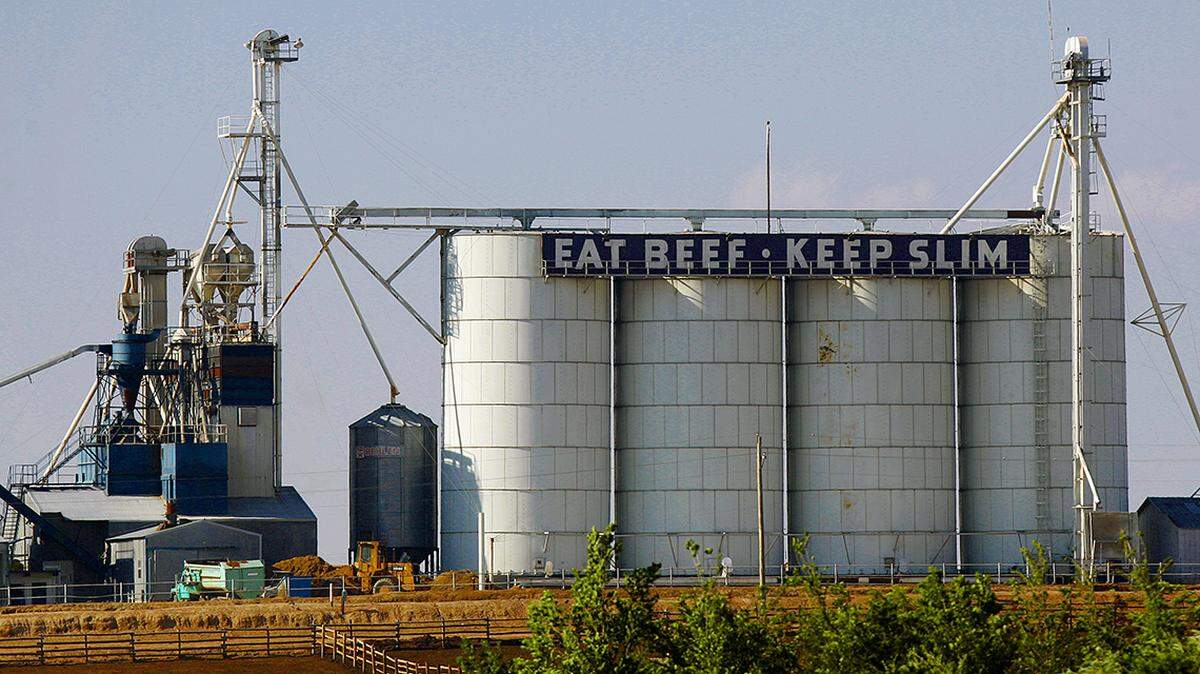
For most of the last 40 years, the “golden triangle” of southwest Kansas meatpacking towns — Dodge City, Garden City and Liberal — have thrived and grown while most other rural communities across the state struggled to survive.
If Donald Trump keeps his promises, that prosperity could take a hit, along with hitting the dinner tables of Kansas Citians.
We’ll have to see how his policies affect the meatpacking plant Walmart plans to open in Olathe next year.
Those meatpacking plants are built on a foundation of migrant labor: Latinos mostly, but also Africans and a lot of other newcomers from across the world.
Trump’s vows to deport millions of undocumented migrants — to be carried out by the American military, no less — threaten that foundation.
Naturally, there’s a bit of disquiet in the region.
“I think there are some people that are still, hopefully, optimistic, and there’s people that are really concerned,” said Debbie Snapp, the executive director of Catholic Charities of Southwest Kansas. “So I think it’s a wide range of emotions in there.”
I have a small personal connection to this story. Back in 1981, when I was 7, my parents packed up the family and moved to Garden City for my dad’s job at the brand-new Iowa Beef Processors plant in nearby Holcomb. We were there at the dawn of the region’s cultural and economic transformation.
Back then, I recall, it was mainly Vietnamese migrants who arrived to fill many of the line jobs — as well as our churches and classrooms. There were so many newcomers that some arrivals had to sleep in their cars while new housing was built.
These days, Snapp told me, a lot of the fresh faces are Cuban and Haitian. (Her agency served approximately 1,500 “new arrivals” during the most recent fiscal year.) The face of migration to the region tends to evolve over time, often reflecting whichever part of the world is most in distress at any given moment.
But it is Latinos who have really driven the change.
More than half of Garden City’s 28,000 residents are Hispanic, according to the census. (In Dodge City and Liberal, the ratios are even higher) Nearly 40% speak Spanish at home. Overall, according to the government’s numbers, a quarter of Garden City’s population is foreign-born — compared to just 7% of Kansas — and that’s probably an undercount.
Perhaps most significantly, their arrival has allowed the region to grow. During the 2020 census, 80 of Kansas’ 105 counties actually lost population. That’s no surprise: Population-wise, the Sunflower State’s rural areas have been treading water — at best — for about a century.
Not so in the golden triangle. Garden City has 10,000 more people than it did in 1980. Dodge City has added about the same number. Liberal, the smallest of the three, has 5,000 additional residents.
Yes, all those newcomers have transformed those communities. No, it hasn’t always been easy. Housing is still a problem. So is occasional conflict: In 2019, three men were sentenced to prison for a plot to bomb Somali immigrants in Garden City.
But neither are those three towns slowly withering away.
“They’re thriving communities,” Snapp said.
Nobody really knows what will happen next. According to Western Kansas Research Extension Centers, Kansas ranks first in the number of cattle processed nationally (approximately 8.2 million or about 23% of the U.S. total).
Trump has hired immigration hawks who seem to relish the prospect of large-scale deportations. But some folks hope those deportations will be targeted at criminals instead of the mass of hardworking folks who keep their heads down.
What’s more, Trump went to great lengths to keep plants open — and meat on Americans’ tables — during the COVID-19 pandemic in 2020. Would he really take action to deprive those companies of so many workers?
And what will voters in Kansas City think when the price of hamburger skyrockets as a result?
We’re about to find out.
Snapp wouldn’t speculate about what mass deportations could mean for Southwest Kansas. (Neither would Gov. Laura Kelly’s office when I called for comment.)
“We just keep doing what we do, which is focusing on care for the poor and the vulnerable, those who are marginalized, and try to do what we can with the resources we have to help them,” Snapp told me. “And we’re not going to change what we do at all. We just may have to change how we do it.”
This story was originally published November 24, 2024 at 5:03 AM.