
I saw the US-Mexico border firsthand. What you hear about immigration is all wrong | Opinion
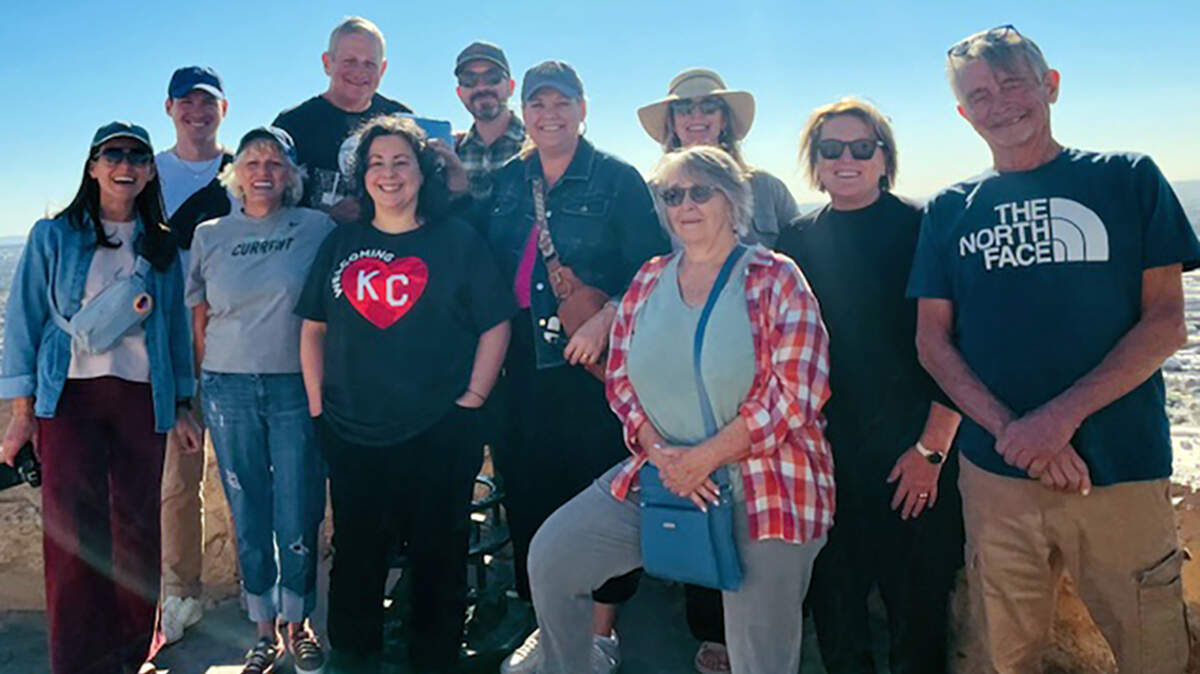
A mixed group of curious men and women headed to El Paso, Texas, last week. Not to serve. Not to save. But to sit — to listen and learn and be immersed in the realities of what happens at the border crossing it shares with Juarez, Mexico. It was a pilgrimage, of sorts, to the Border Encounters program from Abara, which serves both sides of the U.S.-Mexico border.
The nonprofit’s site skirts the 18-foot steel border wall. We would later learn that the realities of life at the border are not the same as what’s being shouted from rooftops, erupting from rallies or blasting through our televisions.
There was no chaos or craziness. No mobs of immigrants or “criminals” scurrying over fences. What we found was a coherent, well-organized community peacefully working together to help those who have lost hope in their own countries.
People in the United States are being fed a 24-hour diet of unfounded statistics and inflated misinformation on almost everything related to the border and immigration. The intent of the Border Encounters program is to help individuals rehumanize relationships outside the news cycle, to reflect on what kind of people we are meant to be, and to brainstorm how we can engage in these conversations closer to home.
During the encounter, we listened to nonpartisan experts as they shared facts citing numbers of migrants seeking refuge, initial processing procedures and the responsibilities of U.S. Border Patrol agents. In addition, we toured migrant shelters on both sides of the border, some run by churches and others operating as nonprofit organizations.
Many anomalies became apparent between this new knowledge and the statistics with which we arrived:
- In 2004, there were about 2 million illegal border crossings compared to a little over 600,000 in 2023.
- Since December 2023, border encounters have decreased 77% due, in large part, to President Joe Biden’s June 4 executive order.
- Most drugs are seized at port of entries arriving in semitrailers and cars. From 2015 to 2024, 88% of fentanyl apprehended was at a port of entry. Only 12% was from migrants sneaking across the border. And 80% of those charged were U.S. citizens.
- Since 1980, even though the migrant population has risen 118%, the violent crime rate has decreased 36% in the United States.
Our desire to believe that political information is accurate and without blemish is clearly faulty, which was demoralizing for me and for the entirety of our group. It led me to wonder why more news sources do not report the factual statistics. But, alas, after returning home from the border as I was conducting my own research, I found a mountain of articles, graphs and reports confirming the above data.
Maybe we simply aren’t looking. Or maybe the counterfeit is louder than the truth.
This group of 11 did not solve any problems while there. Nor did we simplify the complexities associated with immigration. After all, the solutions to big issues do not come in stark colors like black and white, but in varying shades of gray located somewhere in the middle.
We did, however, find transformation and a renewal inside of ourselves to pursue justice, to build bridges with all branches of humanity and to remind ourselves how it looks when a community works together for a common goal. My husband called the whole experience beautiful, and he admits that he never uses the word beautiful. That says a lot.