
Mayor Tyrone Garner is wrong: Corruption in KCK was much worse before consolidation | Opinion
As much as I appreciate the attention Melinda Henneberger pays to Wyandotte County, she recently gave a platform to Kansas City, Kansas, Mayor Tyrone Garner’s allegations of corruption and mismanagement among the Unified Government’s rank and file. His alarmist language (“I’m terrified” and “I’m scared”) and repeating the baseless claim that the 1997 consolidation of Wyandotte County and Kansas City, Kansas, governments has failed his constituents, fall right in line with his wrongheaded thinking.
As the co-founder of the government consolidation movement in the 1990s, I strongly caution the county’s elected officials and its residents against blaming consolidation for the challenges we face. Look at the many urban communities in the United States (including Kansas City, Missouri) and you will discover blight, poverty, crime and racism. Consolidation did not foster, abet or create these challenges in KCK.
It did promise, and has achieved, a stronger, more vibrant community through radical reforms to the county’s politics and bureaucracy. Garner claims that our consolidated government still works like its former corrupt self. This is totally false.
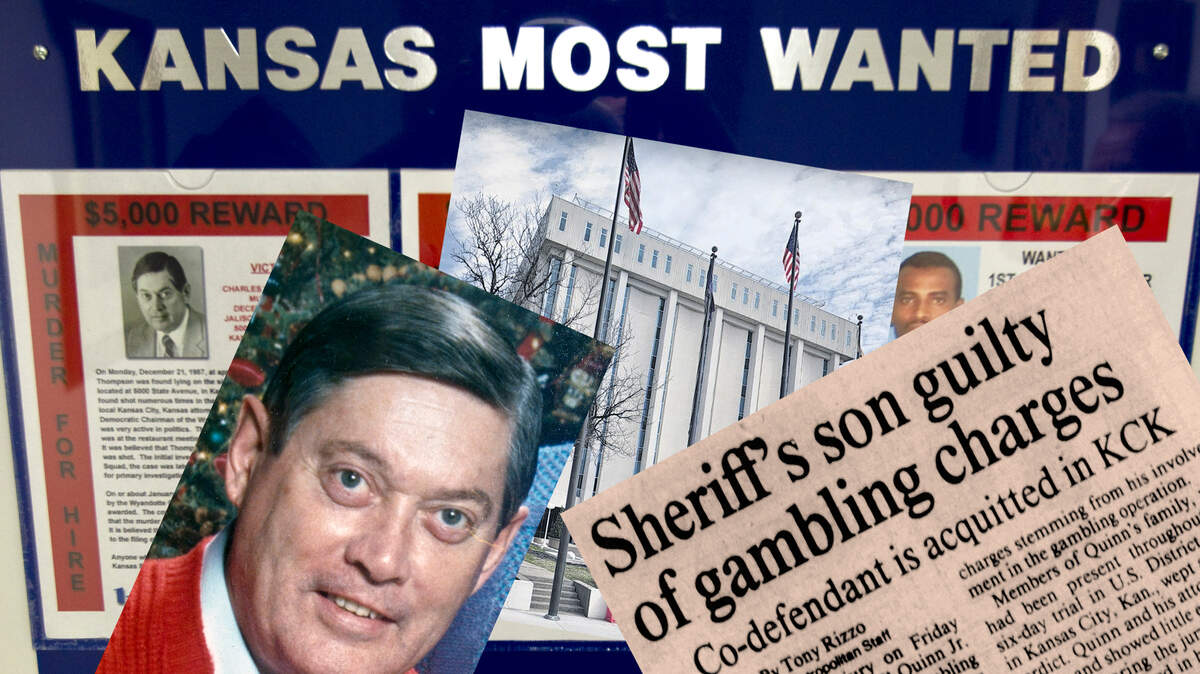
When I moved to Wyandotte County in 1985, corruption — real corruption — was rampant. A sheriff’s son was convicted of running an illegal casino. Topless bars served as fronts for open prostitution, with elected officials as their biggest customers. Democratic Party chair Chuck Thompson was politically assassinated in broad daylight. Unelected political bosses ran the show, treating elected officials as personal servants. Businesses closed. Residents fled. The tax base plummeted. Blight, poverty and crime increased.
Consolidation created a form of government designed to address this dysfunction. It streamlined decision-making, created checks and balances on power, and eliminated the control that party politics had over elected officials by making nearly all elected offices nonpartisan. And, contrary to Garner’s claim, it gave the mayor considerable power: If the 10-member county commission is deadlocked, the mayor can break the tie, so with the support of only five commissioners he can pass any legislation. The mayor sets the agenda with only a minor self imposed compromise after he caused controversy by denying a hearing on many committees’ work. Further, the mayor has the power to hire and fire the county administrator. If Garner wants to change priorities, he should talk to the city administrator he hired, and can fire.
True, neither the mayor nor any elected official can order employees around, whether to fill potholes or build a sidewalk. They used to have this power. But that old system perpetuated favoritism and patronage. Political supporters got their potholes filled. The disenfranchised did not.
Kansas Speedway, commerce developed
Consolidation created a single elected official to oversee both the county and city. With Interstate 435 opening and seven exits crossing Wyandotte County, it held great promise. But for 11 years, nothing happened across this major metropolitan area. Our first UG Mayor Carol Marinovich used her new singular power for the community’s benefit when she almost immediately attracted the Kansas Speedway and Village West to the intersection of Interstates 435 and 70. That development features more than 100 businesses, including many restaurants. It employs thousands of people and attracts millions of visitors annually. We secured that development for the same reason we later won the first-in-the-nation Google Fiber competition: We had unified leadership.
As for those checks and balances: The new charter provides for the appointment by Kansas judges of both an independent legislative auditor and an ethics commission with the power to subpoena witnesses under oath and investigate any ethics complaints. That legislative auditor is there to provide the very oversight critics say the government needs. You want an audit? Then audit away.
Consolidation also preserved and strengthened the independence of Bonner Springs and Edwardsville. Both cities have their own electoral district, guaranteeing representation at both the city and county levels. Yes, a resident of Edwardsville or Bonner Springs now has a vote in KCK government. And Edwardsville and Bonner Springs continue to create their own policies with their own city taxes, but now pay county taxes that are the sixth lowest of the state’s 105 counties.
It is true that, despite paying low county taxes, our tax bills remain high. That has nothing to do with consolidation but with the fact we have less property and fewer goods to tax compared to, say, Johnson County. Wyandotte County has $10,000 in assessed property value per person that can be taxed. Johnson County has $22,000 per person.
Not only that, but the KCK budget represents only 23% of our overall taxes. The largest contributor to our tax burden is the school districts. All that said, since consolidation, businesses now pay half of all taxes in Wyandotte County.
Mayor Garner does not mention any of this when he talks about consolidation. Instead, he uses consolidation as a scapegoat for his failure to wield the power that he does have. That power is great. I wish he would use it to build this community up rather than to tear it down.
Mike Jacobi was a leader in the consolidation of the Wyandotte County and Kansas City, Kansas, governments. He retired at Fort Leavenworth in 1987 with two Presidential Unit Citations, a Distinguished Flying Cross, a Bronze Star, and 39 Air Medals for flying helicopters in Vietnam.
This story was originally published August 20, 2024 at 5:06 AM.