
The further we get from the Civil War, the clearer the need to honor Harriet Tubman | Opinion
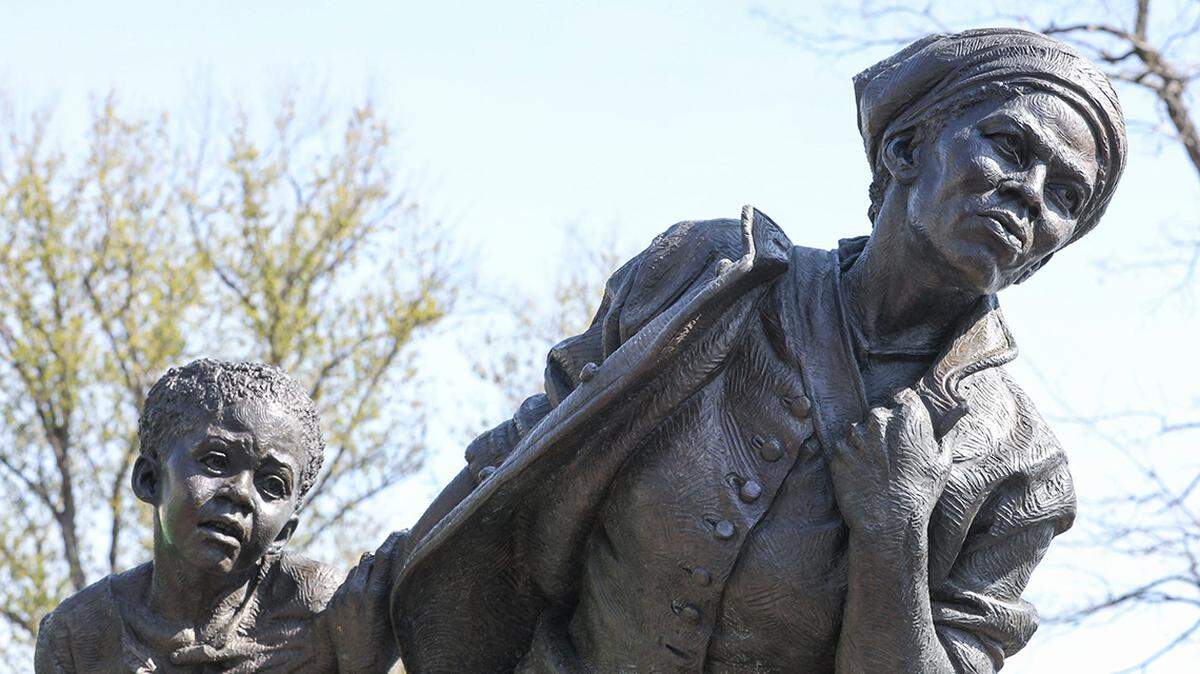
Harriet Tubman escaped from slavery when she was about 27 years old. No one would have blamed her for fading into the background. Instead, she devoted herself to freeing slaves.
Even after the passage of the Fugitive Slave Act in 1850, Tubman “went south, straight into the red zone,” to free slaves.
That’s the way author Tiya Miles describes the Underground Railroad hero’s courage in her new book, “Night Flyer, Harriet Tubman and the Faith Dreams of a Free People.”
Miles writes: “Against all odds and in the face of recapture, resale, torture, and death, she rescued approximately seventy individuals, multiplied by the number of children they would birth and raise in freedom.”
That’s a good argument for putting Harriet Tubman’s image on the $20 bill.
Reading “Night Flyer” got me to thinking about the so-called Civil War “heroes” celebrated in the Landmark Books series from publisher Random House that I read during the centennial commemoration of the war. Sixty years later, those young reader books are woefully out of date.
The cover of “Stonewall Jackson” features a dashing Jackson riding into battle. And there’s more of the same in the book. The author concludes that Jackson “pressed on into the most precious legends of a South which never lost the love of its heroes. He marched, too, into the heritage of a reunited nation which recalls greatness now regardless of whether it then wore gray or blue.”
“Robert E. Lee and the Road of Honor” offers a similar point of view. Here’s how its author assesses Lee’s legacy: “And most of all, Robert E. Lee represents for all Americans the virtues we so greatly cherish and so greatly need. They are old ones but in our times they seem new. A sense of honor and duty … Love of family … Pride in homeland … Devotion to God.”
That’s bad history. In “Myths & Misunderstandings: Lee as a Slaveholder,” a 2017 article posted on the American Civil War Museum website, Sean Kane tells a very different story. He makes clear that Lee had his slaves whipped and, in at least one instance, watched the whipping.
It’s clear that it’s Tubman who represents “the virtues we so greatly cherish and so greatly need.”
Tubman exhibited considerable bravery during the Civil War. In July 1863, she provided intelligence and participated in what became known as the Combahee River Raid in South Carolina.
Union troops surprised and defeated Confederate forces during that offensive. More than 700 slaves were freed. Miles reports that one newspaper described Tubman as a “Black she ‘Moses.’”
Tubman would have rejected that, saying that she was simply doing what God wanted her to do.
Years later, Tubman told a visiting friend she had “prayed all night” because “the meal chest was empty.” She prayed, “Lord send me thy blessing.”
The next morning, Tubman said she “met that blessing a-comin’ in” when a “poor blind woman bad off with consumption” and her six children came to her yard seeking help. Tubman collected food and clothing for the family from neighbors.
Maybe you’re thinking that the authors of the two Landmark Books must have been far-right hate-mongers.
Jonathan Daniels, the author of “Stonewall Jackson,” served as press secretary to President Franklin Delano Roosevelt. And the author of the Robert E. Lee book, Hodding Carter, was a Pulitzer Prize-winning journalist and friend and supporter of John F. Kennedy and Robert F. Kennedy.
The truth is that the passage of time gives us perspective and the opportunity to be a better nation.
The last 60 years have taught us that Jackson, Lee, the Confederates and their miserable cause should be relegated to the dustbin of history.
And we should celebrate Harriet Tubman for the great American hero she was. Placing her face on the $20 bill would be a great way to start.
Fred Logan is a lawyer in Prairie Village.
This story was originally published August 16, 2024 at 5:01 AM.