
Gov. Parson’s cannabis executive order is a misguided war on Missouri’s hemp industry | Opinion
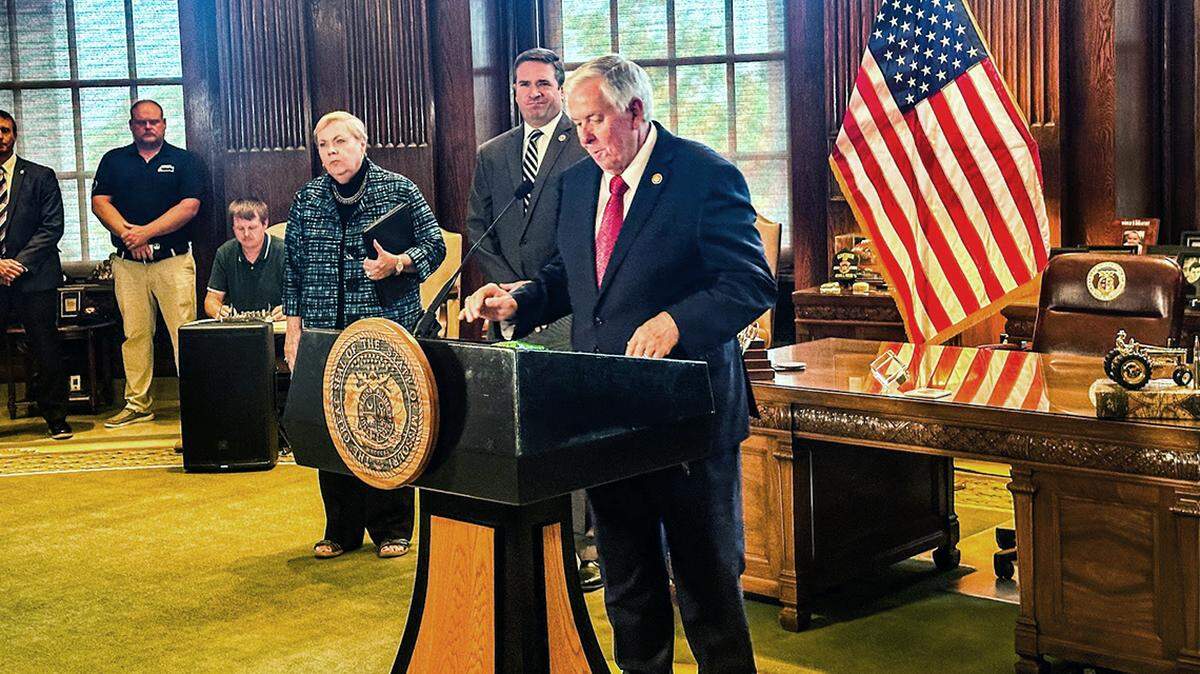
Missouri Gov. Mike Parson’s recent executive order banning the sale of intoxicating hemp products is a severe blow to the state’s hemp industry, which has been a beacon of legal economic growth and innovation since the 2018 farm bill. This executive overreach not only jeopardizes thousands of jobs, but also raises serious ethical and constitutional questions, especially considering the timing and the apparent conflicts of interest.
Parson’s executive order targets unregulated psychoactive cannabis products that include Delta-8 tetrahydrocannabinol (THC), Delta-10 THC, hexahydrocannabinol (HHC), tetrahydrocannabinol (THC-O), tetrahydrocannabiphoral (THCP), tetrahydrocannabivarin (THCV) and other similar compounds, under the pretext of protecting children. However, this reasoning falls flat when scrutinized.
According to the Missouri Department of Health and Senior Services, unregulated hemp products account for 40% of cannabis-related calls to the poison control center. When asked about the other 60% coming from the highly regulated legal cannabis industry, officials had no satisfactory response. This discrepancy suggests that the unregulated hemp market might be more effective at keeping cannabis out of children’s hands than the regulated marijuana market.
Moreover, the executive order does nothing to prevent online sales or sales in venues outside the control of the Missouri Division of Alcohol and Tobacco Control, which means that only Missouri-owned retailers with liquor licenses and local manufacturers are impacted. This selective enforcement appears designed to protect the interests of the multistate operators that currently dominate the state’s regulated marijuana market.
The timing of the executive order — right before an election, and the substantial donations from the marijuana industry to Parson and Attorney General Andrew Bailey — raise serious ethical concerns. One of the larger donations from the marijuana sector was $25,000 from MO Majority PAC, a political action committee tied to lobbyist and longtime Parson adviser Steve Tilley. This connection suggests that the executive order may be more about financial interests than child safety.
On July 30, The Missouri Independent reported: “Last month, Uniting Missouri accepted a $50,000 donation from the Missouri Cannabis Trade Association and $15,000 from Torch Electronics, a Wildwood-based company accused of operating illegal gambling machines across the state.” Torch also donated $15,000 to Uniting Missouri, a pro-Parson PAC.
State Rep. Tony Lovasco of District 64 aptly criticized the executive order, stating: “It is absolutely unacceptable. The legislature debated bills to do similar things and rightfully rejected them. For the governor to then step in and unilaterally prohibit previously legal commerce is a massive overreach of his Executive Authority. Moreover, it’s a terrible policy. Missouri should not be putting entire industries out of business simply because it’s too lazy to properly regulate product safety.”
Conflict of interest in Jefferson City?
During the 2024 session of the Missouri General Assembly, the hemp industry sought to introduce regulations and age verification for hemp-derived cannabinoids. However, these efforts were thwarted by the marijuana industry’s insistence that only licensed marijuana businesses be allowed to manufacture or sell these products. State Rep. Barry Hovis introduced a compromise amendment that was ultimately opposed by marijuana industry lobbyists, ending the prospect of fair regulation.
A major component of legislative interest in the issue comes from law enforcement, specifically the Law Enforcement Legislative Coalition and its lobbyist Dena Ladd. Ladd also serves as a member of the board of directors for the cannabis trade association MoCannTrade and is an investor in the St. Louis Cannabis Company. Her dual roles and investment interests highlight a conflict of interest, as she is hardly a neutral player in this effort.
Jefferson City’s marijuana licensing has been extremely controversial. In 2020, 85% of marijuana license applications were denied in a process criticized for its opacity and bias. More than 850 lawsuits were filed against the state for these denials, with accusations of a rigged system benefiting a select few. John Payne, campaign manager for Legal Missouri 2022, has been accused of manipulating the lottery for marijuana microbusiness licenses to favor those who signed predatory consulting contracts with him. Rod Chapel, president of the Missouri NAACP, expressed disappointment that the licensing process is being monopolized by Payne. Adolphus Pruitt, President of the St. Louis NAACP, also criticized the process, calling it “indentured servitude.”
Parson’s executive order does not prevent online sales or sales in venues other than those controlled by Alcohol and Tobacco Control. The only businesses impacted are Missouri-owned retailers with liquor licenses and Missouri product manufacturers. But since the highly regulated and federally illegal marijuana industry, controlled by multistate operators, is responsible for most cannabis poisoning calls in Missouri, this raises questions about the efficacy and fairness of the new regulations. The federally legal hemp industry has suffered a severe blow, with constitutional rights potentially being ignored.
No mention of Delta-9 THC in order
Critics have noted that the executive order does not mention Delta-9 THC, speculating that this is because non-hemp-derived Delta-9 is a controlled substance. The state couldn’t make arguments against it without admitting deficiencies in their marijuana program. This omission suggests manufacturers will switch to hemp-derived Delta-9 THC instead of other isomers approved in the 2018 farm bill. This could mean the “bad actors” Bailey claims to target would continue their operations unimpeded, while the state punishes its own residents for running federally legal businesses that threaten new marijuana tax revenues.
Although hemp industry interests offered language addressing regulatory concerns, the marijuana industry opposed these efforts, seeking instead to ban hemp-derived products outside of marijuana dispensaries. Additionally, bills seeking to ban hemp products were also rejected. Despite these efforts, the state proceeded with an executive order, bypassing the legislative process and raising further concerns about the democratic process and the rights of Missouri’s hemp industry stakeholders.
Despite what most people likely thought they voted for, cannabis remains on Missouri’s controlled substance schedule — meaning that while it enjoys non-enforcement, marijuana is still illegal in many regards in the state. In contrast, hemp remains federally legal in all regards, even as the state government exerts overreach.
Parson’s executive order banning unregulated psychoactive cannabis products has significant ethical and legal implications, particularly given his administration’s financial ties to the marijuana industry and the timing of the order. Like attacks on the Second Amendment and firearms manufacturers, Parson seems to have a double standard for hemp, especially when Missouri ranks near the top of all states in the nation for unintentional pediatric deaths due to firearms, with at least 129 children killed from 2015 to 2023. In contrast, no deaths have been reported from hemp. Is it really for the kids, or has Parson adopted Orwellian newspeak?
As cannabis lawyer Rod Kight recently told me: “This executive order doesn’t actually solve any of the problems it claims to address; it only hurts the legal hemp industry.” Missouri doesn’t need AG Bailey and Gov. Parson’s show-me-the-money style of leadership. We need leadership that looks out for both the residents and locally-owned businesses in our own state.
John Grady is product developer and farmer of SlapHappy Hemp Company in Hermann, Missouri.