Harry Truman’s world-changing decision: the atomic bomb and the end of World War II | Opinion
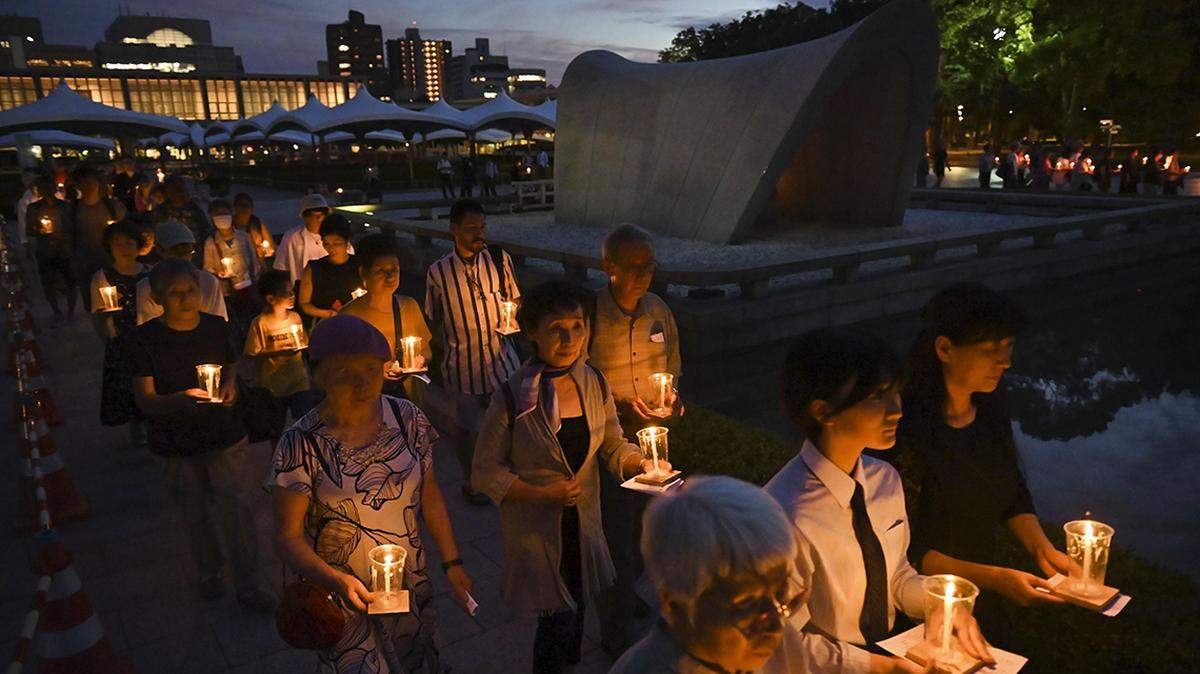
On this day in 1945, the atomic bomb was dropped on the Japanese city of Hiroshima. Tens of thousands were killed instantly and the toll, together with the atomic bombing of Nagasaki several days later, climbed to as many as 210,000 by the end of 1945 from residual blast and radiation deaths.
On Aug. 15, Japan’s Emperor Hirohito informed his people that “the enemy has begun to employ a new and most cruel bomb” which threatened the “ultimate collapse and obliteration of the Japanese nation. … The time has come,” said Hirohito, “when we must bear the unbearable” and accept defeat.
Within weeks, Imperial Japanese formally surrendered to the Allied Powers on the deck of the battleship USS Missouri anchored in Tokyo Bay.
Amid all the controversy surrounding this first use of nuclear weapons, one fact remains largely unknown to Americans today. It is that on that August morning nearly eight decades ago, it was fully believed by all — Americans and Japanese alike — that the war was at its midpoint, not its end.
President Harry S. Truman and his senior military and civilian advisors believed that the planned series of land invasions of Japan this bombing prevented would result in bloody fighting that could well extend into 1947. Without the atomic bombs, the end of World War II, as they saw it, might still be years away.
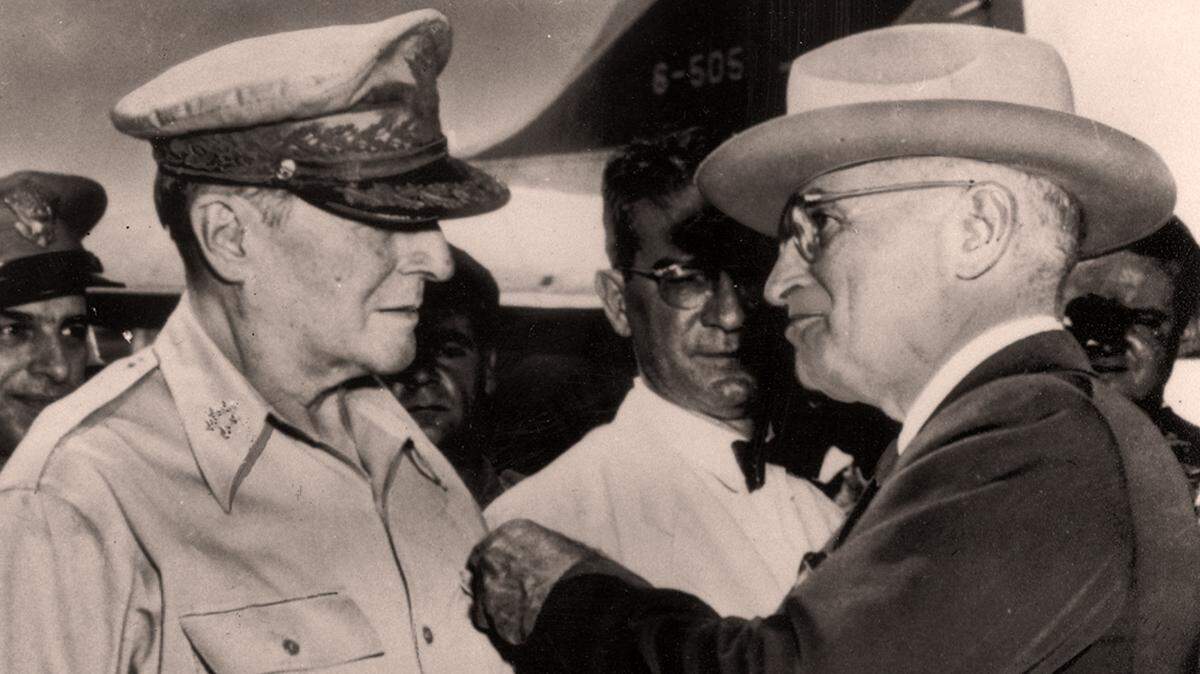
When the war came to its sudden and unexpected end, in 1945, the U.S. First Army and Eighth Air Force were already in the midst of their long journey from Europe to the Pacific to reinforce Gen. Douglas MacArthur’s invasion forces. The First Army had already fought its way across France and into the heart of Nazi Germany, while the Eighth Air Force had for years pummeled the Reich from England.
Estimate: half-million American deaths
The invasion of the imperial homeland, code-named Downfall, contained three major components:
First, a mountainous area half as large as Wales on the southernmost island of Kyushu would be seized by the end of 1945 for the construction of air bases and ship anchorages. Three-quarters of a million American soldiers and Marines would be involved in that operation with nearly the same number from all Armed Services in direct support. Next, a similar invasion operation in the spring of 1946 involving more than a million and a quarter assault troops would be made within striking distance of Tokyo itself, on the island of Honshu. Third, Tokyo would be surrounded and thus cut off from Japanese reinforcements by summer.
It was assumed that with the “industrial heart” of Japan in American hands, that the Japanese would finally capitulate at the end of 1946, if much of the remaining country could be induced to surrender. In case they didn’t, numerous subsidiary operations running into 1947 were planned and the total force commitment for the subjugation of the Home Islands was to top 5,000,000 men. Joint Chiefs of Staff planners had cautiously estimated the cost of this endeavor to be “half a million American lives and many times that number in wounded,” because of the willingness of Japanese soldiers to stubbornly fight to the death.
The young American soldiers, sailors and Marines looking toward the forbidding, months-long combat on Japanese soil understood well the grim calculations of war and wondered aloud who among them would survive to sail home through “the Golden Gate in ’48.”
In the midst of the bloody fighting on Okinawa, Truman received a direct warning that the planned two-phase invasion extending at minimum through the following year, 1946, could cost as many as “500,000 to 1,000,000 American lives.” Then, in his June 18 meeting with the Joint Chiefs of Staff plus secretaries of the War Department and Navy, he was told that up to a full third of the assault force could ultimately become casualties. Truman twice expressed his hope that “there was a possibility of preventing an Okinawa from one end of Japan to the other.”
Japanese, American civilian, military casualties climbing
A half-century after the war, some historians would focus on much smaller casualty projections made only for specific parts of the opening assault to “prove” that the number of dead and wounded would not have been nearly so dreadful. But the fact of the matter was that casualty numbers of both the Japanese and Americans were already climbing to record levels as the fighting grew closer to Japan at Iwo Jima and Okinawa, and as the U.S. Navy fought off kamikaze suicide aircraft at sea.
Thus far, nearly 300,000 Japanese civilians had lost their lives — most burned to death or asphyxiated by fires generated from American incendiary bombs — and 8 million had been rendered homeless even before the atomic bombs were dropped. A July 1945 War Department document grimly predicted: “We shall probably have to kill at least 5 to 10 million Japanese [and] this might cost us between 1.7 and 4 million casualties including 400,000 to 800,000 killed.”
Graphically illustrating the grim prognosis even today is the fact that, when the war came to its abrupt end, nearly 500,000 Purple Heart medals instantly became surplus stock and roughly 60,000 of these decorations struck for their great grandfathers’ generation are mixed in among more recent mintings of the medal and are still being pinned on the chests of young soldiers.
The Japanese government, meanwhile, had come to an even more frightening conclusion than the American planners. Imperial General Headquarters in Tokyo had made its own clear-eyed assessments. Based largely on the recent fighting on Okinawa, where up to 130,000 combatants and perhaps as many as a quarter of the island’s 400,000 men, women, and children were dead by July, these men contemplated the “sacrifice” of 20 million Japanese in the Home Islands to achieve some imaginary “victory” over the Americans. This shocking figure, twice the highest figure coming out of the U.S. War Department, became the figure discussed in Imperial circles.
Some civilian elements in Japan were determined to try to find a way to end the war before the U.S. invasion was launched. Unfortunately, the military was in firm control of the government, and Japanese moderates had to tread gingerly for fear of arrest or assassination. It was the hope of Truman and his senior advisors that the tremendous shock of the few nuclear weapons coming available would essentially stampede the Japanese into a quick capitulation.
In the end, this is precisely what happened — but not before an attempted military coup nearly upended Emperor Hirohito’s surrender announcement. The bloody carnage on Japanese soil of an invasion extending into late 1946 or even 1947 never happened. But without Truman’s decision to drop the atomic bombs, World War II would not have ended on the deck of the USS Missouri on Sept. 2, 1945, less than a month after Hiroshima.
D.M. Giangreco is a military historian and author. His most recent book is “Truman and the Bomb: The Untold Story.” He lives in Lee’s Summit.