
Parson-Kelly ‘Disagree Better’ ad is a great idea. But civility has to go both ways | Opinion
I believe in civility. Or I desperately want to, anyway.
There’s a precious shortage of good manners and good faith in our politics these days, isn’t there? The once and possibly future president of the United States is running around calling his opponents “vermin,” while Israel’s war against Hamas has made open expressions of antisemitism and Islamophobia acceptable again.
We are living in ugly times. I hate it. You probably do too.
So I ought to be thrilled by the new “Disagree Better” public service announcement that Kansas Gov. Laura Kelly and Missouri Gov. Mike Parson released earlier this month, part of a nationwide initiative from the bipartisan National Governors Association.
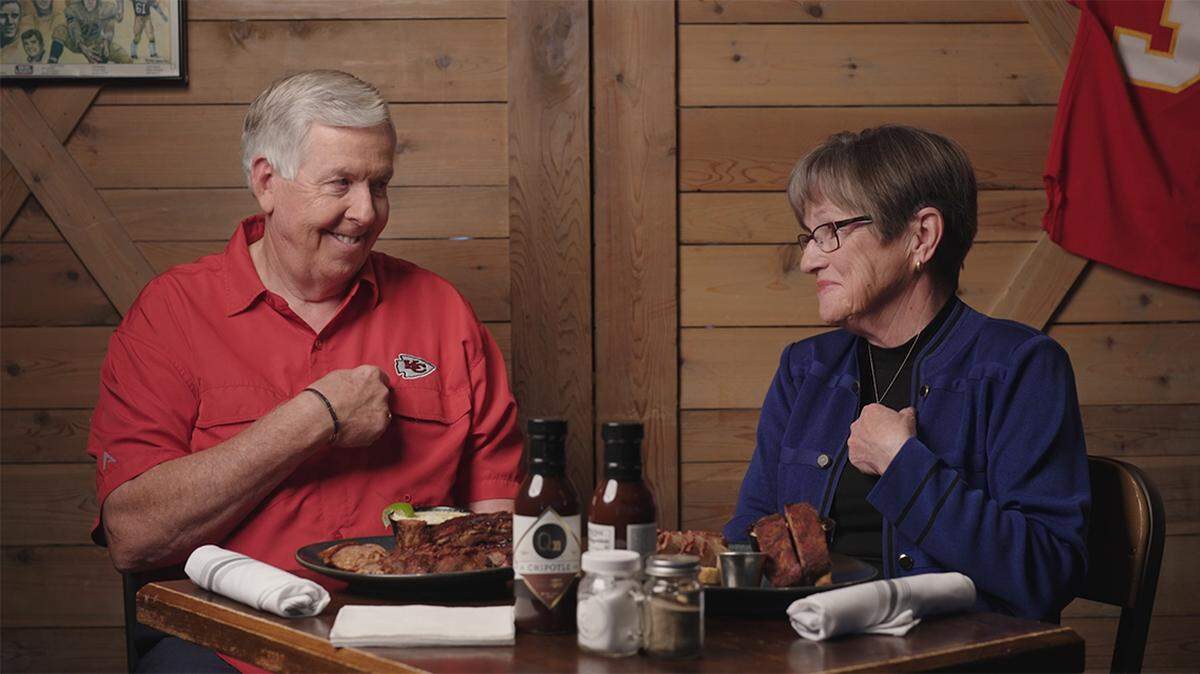
You might have seen the video. The two sit at a table adorned with barbecue sauce bottles and admit that — as a Democrat and Republican, respectively — there’s a lot they disagree about.
“But regardless,” Parson says, “we’re committed to disagreeing better.”
“We don’t always have to agree,” Kelly adds, “but we can learn to disagree better.”
Nice sentiments. But the ad still rings a bit hollow for three reasons.
First, it’s relatively easy for Kelly and Parson to be civil to each other. They might be from different parties, but they also live and govern on different sides of the state line. The two governors don’t compete with each other for political power or have to put their differing philosophies on abortion, taxes and public education to test against each other.
It’s easy to be civil when there’s not much at stake, when there are no winners or losers. The ad might have been more impressive if Kelly was sharing barbecue and good feelings with Kansas Attorney General Kris Kobach, the Republican she defeated in 2018 to become governor.
That would be something.
Another reason for skepticism: It’s not clear the commitment to civility goes both ways. The National Governors Association “Disagree Better” initiative offers a host of resources on civil debate — including a link to the nonpartisan Common Ground Scorecard, which ranks public officials on their willingness to engage in “listening and productive conversation” across party lines.
Kelly scored 80 points on the scorecard’s matrix. Parson received zero.
Those scores might reflect Parson and Kelly’s differing political incentives. Parson governs a Republican state with a Republican legislature. He doesn’t have to reach across party lines to get stuff done. Kelly, on the other hand, is a Democrat in a Republican state with a Republican legislature. Her very political survival demands appealing to voters on the other side.
She does walk the walk, however: Earlier this year she launched a PAC to elect centrist Kansans, even if they’re Republican. Parson, last I checked, has not committed himself to electing friendly Democrats.
A third reason to be cautious: All too often, calls for civility can mask efforts to shut down unruly debates about real problems. Should we be disagreeing “better” if the disagreement is about the choice between democracy and authoritarianism? What would that even look like?
Parson and Kelly, for all their friendly cheer, don’t say.
Am I being too cynical here? Probably. For all the shortcomings of the Kelly-Parson PSA, it really would be good if Kansans, Missourians and everybody else across the country could figure out how to disagree better.
That takes more than just pleasantly nodding at each other over a restaurant table, though. It requires a shared commitment to facts over conspiracy theories, a mutual love of democracy, and a belief on all sides that the world won’t come to an end if the other side wins an election. It means living with an election loss and working harder to persuade voters the next time around.
We’re a long way from meeting those conditions at the moment.
Still, you have to start somewhere. The country some days feels like it is tearing itself apart. Maybe a little performative “fake it until you make it” enthusiasm is how we begin to back down. “Disagree Better” doesn’t feel like much — but it might be exactly what America needs.