
After Kansas City schools were desegregated, white flight left them behind | Opinion
In the 1980s, I attended Kansas City Public Schools during the peak of the magnet school era. I walked to school and stayed for after-school activities. Students in the classrooms were diverse, and my art teacher, Mr. Heath, taught traditional photography skills and darkroom film development techniques to us at Mary Harmon Weeks Elementary School. I carried those skills into adulthood, leading to a lifelong career that opened many doors for me professionally and personally.
Now, imagine all those educational opportunities coming to an end because they were never truly intended for you. Imagine learning it was a failed attempt to reverse white flight. I always wondered why some of my white student peers were picked up by taxicabs.
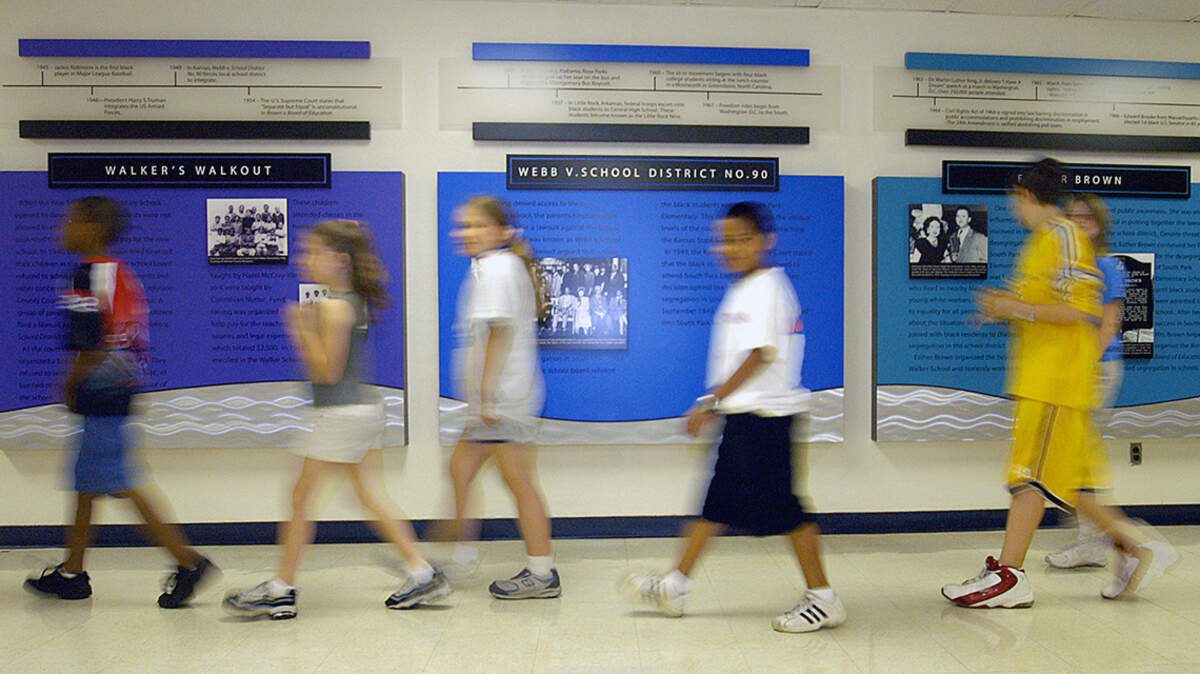
In 1954, the U.S. Supreme Court declared “separate but equal” in public education unconstitutional in the Brown v. Board of Education of Topeka case, triggering white families fleeing urban schools and weakening local tax bases around the nation.
The Missouri v. Jenkins desegregation lawsuit began in 1977, when a group of Kansas City Public Schools students sued the state, federal agencies and suburban districts to address the impact of white flight. Their argument was that disparities in facilities, resources and educational opportunities violated the 14th Amendment’s equal protection clause, echoing the constitutional violation seen three decades earlier in Brown v. Board of Education. The Missouri Supreme Court ruled in favor of the plaintiffs, affirming equitable, high-quality education for all. The state was ordered to correct racial discrimination through funding increases and remedial programs.
As a remedy, KCPS sought to consolidate the district with 11 suburban school districts into a single, 118,000-student district to achieve equal funding. This was a promising, logical solution to the funding gap, but U.S. District Judge Russell C. Clark excluded suburban school districts from the desegregation case in 1984. Clark’s rulings led to forced integration and court-ordered remedies, including the creation of magnet schools in Kansas City school district. While historians often view this $2 billion era as a failed experiment, the primary issue was funding being linked to white student enrollment, rather than the exclusive pursuit of equitable, high-quality education for all.
In an ironic twist, courts mandated that the state and Kansas City Public Schools bear equity’s financial burden via property taxes, which were insufficient to cover the costs. The district attempted to address this by raising rates, but the state Supreme Court ruled against this move, citing an overreach of judicial powers. White flight and suburban expansion persisted, and redlining reinforced the exclusion. Funding for desegregation payments and magnet schools ceased in 1999, finally concluding in 2003 when U.S. District Judge Dean Whipple terminated court supervision of public schools. In 2010, the district school board voted to close 28 of its 61 schools.
It’s 2023, and the 501(c)(3) nonprofit Century Foundation estimates a nationwide $150 billion annual funding gap in education, with Missouri facing a $1.64 billion deficit — a number remarkably close to the $2 billion cost to create the magnet school era experiment. The think tank calculates Kansas City Public Schools’ funding gap at $91 million. The rampant issuance of 15- to 25-year tax abatements to developers has exacerbated the need for public school funding, further deepening the chasm.
Missouri v. Jenkins was necessary in its day, but missed the mark and needlessly protracted the pain. The plaintiffs were correct in identifying the funding gap 46 years ago. Judge Clark erred in excluding suburban school districts from the desegregation case in 1984. Magnet schools and proper funding should have been mandated not solely to attract white students but because they were essential. The proposed solution to consolidate the districts would have addressed the funding problem.
Surrounding districts contribute tax dollars to highways, roads, streetcars, fountains, shopping malls, luxury hotels and sports arenas. Our children’s education deserves the same attention.