
If Overland Park farmers market vendor’s hate was a shock, you aren’t paying attention | Opinion
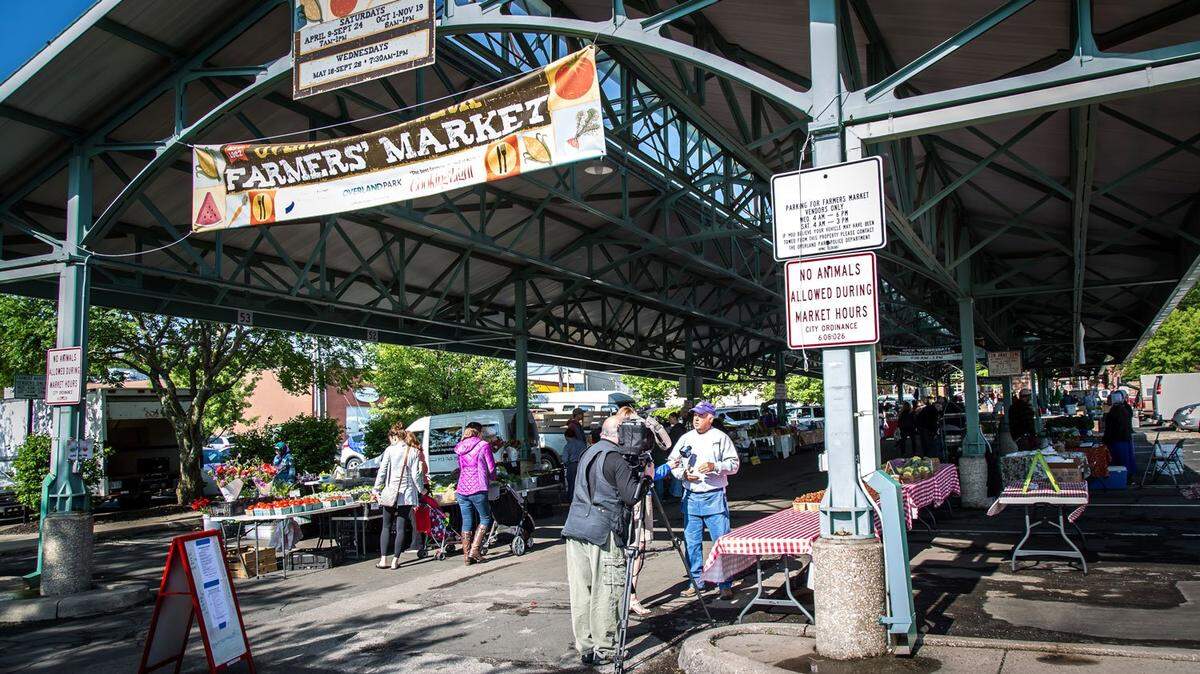
In my job, I don’t have a typical Thursday. Our organization, the Jewish Community Relations Bureau|AJC, leads our community’s efforts to combat antisemitism through education, community relations and advocacy. On any given day, we might meet with faith leaders or elected officials, or host educational trainings. Thursday before last, I was in Chicago, preparing to speak on a panel on rural antisemitism organized by the U.S. Department of Agriculture. But this past Thursday, we were dealing with a particularly nasty case study in our own backyard, involving antisemitic online posts made by a vendor now ejected from the Overland Park farmers market. By now you’ve read about it — and I’ll avoid giving this person any more airtime.
Fortunately, we already had two relevant meetings scheduled that day. One with the FBI, and another with the U.S. attorneys’ offices, who were hosting a “United Against Hate” program for our Jewish community leaders on understanding and reporting hate crimes.
We’d planned this conversation for months, because despite being 2% of the American population, Jews account for 60% of all religiously based hate crimes in this country.
The antisemitic vitriol of this business owner, the swastika graffiti at a local school — these are the stories you hear. But the few times a year that antisemitism makes the news are just the tip of the iceberg. Every time you see a public instance of antisemitism, my team and I have been helping to address 20 more.
We live in an age when the internet has enabled the spread of information like never before, yet we are dealing with a misinformation crisis. We should be more connected than ever, and instead, we are living in silos. But food — the local farmers market — should be a unifier, something to bring us all together. Instead, it’s become a flash point for the ways in which hate persists and finds its way into all corners of society. And the supportive community that this person has found online — people inspired by his antisemitic extremism — illustrates a much wider problem.
We can no longer be surprised to see antisemitism in our own community. It is here, it is growing, and it is affecting the lives of your Jewish neighbors and friends. It affects the Jewish family who worried for their children after their photo was posted online by this business owner. It affects all of us. There’s a classic saying on the Jewish corners of the internet: The Jews are tired. It is exhausting not just to deal with the disturbing and dangerous rise in antisemitism, but also to have to work to convince people that it is real.
Everyone needs to recognize the severity of this issue. This moment requires more of us — and especially our friends and allies from different faiths and backgrounds. Jews did not invent the problem of antisemitism, and ultimately, we cannot be the ones to solve it. We must continue to build a coalition of allies who are sufficiently educated and empowered to join us in this fight.
Antisemitism, the world’s oldest hatred, has proved an adaptable and evolving phenomenon. By relying on dog whistles, conspiracy theories and stereotypes that might seem innocuous or even complimentary to the untrained eye, it is able to convince even the most well-meaning people that Jews are the opposite of whatever value system they hold. While the type of antisemitism broadcast this past week — the far-right, white Christian supremacist type — is easy to spot, the same phenomenon exists across the political spectrum, and within all communities. In fact, some of this person’s posts focus on Israel or Zionism (support for Jewish self-determination in some part of our ancestral homeland) in ways that would be welcomed by many on the far left. This is to say: If you think your political group or community is free of antisemitism, you are likely wrong.
As 2% of the American population, Jews are often not in the rooms where antisemitism is spread. We need informed allies who can identify it, who can speak up for us when we aren’t there to speak up for ourselves.
This is the work of our organization — to educate as many people as we can, through our trainings for faith groups, corporations, and schools; through our work with elected officials and law enforcement; and through building this multifaith, multiethnic coalition of leaders and individuals who are willing to stand alongside us.
I don’t have a typical Thursday — but Friday nights are sacred. On Friday, we let go of the week, lighting the Shabbat candles with our friends and family and moving into a holy time and space. Yet this Friday, I scrolled through the comments by those inspired by this person’s hate, and I worried. Because on Saturdays, we like to go to the farmers market. How sad that this time, we even had to think twice.