
Ranked choice voting can help Kansas City elect candidates who represent the majority | Opinion
A recent editorial in The Star showed the near impossibility of the nonprofit No Labels’ attempt to field a third-party presidential candidate capable of defeating both the Democratic and Republican nominees. But The Star’s conclusion left no space available to address two questions the editorial infers.
First, why are American voters unable to have a bona fide third-party candidate for president with a substantive chance of winning? And second, what must be changed to make this a possibility?
The reason we don’t have a competitive third party is not the candidates’ or the parties’ fault, but rather the antiquated process most of the U.S. continues to use in its presidential elections. (And, no, we’re not talking about the Electoral College. That’s another commentary.) Accordingly, the intention here is to expose the inherent defects of this process used to choose among candidates.
Instead of voters putting their efforts into a doomed third-party campaign, they should instead heed one of the corollaries to Murphy’s law: Before you do anything, you have to do something else first.
In this case, “something else” is getting rid of the irrevocably flawed winner-take-all ballot we use in our elections. The first problem with this system is its inability to guarantee a majority winner with 50% plus one or better of the vote. If there are three or more candidates, then the chances are that there will be a plurality winner, whereby the minority defeats the majority.
A key phrase in the Declaration of Independence is “the consent of the governed.” How do elected officials have the consent of the governed when they are allowed into office with less than a majority of the vote? Answer: They don’t. This is a root cause of the discontent voters feel today.
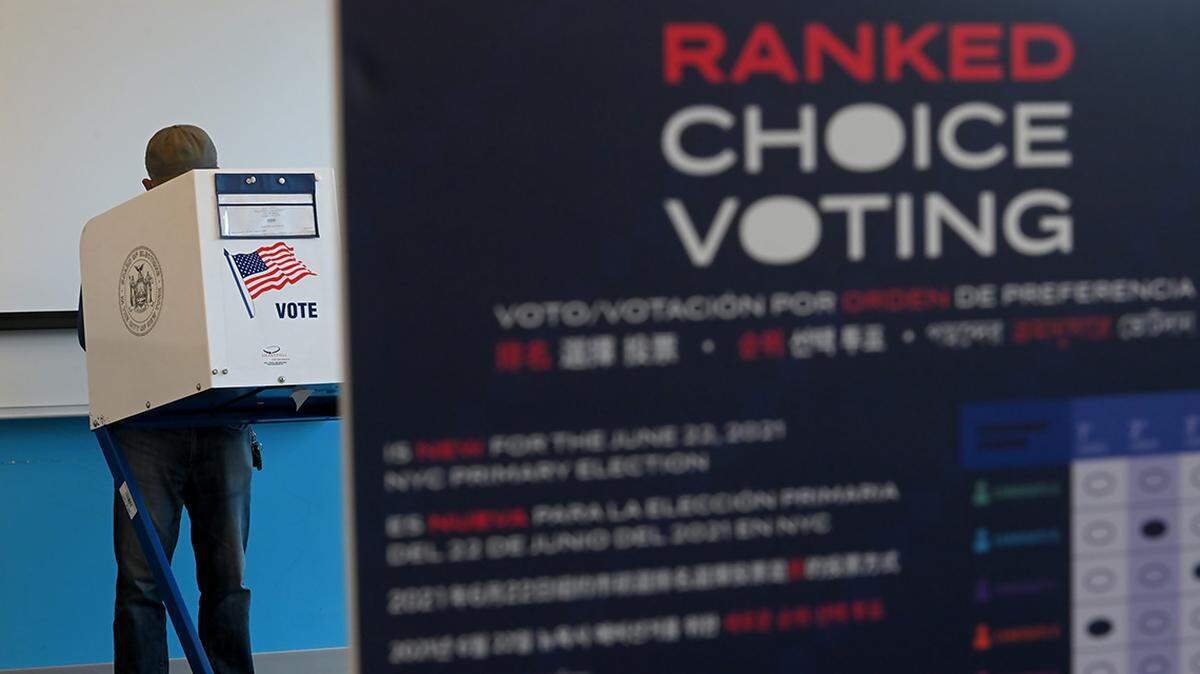
The second inescapable flaw with the winner-take-all ballot and multiple candidates is the spoiler scenario The Star’s editorial board describes. In our current elections, any vote for No Labels or another third-party candidate feels wasted — a vote “taken away” from a Democrat or Republican, and one that might actually help your least favorite candidate win. Ranked choice or instant runoff voting solves that problem: Just rank the candidates in your order of preference. If your first choice can’t win, your vote then counts for your next choice.
Let me prepare you for the misguided detractors’ arguments. One of the objectors’ favorite objections is, “Ranked choice voting fails to provide a majority winner.” This is invalid. If the runoff process of ranked choice must be used to determine a winner, then in every round of voting, the majority defeats the minority. In athletic tournaments, competitors must defeat the opponent in front of them in order to qualify for the next round. Ranked choice works the same way.
To avoid being victimized by our current voting system’s flaws and to be able to vote for the candidates you want without fear of a negative result, do the following: Support the efforts of groups working to enact ranked choice. Tell your current representatives at all levels you want it. Support candidates for office who will vote for adopting ranked choice. We can start right here in Kansas City. Call or email your newly elected City Council members (a significant number of whom already favor ranked choice voting). Tell them you want it put on the ballot, as proposed by Better Ballot KC. It’s now being used in 50-plus municipalities across the United States. Let’s join them.
Nothing can be done to fix the winner-take-all ballot’s flaws. The only solution is to replace it with ranked choice. Positive change is up to you. Let us no longer participate in the absurdity of conducting elections over and over again the same way and expecting different results. To learn more about how ranked choice voting works and the advantages it offers, visit BetterBallotKC.org or FairVote.org.