
The war on drugs fills Missouri prisons with poor, rural women. That isn’t justice | Opinion
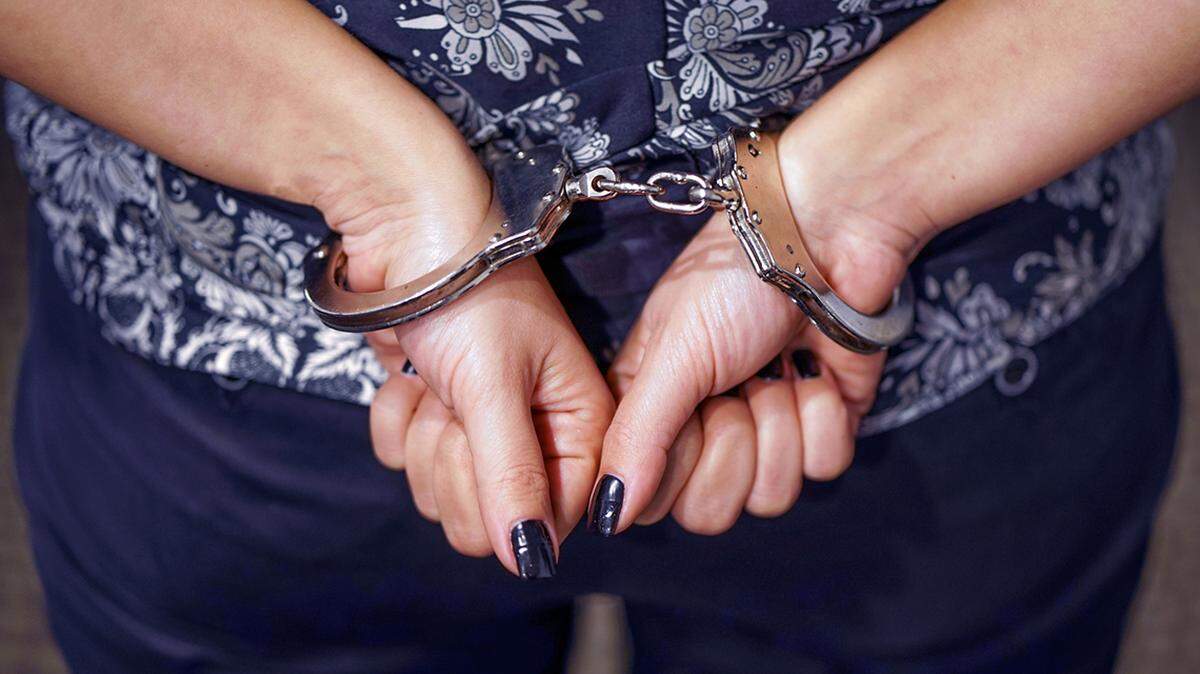
Amber, a single mom and resident of a rural community two hours outside Kansas City, didn’t plan on spending her 46th birthday in jail. She was followed through town and stopped by the local sheriff’s department for not using her turn signal. The officer reported he saw cannabis in her vehicle door as probable cause to search her vehicle without a warrant.
He found a plastic bag of methamphetamine dust — not any actual drugs — under the passenger seat. No cannabis was ever found. Amber was arrested and placed on a $10,000 cash-only bond. Coming up with that amount is no small feat for a restaurant server making Missouri’s minimum wage of $12 per hour. She had never had previous trouble with the law except for a few traffic tickets. This was her first arrest. After being charged with a Class D felony, Amber became another statistic in a prison system now turning to low income rural women to fuel its growth.
Like other rural counties, Amber’s used pretrial detention. Because the punitive process of being on bond apparently wasn’t enough, she was required to wear a “drug patch” on her arm. The patch is a piece of cotton cut into a square taped to the arm with a clear tape. Its purpose is to detect the presence of drugs excreted through sweat. She was forced to pay for this patch and charged $50 per week and $100 per month on top of that for court service. It is left up to the discretion of a probation official to change the patch every week or two weeks. It can be worn for up to 14 days. This person determines whether someone like Amber pays $200 or $400 a month for the patch, and Amber was charged the latter. That makes $500 a month for a person making $24,960 a year.
Amber considers herself a casual methamphetamine user, and didn’t experience withdrawals during her time in jail. A childhood trauma and abuse survivor, she was too embarrassed to seek treatment for mental health conditions. “There are only a couple places to go to, and everyone has a relative or someone they know working in those places,” she said. She contributed the stress of being a single mom to her use of the drug. “The few times I tried it was an escape. Then I learned it helped me work longer hard shifts at work.”
Amber’s story is not a rarity. The Missouri Department of Corrections website states, “In recent years, Missouri has had the fastest-growing population of women in prison in the United States.” There is a high percentage of new inmates coming from smaller counties, which haven’t seen the criminal justice reforms some urban areas have. In 2017, the 501(c)(3) nonprofit Vera Institute of Justice found: “During the past decade, the rising number of women in jail has been fueled by small counties, rather than urban counties — where the number of jailed women has declined. And the rising rate of white incarceration in America’s jails has also been driven by these small counties.”
Amber pleaded guilty to a reduced charge and is still penalized in the court of public opinion. She feels her small town doesn’t see her as a person who needs mental health and substance use treatment, but rather just as “another druggie.” This stigma, in turn, limits her already minimal employment opportunities.
Amber’s understanding of her arrest offers a terrifying assessment of so-called “criminal justice” in rural America: ”There are a lot of women who are single moms and struggle to do what they need to do to make it,” she said. “Rural white women are stereotyped and scrutinized as being basic white trash, low income or druggies, so they are automatically put in a box in law enforcement’s eyes.”
Amber is not alone. And it’s long past time we end the war on drugs, acknowledging that it is really just a war on people.