
Striking TV and film writers aren’t multimillionaires. We just want to make a living | Opinion
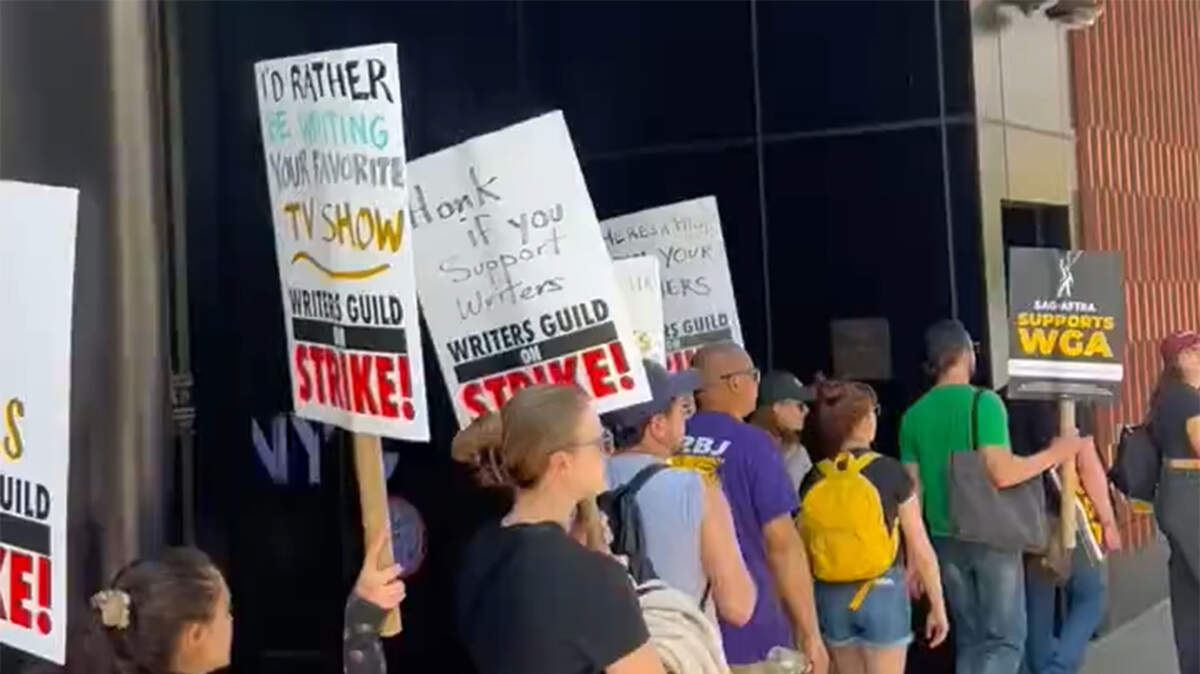
A little over a year ago, I was sitting in a coffee shop just west of Times Square when I got the call offering me my dream job: staff writer at “Last Week Tonight with John Oliver” on HBO. This past Wednesday, I was 20 blocks away from that coffee shop picketing HBO’s New York offices as one of the more than 11,000 film and television writers currently on strike.
It may be tempting to read the phrase “Hollywood writers go on strike for better working conditions” as “People who are best friends with celebrities want four beach houses instead of three.” But that’s missing the forest for the Ryan Murphy.
Streaming has changed everything in our industry, and the studios (and tech companies that have decided to become studios) have been exploiting these changes for huge financial gains while squeezing the people who actually make the product they profit from. The shift in how we make, distribute and consume film and TV threatens to turn the once solidly middle-class career of an average TV writer into another unsustainable gig job. Or, I suppose, turn it permanently into an unsustainable gig job. Because right now, that’s what the majority of writing jobs have become.
Back in the day, a TV writer on the staff of a show for a season would make at least a weekly minimum — negotiated by our union, the Writers Guild of America — for about 22 episodes. That one job would give writers the earnings necessary to qualify for WGA health insurance and the residuals (payments writers receive from reuse of their work) would often give enough financial cushion to get a writer through to the next job or the next season. The dream, once upon a time, was to work on a show that lasted enough seasons to go into syndication, which meant more reruns on more channels, and more big checks for everyone.
Basically, being a writer on any show used to be a solid career, and being a writer on a hit show used to be a very solid career — and also champagne on a boat sometimes, if that’s your thing.
Then came streaming. Some of the changes are obvious to the casual television viewer: Your favorite show has eight episodes in a season instead of 22. The new Adam Sandler movie is on your computer, not at the theater. And late-night TV shows have become morning YouTube shows.
But for writers, and many other workers involved in the actual making of TV and film, the consequences have been dire. Shortened seasons mean less time working and earning, and more time between jobs, while minuscule streaming residual rates mean that folks are making much less money in that much longer time gap. Also, since writers don’t get paid based on how many times a show is streamed (surprise!), a hit show no longer bodes financial stability.
The career of a TV writer already comes with an incredibly high barrier to entry, and under the current status quo, clearing that bar isn’t even guaranteed to pay a writer’s rent. And you only have to open Netflix accidentally by sitting on the remote one time to see that this problem is definitely not borne out of a lack of TV shows. Meanwhile, the studios continue to plead poverty while reassuring their shareholders that streaming is profitaable.
So now we’re on the picket lines. Because what’s at stake here isn’t writing as a wealth-building apparatus. It’s writing as a sustainable way of life.
In the hours before I got my first TV job, I walked almost 100 city blocks from my apartment to Ground Central Coffee on 53rd Street, full of nervous anticipation for a call I wasn’t sure would come. I allowed myself, for brief moments at a time, to imagine what it would be like to be a TV writer. To envision what my life would become on the other side of realizing that dream. Now, I’m walking tens of thousands of steps a day, alongside my other writers, fighting to keep that dream one worth having.
Because the truth is, we’re not striking because we want film and TV writing to be a more glamorous and opulent career. We’re striking because we want it to be a career at all.
This story was originally published May 12, 2023 at 10:48 AM.