
Kansas City’s Liberty Memorial honors those who sacrificed. Keep that commitment alive | Opinion
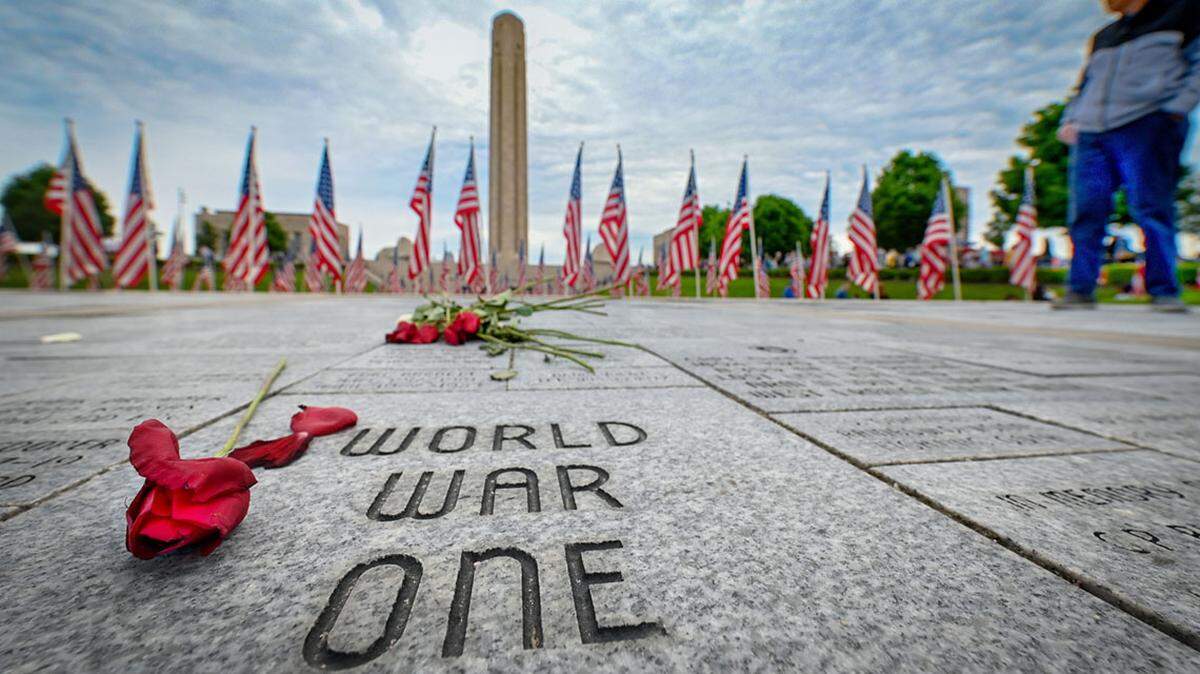
In 2018, we marked the 100th anniversary of the end of World War I. Kansas City has long played a significant role in preserving our nation’s memory of that conflict. Within one year of the war’s end, the city’s leaders formed the Liberty Memorial Association to create a permanent memorial to those who served. In support of its construction, the association and the people of Kansas City raised a staggering amount of money — the current equivalent of more than $35 million — in just 10 days.
This year, our nation marks another centennial anniversary — that of the American Battle Monuments Commission or ABMC, the federal agency Congress established to serve as the guardian of the eight burial grounds initially created for World War I.
The U.S. Army Graves Registration did its best following the war to bury the nearly 75,000 fallen in more than 2,000 temporary cemeteries, but those arrangements were never meant to be permanent. At the time, the U.S. government did not have the resources to repatriate the remains of so many casualties, so the War Department sent ballots to their next-of-kin asking if they would like to bring home their loved one’s remains or have them buried in newly created cemeteries overseas. Nearly 30,000 families elected to have their service member buried alongside their fallen comrades near the battlefields where they fought and died.
In 1923, Congress established the ABMC to maintain those sacred grounds. Unfortunately, they would not be the last cemeteries added to the commission’s charge. Today, the ABMC is the caretaker of 26 burial grounds on five continents, honoring those lost and missing from several conflicts.
Being French-born, I know the meaning these cemeteries hold for our European allies. Stories of the Americans who fought and died for the freedom of others are still passed down from generation to generation. Many citizens there join the ABMC as staff and volunteers to maintain the pristine and idyllic settings of the cemeteries. Some nearby families adopt and care for graves, knowing that most American families are not able to visit regularly.
I also understand the significance of these sacred sites as someone who immigrated to the United States and served in the U.S. Army. When service members sacrifices their lives in service to our country, there is no finite amount of time that can justly honor what they gave for our nation. We must fulfill our promise never to forget them and their legacies. While the lives of those buried at ABMC cemeteries remain at rest, their stories deserve to be kept alive in perpetuity.
The ABMC’s cemeteries, together with 32 memorials around the world, commemorate the lives of more than 200,000 individuals. According to the commission’s burial registry, 5,376 of those honored entered military service from Missouri and nearly 3,000 entered from Kansas during the world wars.
To mark this centennial anniversary, I encourage all Americans to take an action of remembrance for those whom the ABMC watches over around the world. An online registry can be searched for family connections and their cemeteries and memorials can also be explored virtually at abmc.gov. Their sites are open to visitors, year-round.
By taking an action that keeps alive the memories of those lost, we help uphold the words of General John J. Pershing, himself a son of Laclede, Missouri, and the Commander of the American Expeditionary Forces of World War I. As the ABMC’s first chairman, the general committed our nation to an everlasting promise: “Time will not dim the glory of their deeds.”