
Schools, other pro teams have dropped racist Native imagery. Why can’t the KC Chiefs? | Opinion
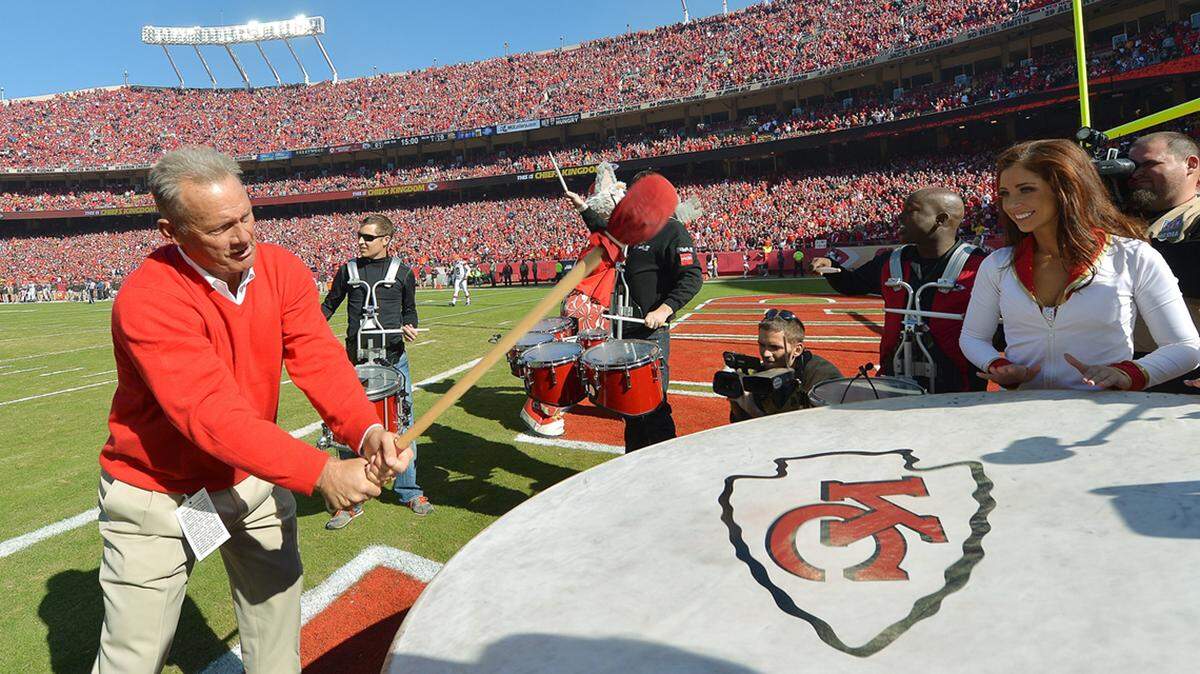
Long after Super Bowl fireworks have faded, Amanda Blackhorse’s voice still echoes in my ears: “We want to live in a world where our children can attend school and feel included and not met with reenactments of fake war dances on the football field.”
When I imagine students in my classroom, her words make my heart pound. Why do thousands of Kansas City adults proudly perform and eloquently defend the exact racist behaviors that many local schools have formally banned?
Though I first encountered it in The Star, several journalists have referenced Blackhorse’s speech from a press conference outside the State Farm Stadium in Glendale, Arizona in February. ABC News quoted Blackhorse — who is Diné, or Navajo — clarifying: “There’s no respectful way to mascot us or belittle us and use us for profit.”
Her words challenge Chiefs President Mark Donovan. He insisted to the Associated Press: “We also respect that we need to continue to educate and raise awareness of the Native American culture. … I’m really proud of the things we’ve done and the people we’ve worked with.”
Donovan misunderstands racism. Generalizing “the” Native American culture cheapens the rich cultural diversity of 574 federally recognized Indian nations. His mention of “people we’ve worked with” excludes KCIC, the Kansas City Indian Center, and the Not In Our Honor Coalition. Though Donovan didn’t acknowledge Kansas City-area Indigenous leaders, I agree with Blackhorse when she said, “I’m confident the Kansas City team and the NFL hear the resistance.”
But Donovan isn’t alone. Many public leaders seem unaware of KCIC. Some news stories about Blackhorse’s press conference wrongly implied there has been no protest about teams’ use of Native names and imagery at times other than this Super Bowl. Speaking alongside Blackhorse at the press conference was Rhonda LeValdo of Haskell Indian Nations University, Acoma Pueblo and Not In Our Honor. Blackhorse referenced LeValdo’s ongoing efforts when she said, “Groups like Not in Our Honor and the Kansas City Indian Center protest every single home game.”
LeValdo’s decades of resistance may go unnoticed by some, but local schools have been listening. Between our last Super Bowl and this one, at least six school administrations took anti-racist action. In 2021, four Shawnee Mission schools changed their longtime Native mascots, and last spring, Kansas City, Kansas, removed Arrowhead Middle School’s Apache mascot. More recently, the Kansas State Board of Education recommended all its public schools remove Native American mascots and branding.
Such decisions should be no-brainers if we consider what science and history have to teach us. When the NFL came here in 1963, the American Indian Religious Freedom Act was not yet law, so Indigenous people could not yet freely practice some of the “traditions” the team purports to honor. And in 2005, the American Psychological Association recommended the retirement of all Native symbols in educational organizations because racial misrepresentations harm the social identity development and self-esteem of Indigenous youth.
Our children are watching. If Kansas City wants to be “proud of the things we’ve done,” we need to love our neighbors sooner, not later. As Blackhorse said: “The anti-Native mascot movement has always been about the betterment of our Native people, not hatred towards … football fans.”
Neighbors, this conflict didn’t disappear after the parade. As LeValdo foreshadowed: “There’s always going to be Native people who are against it. It’s not going to stop.”
All eyes are on Kansas City during the NFL Draft this week. We can resolve this the easy or hard way, but history will remember our choice. Let’s go, Kansas City!
This story was originally published April 26, 2023 at 5:00 AM.