
Ewing Kauffman wanted Kansas City to thrive. Here’s how to make it happen for everyone | Opinion
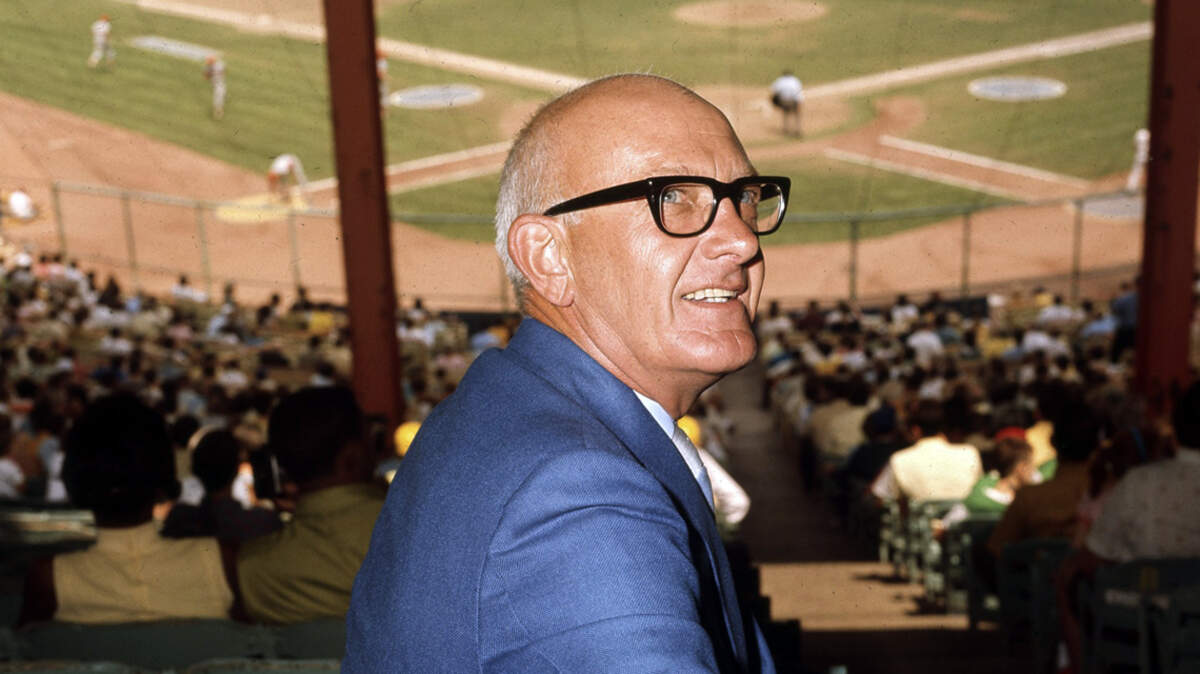
Ewing Marion Kauffman cared deeply about Kansas City.
His roots in rural Missouri and his public education at Westport High School and Kansas City Junior College provided the foundation for his success in building a company here. As his hard work was met with increasing success, he was very intentional in using that success to the benefit of the Kansas City community.
For many of us, the most visible sign of his community spirit was his ownership of the Kansas City Royals, bringing major league baseball back to our community after the departure of the Athletics in the late 1960s.
It may be hard to imagine today, but at that time Ewing Kauffman’s name was relatively unknown to many in our city. He told a reporter that his decision to become owner of the baseball team was driven by love for Kansas City, “This community has been good to me, and I want to show that I can return the favor.”
For many individuals, this would have been a culminating act of community service, but for Mr. Kauffman, it was much closer to a beginning. As his public profile increased, so too did his leadership within our community. Notable among his philanthropic efforts was his commitment to provide post-secondary scholarships to hundreds of Kansas City students through Project Choice and the ongoing work of the Kauffman Foundation, on whose board of trustees I am honored to serve.
It is not coincidental that much of the foundation’s work focuses on areas with which Mr. Kauffman was familiar from his own life experiences as the child of a family of limited means. He believed Kansas City should be a place where every student can access a quality education and apply it toward their own success. Where entrepreneurs can find support, knowledge, opportunity and funding. Where key city institutions, organizations and programs are accessible as critical civic investments.
Yet, the fact is that far too many in our community are financially unstable and don’t see a pathway to improve their economic opportunities. The foundation’s work, through its grantmaking, programs and initiatives, aims to provide opportunities that help people achieve financial stability, upward mobility and economic prosperity — regardless of race, gender, or geography.
As we work to identify the next leader of the Kauffman Foundation, the board of the foundation recognizes that the individual who leads this organization must understand and embrace Mr. Kauffman’s vision for the foundation and the community as we continue to fund key initiatives and work with many partner organizations in Kansas City.
For example, Kansas City schools, businesses and families are redefining high school by daring to reimagine education for the real world. The Real World Learning initiative activates communities to provide all students with real-world experiences and market value assets. The initiative actively supports more than 30 school districts, representing more than 80,000 students.
Community-driven initiatives such as KC Scholars, Great Jobs KC and ProX are making traditional and alternative pathways to enter and advance in the workforce more accessible, with the resources to support tens of thousands of skilled and diverse professionals who will drive the region’s economy in the years to come.
Traditional lenders and capital innovators are deploying new financial models to increase equitable funding for small business owners — especially those who are Black, Latino and women.
Significant investments in early education, closing the digital divide and other supports from public sources such as the federal government and the states of Kansas and Missouri are creating supportive learning environments for youth and families. However, it will take all of us — foundations, elected officials, service providers and potential beneficiaries — to help shape how that funding can be used to maximum effectiveness.
By working together, we can further Ewing Kauffman’s legacy to catalyze ideas and support solutions designed to improve education, boost entrepreneurship and help our communities and individuals thrive.