
Our church is the heart and soul of Parkville’s Black community. It deserves salvation | Opinion
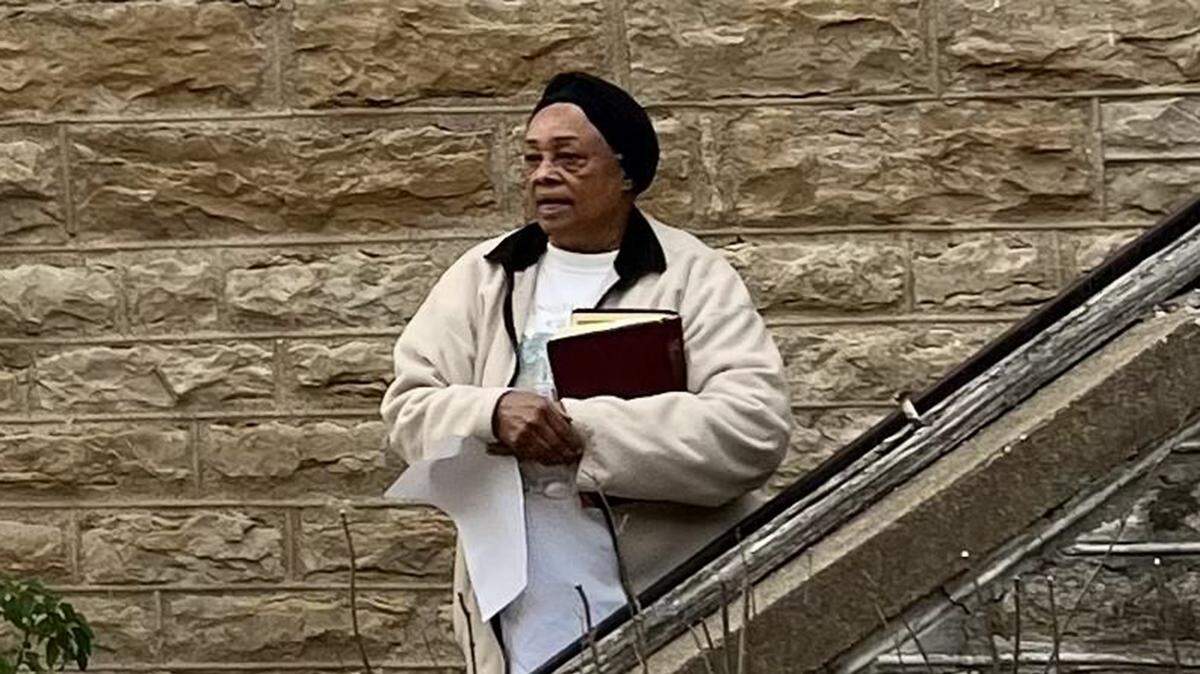
Recently, The Star published my letter to the editor about vandalism at Washington Chapel CME Church in Parkville, and the vigil for forgiveness that we held a few days later. Thanks in part to this coverage, about 50 Parkville dignitaries, people of faith and neighbors gathered on a cold evening to show their support for the church family, located in the once-segregated part of the city. Others mentioned reading the piece as I completed my daily exercise at the YMCA, and it is now on display as a part of a historical display at the local Mid-Continent Public Library branch.
It was a thrill to be able to inform well-wishers that only hours before the event began, the vandals had returned a part of a priceless stained glass window that they had broken while attempting — for the second time — to enter the historic landmark. The piece of the window returned was the part with the name of John A. McAfee, first president of Park College (now University) and friend to the formerly enslaved church community.
Several donations were collected at the vigil and since then. We are so grateful for the prayers and support of our community as we struggle to renovate our church.
The children of the Parkville Black community grew up attending Washington Chapel. Among them were congregants Pearl Douglass Spencer and Dr. Cora Douglass Thompson, who both spoke at the vigil. Their parents were outstanding citizens in the community. Their mother, Lucille Sears Douglass, was responsible for getting the church listed on the National Register of Historic Buildings and also, along with Gaylon Hoskins, for saving the Banneker School for Black children that stands today at 31 W. 8th St.
As enslaved people, African Americans were barred from participation in nearly all of the public institutions in this country. Some white property owners did, however, allow Black people to develop their own religious life. As one of the few means to express themselves, religion and education became a primary focus of the African American community.
Around 1870, Moses White of Leavenworth was allowed to organize the Colored Methodist Episcopal Church in Parkville, after the denomination had split in 1844 over the question of slavery. From 1870 to 1877, church services were held in the northeast corner of the basement in Old Number One, a hotel owned by George Park, founder of Parkville.
Membership appears to have grown rapidly, because as early as 1886, The Park College Record newspaper noted: “For some time the colored people of town have been trying to raise means to erect a church, the present one having become too small and old for their use. This week they have purchased the ruins of the old college barn and will use the timbers, which are very heavy and solid, in building their new house of worship.” The church officially adopted its present name, Christian Methodist Episcopal, in 1952.
In May 1905, Parkville residents attended two public lectures in Park College’s McCormick Chapel to raise funds for the church’s construction. According to The Park College Record, a speaker said: “We do not hesitate to say that the colored community of Parkville is far above the average in sobriety, industry, thrift and intelligence”
About this same time, a church parsonage was built where a yellow house stands today at 13th and W. Walnut streets. The Douglass sisters remember that it had a good stove, two bedrooms and no indoor plumbing. The Revs. O.T. Kneely, William Johnson and J.W. Jenkins lived there with their families.
As Black people were denied participation in Parkville’s political life, Washington Chapel Church provided leadership opportunities for its trustees, choir, Sunday school teachers, Missionary Society, War Mothers and Wives and more. Annual events to meet church expenses included fish fries, the Homecoming Bazaar and the annual Thanksgiving dinner. Mr. Clayton even sold ice cream and soda.
Chiang Kai-shek’s grandson was a guest speaker at the church on several occasions, and Alex Haley, acclaimed author of the novel “Roots,” visited on three occasions through the years. Foreign students from Park College often joined in the worship. As a result of these many activities, Washington Chapel left its imprint for decades on practically every aspect of life for most African Americans in Parkville.
Faithful members have tried to maintain the Church. Pearl and Cora have served on several committees to keep the church in good order over the years. However, since 2021, members have been unable to hold services and community events in the building because of the need for extensive repairs on the roof, bell tower and electrical system. A Restoration Committee was formed to raise the $550,000 needed to completely restore this landmark. We have a Facebook page with more information, and we will be hosting a fundraising dinner on Feb. 18.
Washington Chapel deserves to be saved. We must preserve its important history for future generations.