
I’m a police psychologist. So many guns, not mental health issues, cause mass shootings
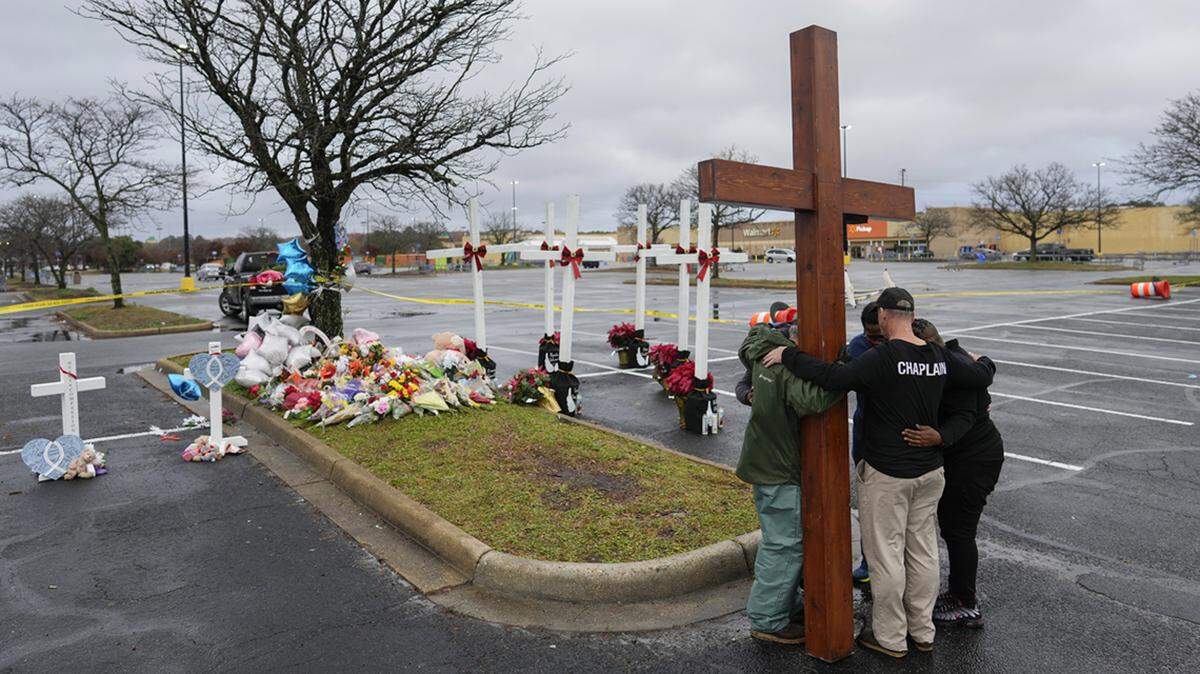
As a police psychologist for the past 40 years, I have screened more than 10,000 law enforcement and fire candidates for suitability, counseled many officers following shootings and suicides, and taught in five police academies around the Kansas City region on topics such as mental illness, deescalation, the criminal mind and officer safety. In this capacity, I have followed the research on gun proliferation and escalating gun violence with growing concern, including concern for my officers.
The United States has the second highest rate of gun deaths in the world, behind only Brazil. We have more than 400 million firearms, far more guns than people, and we shoot and kill over 45,000 of ourselves a year (more suicides — 60% — than homicides — 40%). About 80% of murders are by guns. In 2020 and 2021, Americans purchased 43 million guns.
Since 1968, more Americans (over 2 million) have been killed by guns than all those U.S. personnel killed in all our wars. States (and countries) with tighter gun restrictions have significantly lower gun death rates. Police clear only about 50% of homicides. White men are six times more likely than other nonwhite Americans to commit suicide, while Black men are more likely to die by homicide.
We hear a lot about mass murders (killings of four or more individuals in an incident), but keep in mind that mass murders account for only a very small percentage of all our gun killings, the majority being suicides and individual murders. Also, while mass murders in public places get more media attention, most homicides take place in households.
There were 417 mass murders in 2019, 610 in 2020, 700 in 2021, and 600 so far in 2022 (385 since May 24). By far, most mass shootings occur on Saturdays and Sundays.
It is important to note that issues such as poverty, crime and mental illness are not the most important direct factors driving our high rate of gun homicides. Other countries with much lower rates of homicide have similar or worse problems with these challenges. In fact, people with mental illness are responsible for only a small percentage of interpersonal and gun violence. They are more likely to be victims of violence.
Where does all this leave us? While better law enforcement, better mental health care, more jobs, better education and more support for poor families are important to pursue, don’t let politicians mislead you into thinking these are our best or adequate solutions to gun violence. The proliferation and availability of guns and the lack of gun restrictions are the main and crucial challenges to addressing violence in our country.
We have to be reasonable. Most people do not need guns. Our huge armament of firearms has not made our country one bit safer. And it is not about rights. I might have the right to paint myself blue, but that would not be in anyone’s best interest.
More seriously, I have a right not to recycle, a right to smoke and a right to drop out of school after eighth grade, but having a right does not mean I should act accordingly. In fact, exercising some rights can put myself and my fellow Americans — or even our country — at risk: for example, the right for baseless election deniers to disrupt our voting system, or the right not to get vaccinated.
What purposes are served (and what risks are run) by allowing possession of assault weapons, by allowing those under 21 to purchase guns or by allowing concealed or open carry of firearms in college classrooms, churches and movie theaters?
One more commonsense point: Even more people with firearms will only make our extreme situation worse. Arming teachers is not an answer. The “good guy with a gun” is a political myth. Only in very rare and unpredictable circumstances does a gun make a person safer — and overwhelmingly more often, the presence of guns makes bad situations tragically worse. Ask any police officer.
Being reasonable and acting reasonably, without the presence of guns, make all of us safer. Acting reasonably is important for our mental and societal health.
This story was originally published December 1, 2022 at 6:30 AM.