
I fled Afghanistan for Missouri, but my family still lives under the Taliban’s tyranny
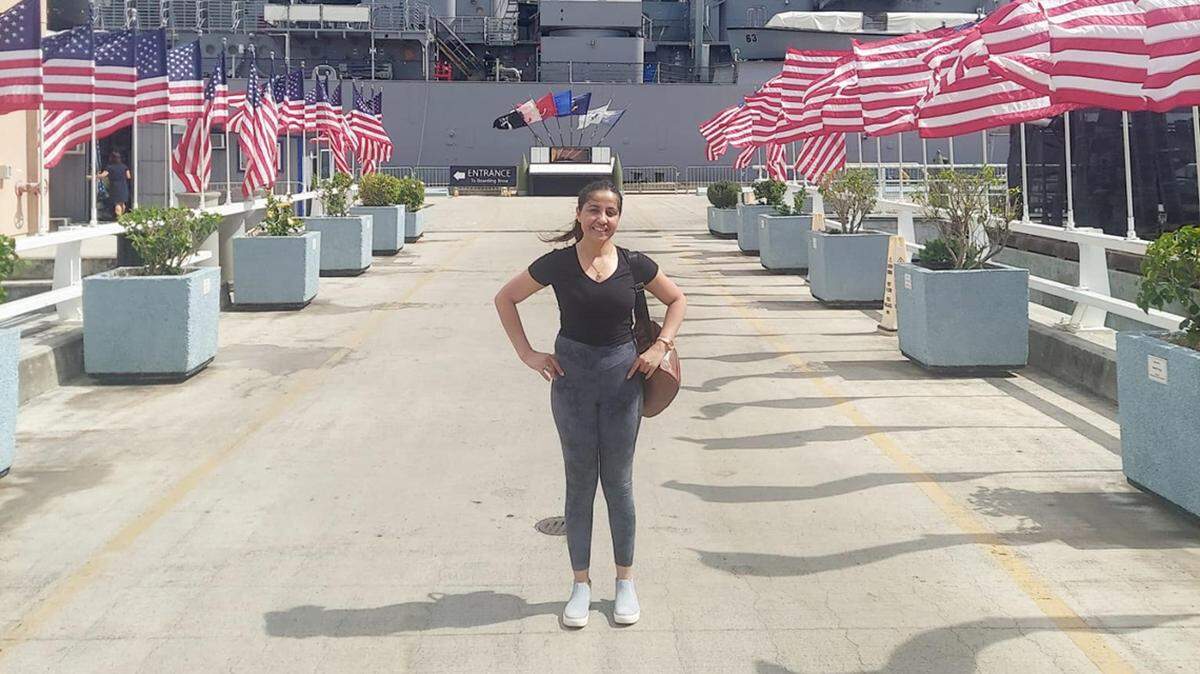
One year ago, I fled Afghanistan amid the chaos at the airport in Kabul. It’s been a long journey to find peace and safety here in Missouri. One year in, I am more determined than ever to continue my education and stand up for Afghan women who have suffered under Taliban rule since the U.S. withdrawal last August. And, one year in, I still always think about the women in my country who were left behind and had so much taken away from them.
Before I came to Missouri, I lived under constant fear for my life in Afghanistan.
I was kidnapped by the Taliban when I was just 15 years old. I thought the Taliban would kill me because of my commitment to education, and for being the only girl at my school who was studying English. After the Taliban kidnapped me, they threw all my English books into a river. I told them that while they might be able to destroy my books, they could never take away what I learned. I endured four days of brutal torture and abuse before I escaped.
When I was kidnapped and tortured by the Taliban, it felt so far from the peaceful and safe life I had dreamed of as a young girl. My father was an advocate for women’s rights and supported my education in a country that saw an eight-fold increase in education for girls, from 1 million in the early 2000s to 9.2 million by 2018 with the presence of NATO and the U.S. military in the country. During that time, women were able to pursue careers and become doctors, lawyers, teachers or even translators like myself.
Now, that number has dwindled to zero because the Taliban once again closed schools to Afghan women. Professional women are also forced to stay at home.
Once I graduated from high school, I became the first and only female translator for the U.S. military in my village of Jalalabad. Every day, I went out on missions with my unit. After each mission, I could still feel the weight of the heavy body armor we had to wear. Working for them, especially as a woman in the east provinces, was a huge risk, but I loved my job and the American people I served with.
I had my freedom at the base. I worked hard every day translating documents, participating in meetings, advising on local cultural norms and going out on missions with my unit. Although I had my freedom and relative security, my family received daily threats from the Taliban because of my work.
After 10 years of fighting for women’s rights and serving as a translator, I was eventually able to receive my Special Immigrant Visa because of my work with the U.S. military. The day that I received my visa to come to the U.S. was the best day of my life, even though exactly how I would escape Afghanistan remained uncertain. By that time, the Taliban had regained most of their power in the country and were building checkpoints all around Kabul. The dark days of Taliban rule in Afghanistan were again upon us.
Last August, I was able to escape Afghanistan. It was very terrifying to travel to the Kabul airport because the Taliban were building checkpoints on my way there.
The day I escaped, I was filled with dread, knowing that I could be killed if I was caught. I covered up everything except my eyes and hid my U.S. visa close against my body.
When I saw the U.S. troops at the Kabul airport, I felt safer. While I waited for my flight, I watched as my country collapsed around me as the Taliban took the city. I was terrified that my flight would be canceled and that I would be killed by the Taliban for trying to escape.
Somehow, we were able to board the plane and I ran as fast as I could to my seat. When the landing gear went up, I was in shock as I looked out the window over Kabul. I thought of my family I was leaving behind in Afghanistan. For this past year, they have not left their house. My sisters, who are nurses, are no longer allowed to work.
When my flight landed in America, I was in the country of freedom and opportunity. While I was so grateful, I was at the same time incredibly sad for the future of my beautiful country. It was now under tyranny again.
Missouri soon became my home, and I found the people in this state to be so respectful, kind and loving. I have a great life here and access to so many opportunities. It is peaceful and safe and I can access education freely and without worry. But I will never forget the women in my country who were not able to escape and had their futures taken away from them. I will never give up and never stop achieving my goals so that I can continue advocating for the women of Afghanistan.
On this first anniversary of the U.S. evacuation of Afghanistan, I want to thank the people of Missouri for the opportunities I have been given here, such as getting a driver’s license, sharing my story at local colleges and high schools, and attending graduate school. But I also ask you to remember the Afghan women who have been silenced, who dream of getting an education freely and of being independent, and who hope for not having their future be controlled by the oppressive rule of the Taliban.