
We saw Donald Trump will use mob violence on Jan. 6. Get ready for what he’ll do next
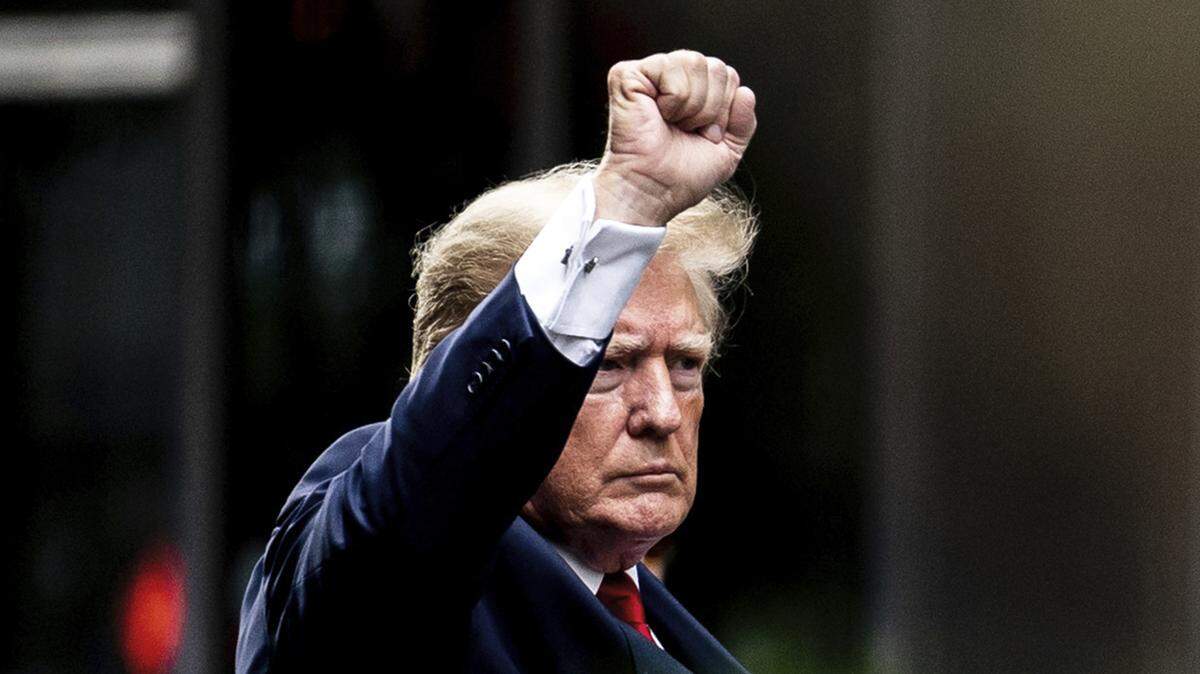
The FBI’s raid of Donald Trump’s Florida estate Mar-a-Lago has angered many Republicans. Missouri Sen. Josh Hawley, for example, called the search “an unprecedented assault on democratic norms and the rule of law.” Hawley said Attorney General Merrick Garland and FBI Director Christopher Wray should both be removed from office.
Trump himself said in response that “these are dark times for our nation.” And the former president’s rhetoric will no doubt escalate dramatically as the investigation unfolds. At a Texas rally in January, Trump brazenly threatened the prosecutors investigating him. “If these radical, vicious, racist prosecutors do anything wrong or corrupt,” he said, “we are going to have in this country the biggest protests we have ever had.”
Trump is thus actively organizing an alternative to legitimate government power: a large, violent mob summoned to intimidate government officials and stymie their will.
Sound familiar? The Jan. 6, 2021, mob of Trump supporters who violently stormed the U.S. Capitol may have been merely a precursor to something larger.
The government’s monopoly on the use of force is an essential precondition to a civilized society. As political scientist Ezra Suleiman wrote in his book “Dismantling Democratic States,” when a government loses its monopoly on force, it stops being a state, and “its form of organization becomes indistinguishable from other types of organization.” And as Joshua Horwitz and Casey Anderson put it in their book “Guns, Democracy, and the Insurrectionist Idea,” a “state must be able to enforce its judicial or administrative rulings: If it is outgunned by individuals or factions, it is not functioning as a democratic state (in fact, it is not functioning as a state at all) and is reverting to a pregovernmental society where might makes right and political equality is at best an abstract ideal.”
This is exactly what Trump has been threatening: to use a violent faction to outgun prosecutors investigating his behavior.
And it might just work. Prosecutors have vast discretion to decide whether to pursue a matter or not, and nothing requires them to bring a case, even if crimes have clearly been committed. In this instance, fear of mob violence could be the difference between initiating proceedings and declining to prosecute.
Indeed, whether to prosecute Trump will likely be a close call. On the one hand, the government has probable cause to believe that Trump did in fact commit a crime. The FBI’s Mar-a-Lago search warrant would not otherwise have been approved by a federal magistrate judge. On the other hand, obtaining a unanimous jury verdict in a country where Trump has historically high approval ratings among Republicans is a tall task. No prosecutor wants to earn the historical distinction of losing to Trump in court.
Concerns about the reactions of Trump’s tens of millions of supporters will undoubtedly weigh heavily in the Department of Justice’s analysis. Trump understands this. And he knows how to mobilize his supporters and create a frenzy of anger and violence. The violent rhetoric has, indeed, already begun. In a pro-Trump online forum, one user posted: “I’m just going to say it. Garland needs to be assassinated. Simple as that.” Another wrote: “Kill all feds.”
We don’t yet know the underlying basis for the FBI’s Mar-a-Lago raid. We do know, however, that the FBI pursuing Trump feeds the long-held narrative among many Trump supporters that the federal government is unfairly targeting their chosen leader.
On Jan. 6, 2021, Trump organized a mob to try to physically prevent the peaceful transfer of executive power to President Joe Biden’s administration. We should expect him to mount a similar initiative in the months ahead regarding the federal government’s intensifying criminal investigations into his conduct.