
Are Hawley, Marshall and other Jan. 6 objectors gullible — or are they just liars?
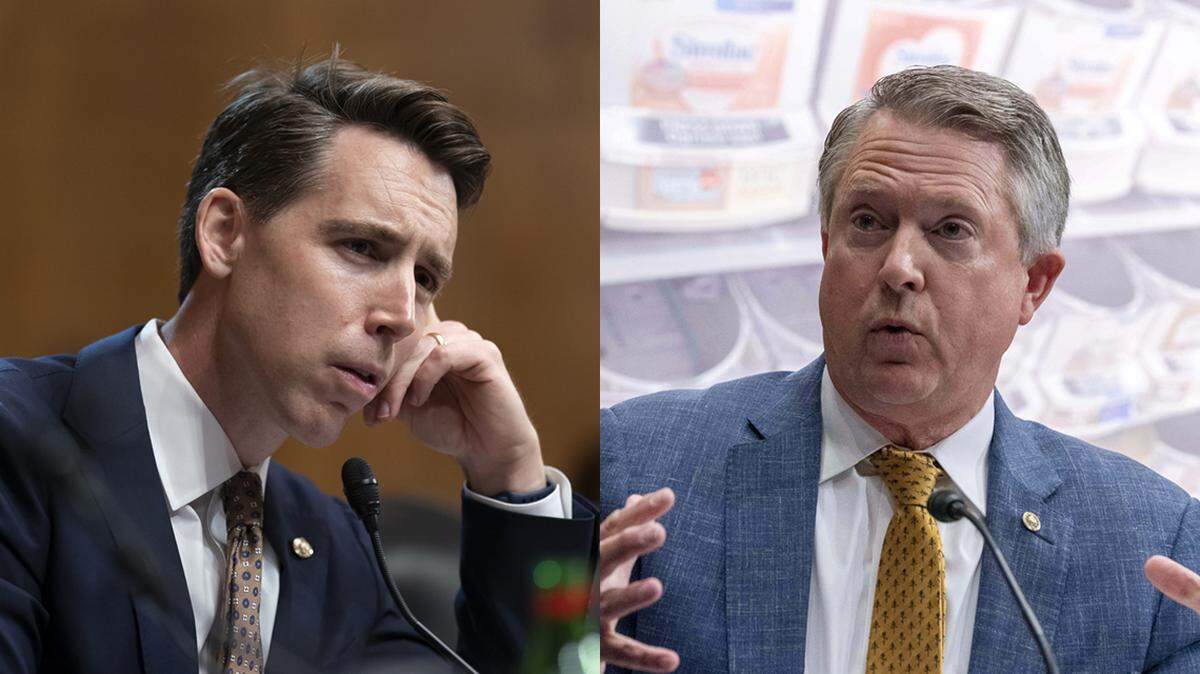
The Jan. 6 committee hearings have once again raised a pointed question about the Kansas and Missouri Republicans in Congress who voted against certifying Joe Biden’s 2020 election victory: Are they gullible, or are they liars?
Almost nobody in then-President Donald Trump’s inner circle actually believed he won the election, the hearings have revealed. Not his campaign manager, Bill Stepien. Not his attorney general, Bill Barr. Not even his daughter, Ivanka. But Trump pressed on with his wild, evidence-free claims that the election had been stolen from him. The result? A violent insurrection that threatened the survival of American democracy.
There was “zero basis” for the election fraud allegations, Barr told the committee.
“I thought, ‘Boy if he really believes this stuff, he has lost contact with — he’s become detached from reality, if he really believes this stuff,’” Barr said.
So what does that say about the Missouri and Kansas Republican leaders who seemed to buy what Trump was selling? Were they “detached from reality,” true believers who got duped by their charismatic leader? Or were they just playing along in a cynical bid to curry favor with Trump’s supporters?
Neither answer is good, to be honest.
But it’s a question that ought to be asked of a substantial portion of the two states’ congressional delegations. In Kansas, Sen. Roger Marshall was joined by Reps. Ron Estes, Jacob LaTurner and Tracey Mann in voting against Biden’s certification. On the Missouri side, Sen. Josh Hawley was joined by Reps. Sam Graves, Vicky Hartzler, Billy Long, Blaine Luetkemeyer and Jason Smith.
Hawley was almost certainly the most prominent of that group — and not just because of the notorious photograph of his fist-pumping salute to Trump supporters gathered at the Capitol on the morning of the insurrection. After all, he was one of the first Republican senators to announce in advance that he would object to certifying Biden’s victory.
What’s interesting, even now, is how carefully Hawley avoided actually endorsing Trump’s false narrative. “Congress should investigate allegations of voter fraud,” he said, without weighing in on the merit of those allegations. Instead, he offered himself up as a tribune for all those Trump supporters who believed the lies the president and his cronies were telling them.
“Millions of voters concerned about election integrity deserve to be heard,” Hawley tweeted on Dec. 30, 2020. “I will object on January 6 on their behalf.”
Even Hawley’s friends didn’t take him seriously.
“He surely knows this isn’t true and that the legal arguments don’t hold water,” an acquaintance of Hawley told The Atlantic before Jan. 6. “And yet clearly the incentives he confronts — as someone who wants to speak for those voters, and as someone with ambitions beyond the Senate — lead him to conclude he should pretend the lie is true.”
Hawley wasn’t gullible. But it seems he thought his constituents were.
It’s impossible to truly know the mindset of any Republican who joined Trump’s narrative, of course. Perhaps we can deduce something from their reactions to the Jan. 6 committee — a dismissive “there’s nothing to see here” attitude that treats the attempt to overturn an election as a trifle.
“Folks back home are concerned about the price of gasoline, the price of groceries, their safety, and security,” Marshall told Newsmax last week. “Democrats are busy ignoring the needs of the people in favor of an illegitimate committee weaponized to solely attack former President Trump,” Hartzler tweeted.
That’s a startlingly casual dismissal of their oaths to defend the Constitution — and demeaning to conservatives who believe in honesty and the rule of law.
It also helps us answer the “gullible or liars?” question, however. The same folks who loudly demanded voter fraud investigations in 2020 are now utterly — aggressively — uninterested in the actual facts surrounding Trump’s allegations and why he made them. That probably tells you everything you need to know.