
Walt Disney created the modern cartoon industry. We’re saving his Kansas City legacy
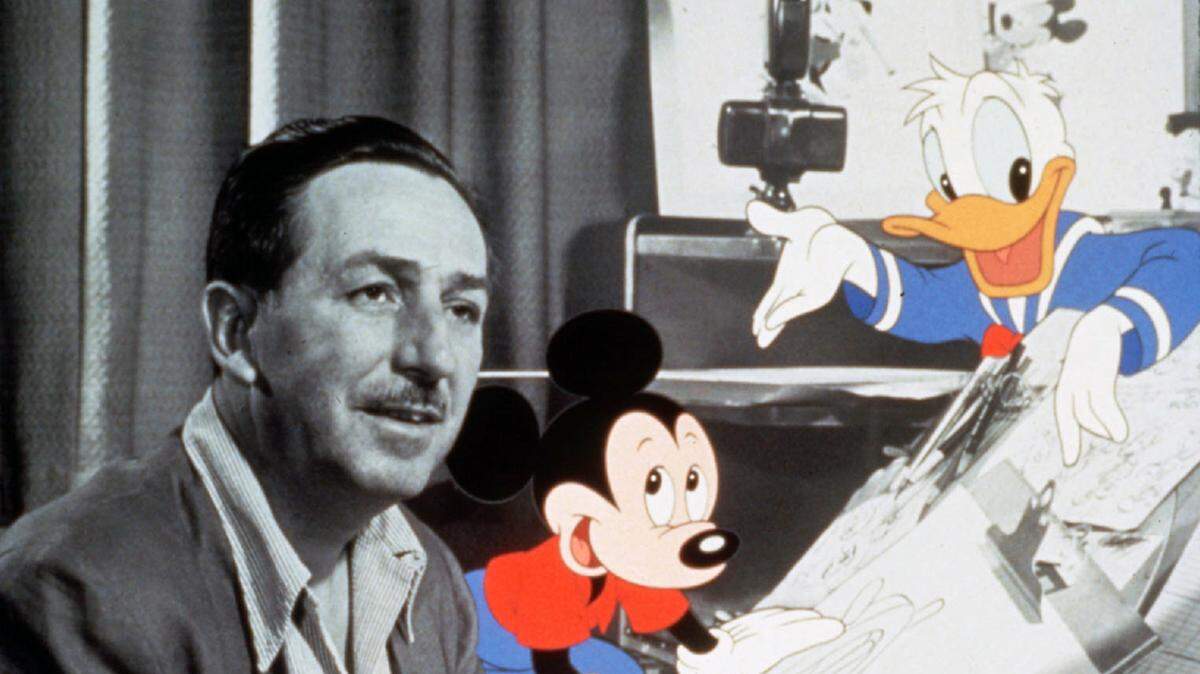
One hundred years ago, 20-year-old Walt Disney incorporated his first professional film studio, Laugh-O-Gram. He opened it in a building designed by noted Kansas City architect Nelle Peters at 31st Street and Forest Avenue.
Film historian and critic Leonard Maltin called Disney “the most successful and influential producer in the history of movie making.” He personally earned 32 Academy Awards, a record which is unlikely ever to be equaled. He revolutionized the theme park and resort industries with his creation of Disneyland in California and the plans he made for Walt Disney World in Florida.
At Laugh-O-Gram, Walt created a series of excellent one-reel, black-and-white, silent cartoons. He not only worked at the Laugh-O-Gram building — he lived there. He would go to Union Station for a shower, at least once a week.
Perhaps the most significant event at Laugh-O-Gram was Walt taming a mouse and keeping him as a pet. He said many times that while he slept in his studio, he would be awakened by mice taking the remains of his employees’ lunches from a wire wastebasket. Walt began to put food out for the rodents and found that one little mouse seemed to be braver than the others.
Walt tamed him, and the mouse would play on Walt’s drawing board. He lived in a drawer of Walt’s desk, and later in a small cage. Five years later, when Walt lost the rights to his character Oswald the Lucky Rabbit, it was that little mouse in Kansas City that inspired the creation of the world’s most famous fictional character, Mickey.
The company Walt contracted with to make cartoons went bankrupt, forcing his own company into dire financial straits. His last attempt to save Laugh-O-Gram was an ambitious production he called “Alice’s Cartoonland.” He had met 4-year-old Virginia Davis while he worked at the Kansas City Film Ad Service. He recognized her innate talent and charm. He cast her as Alice in what he hoped would become a successful series of cartoons in which she, as a live-action character, interacted with cartoon characters.
Walt began to correspond with Margaret Winkler, the nation’s foremost distributor of animated cartoons. She was favorably impressed with the unfinished Alice comedy Walt sent her.
Walt was forced to take bankruptcy himself in the late summer of 1923. He liquidated the assets of his little company and headed west, buying a first-class ticket on the Santa Fe Railway. His brother Roy advised Walt to resume what he knew best: producing animated films.
On Oct. 16, 1923, Winkler offered him a contract to produce the “Alice Comedies,” on the condition that the same little girl who appeared in the pilot episode would continue to play the character. Walt persuaded Virginia’s parents to move to Los Angeles so she could continue in the role.
As the Disney Brothers studio began to make money, Walt called on his old friends in Kansas City to join him. Ub Iwerks was the first to do so. Hugh Harman, Rudy Ising, Friz Freleng and others followed.
After working with Disney, Harman and Ising became the founding animators at Warner Bros., and then did the same at Metro-Goldwyn-Mayer. Along the way, they trained Bill Hanna and Joe Barbera to animate. Young Isadore “Friz” Freleng worked for Disney briefly and later became one of the most important creative forces at Warner Bros. Animation before co-founding the DePatie-Freleng Enterprises, famous for “The Pink Panther.” Joseph “Bugs” Hardaway became the namesake of the most famous Warner Bros.’ character, Bugs Bunny.
Virtually the entire Hollywood animation industry, from its earliest years through the middle of the 20th century, was founded by animators who got their start working in Kansas City.
For many years, Thank You Walt Disney Inc. has worked to preserve and restore the Laugh-O-Gram building, which is listed on the National Register of Historic Places. It would have been demolished long ago if not for our efforts.
We are working to restore the building to become a place where young Kansas City animators will once again learn their craft in the digital age, and also to create a museum telling the amazing story of how Hollywood animation began in a red brick building at 31st and Forest in Kansas City.