
KU prepared me for my world. Today’s grads face a future that’s completely different
Commencement for my class of 1970 at the University of Kansas was truncated — a quick ceremony in Allen Fieldhouse — by student upheaval that spring, including the burning of the Kansas Union, which led to school closing early that year. This year, the Alumni Association recognized the ritualistic gap in our KU experience and enabled members of the classes of 1970 and 1972 to walk down the hill to mark their 50-year anniversaries.
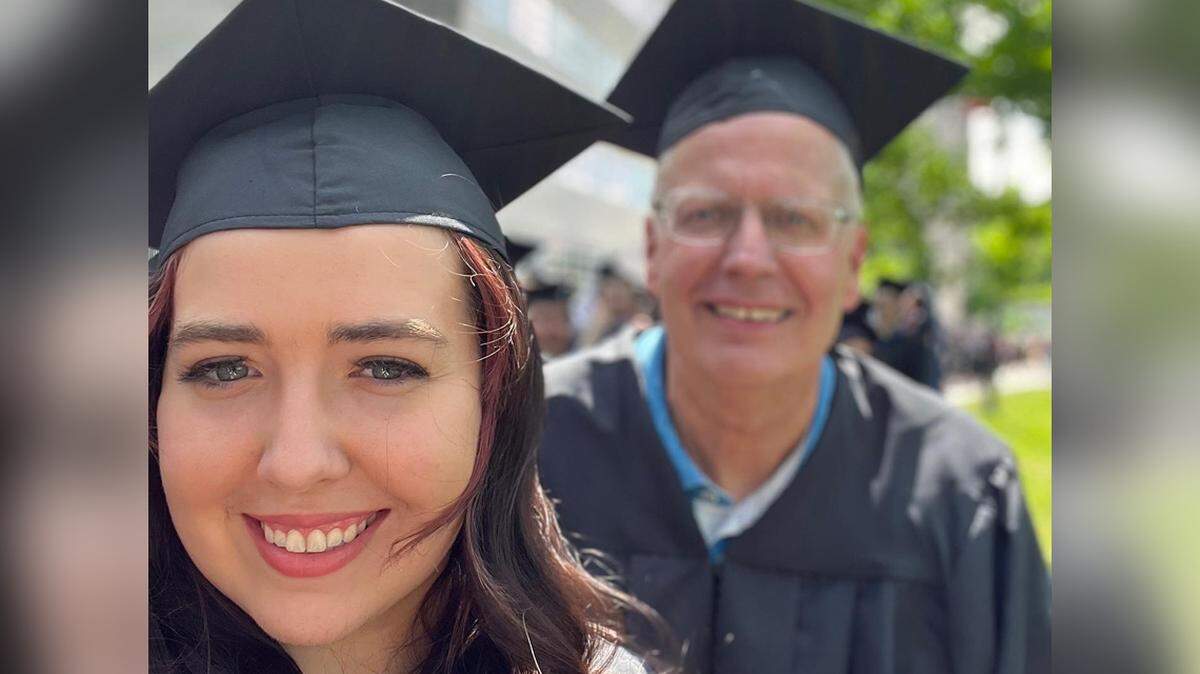
Coincidentally, my daughter Grace is a member of the class of 2022. Because I was a late-in-life father at age 51, we walked through the campanile, down the path and into Memorial Stadium side by side at this year’s graduation on Sunday.
Aside from a half-century quirk of chronology, what does the class of ‘22 have to share, what common links, with the 70-plus years old gray-hairs scattered among them at graduation? I especially wondered whether Grace and her generation feel what’s been called “Jayhawk spirit” — that connection when students and alumni meet and share those special bonds of memory and youth tied to Mount Oread.
“What’s the essence of KU?” I asked her. “What is the soul of the university? What would you say to reassure generations of alumni that — at its core — KU today resonates with the KU they remember?”
“I’d tell them it’s still Snob Hill,” she replied.
Here’s how this fourth-generation Jayhawk describes her classmates: “Students today are nice and more accepting of people from diverse backgrounds, but they’d rather stare at the floor than talk to you before class.” KU snobbery? No, the first generation of digital natives — the Zoomers — are a bit weak on person-to-person and other non-electronic communication skills.
The major change from KU pre-1972 is a generational redefinition of the university’s mission. When I entered the school in 1966, I was told the purpose of college was to develop a philosophy of life, to build moral character, to “know thyself” and to prepare to be a productive member of a democratic society. That meant most students had an intellectual grounding in history, literature and other liberal arts, including the required two-semester Western civilization course.
That KU is gone, replaced by a vocational emphasis as students flock to pre-professional, STEM and other majors that promise future employment. It’s understandable. Class of 2022 grads were scarcely toddlers when 9/11 hit. Since then, they have known interminable wars; two — now possibly three — major financial crises; a national reckoning on race, class and gender issues; a fractious political climate; a worrisome physical climate and a pandemic. Add in student loans, and concern for their financial and personal well-being becomes paramount.
With academics largely relegated to career preparation, today’s students have bracketed classwork out of their larger campus life. Unlike the late 1960s, few of them gather for intense — if often comically pretentious — “meaning of life” discussions. “No one even asks those questions anymore,” Grace said.
“KU has a lot of B-plus students like me,” she explained. “We’re not going to work so hard that it interferes with everything else there is to do at KU. We want better work-life balance than the boomers and millennials had. And KU students are pretty confident that despite all the problems in the world, we can make life work out for us. We take a lot of responsibility for ourselves.”
Civilization is not inherited. It has to be learned and earned by each generation anew. KU’s role in its students’ lives should be to transmit the intellectual, moral, aesthetic and technical heritage of American society. It will take 50 years before Grace and her classmates know whether KU served them as well in that task as it has for me and my generation.