
What’s more Kansas City than a daylily? Actually, there’s nothing Midwestern about it
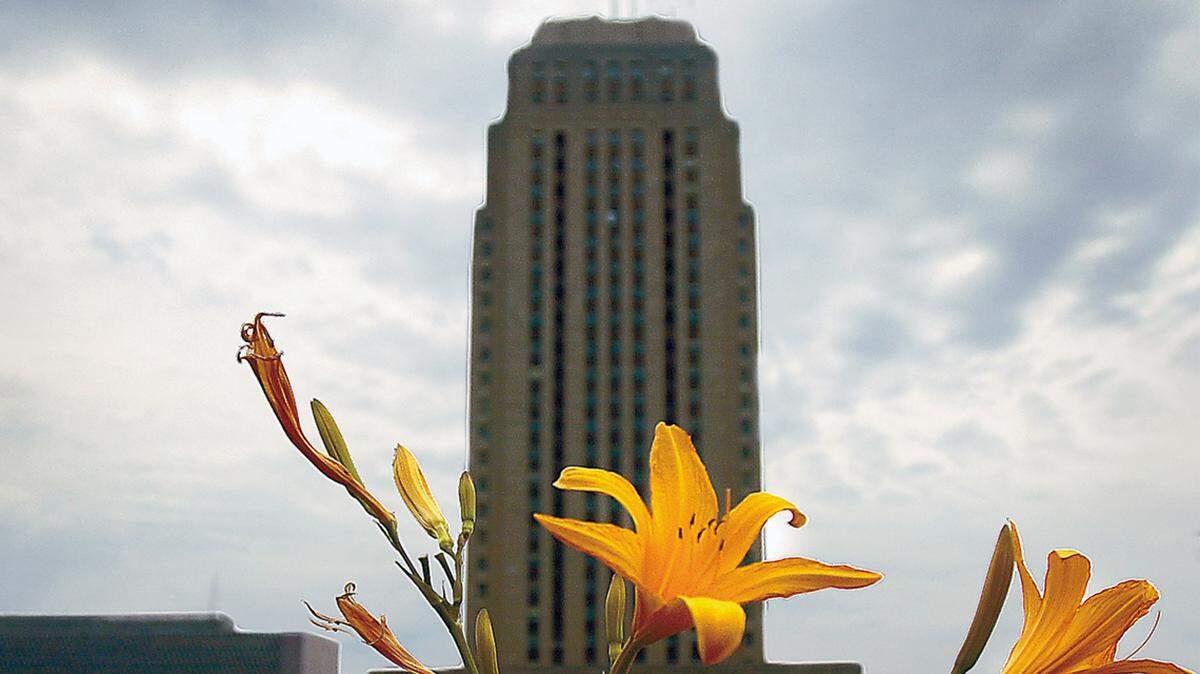
You know those orange daylilies that pop up in Missouri yards and along roadsides in summertime? I used to think they were a quintessential part of the Midwestern landscape. But they didn’t originate in the region — or even in the Americas. According to the Missouri Department of Conservation, they are native to Eurasia. The invasive lilies spread almost anywhere, including in my own backyard. As a new homeowner launched into the trials of yard maintenance, I am on a quest for the perfect plants to fill in my garden. I’ve discovered how little I knew about what we put in our yards.
Like those persistent daylilies, many of our front yard favorites hail from other parts of the world. Bright purple hydrangeas are originally from Asia. Evergreen azaleas? From Asia. Pink peonies? You guessed it — also from Asia. But why are these non-native plants a problem? According to Grow Native!, a program of the Missouri Prairie Foundation, “Since non-native plants did not evolve locally over thousands of years, their presence can often have negative impacts.” Native plants on the other hand, “have co-evolved with native insects and wildlife and are critical to ecosystem functions,” Grow Native! tells us.
I started researching native plants to incorporate in my yard, and things got even more interesting. It turns out that there is a species of hydrangea, the “smooth hydrangea” or hydrangea arborescens, that is native to North America. When I went to buy one, I noticed that there was another name on the label: Annabelle. Annabelle, I learned, is a cultivar of the hydrangea arborescens species. Cultivars are plants that have been selected and bred for a specific trait, such as longer bloom periods or certain colors. These seem like desirable characteristics. So why does that matter?
As a woman from Missouri Wildflowers Nursery outside Jefferson City explained to me, the blooms on the Annabelle cultivar are covered entirely in petals. Blooms on the true native species or wild hydrangea have more fringe-like centers with clusters of petals interspersed. Those feathery sections on the wild hydrangea contain the pollen. And, she assured me, the bees just love them. With all petals and no fringe, the Annabelle cultivar is mostly sterile, offering limited food source to pollinators. Feeling informed, I picked up two wild hydrangeas and a copy of the nursery’s catalog.
There are hundreds of beautiful and beneficial native plants that we could all be planting in our yards instead of the imported or modified varietals available from big plant brands such as Proven Winners. I am replacing orange daylilies with equally vibrant orange butterfly milkweed and striking stalks of purple prairie blazing star. For curb appeal considerations there are many native shrubs, ornamental grasses and flowers that look attractive and tidy in formal landscaping. I’m starting with the wild hydrangeas and a tall standing switch grass in my front yard.
Style and substance make native plants the true winners. As the Grow Native! program’s FAQ page states: “Choosing native plants beautifies yards and other spaces, supports nature’s web of life, manages stormwater, stores carbon, and improves soil health.”
This weekend, skip the big box store. Forgo the gallon of showy but sterile cultivars. Instead, consider shopping at a native plant sale. Chat with a local grower. Who knows what fabulous (and impactful) plants you’ll discover?
To learn more about upcoming native plant sales in your area visit grownative.org/events/category/plant-sales