
Kansas City, here’s how you can help Ukraine now — and build lasting future peace
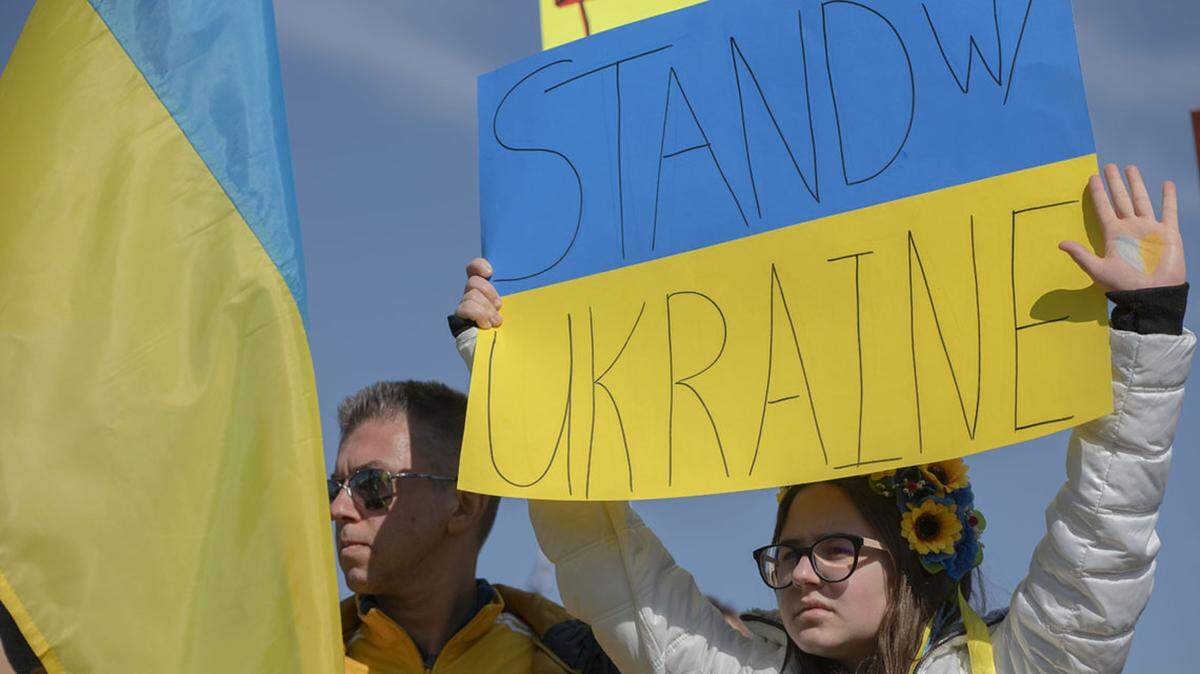
Kansas Citians, like many Americans, have united to show their support for Ukraine symbolically — such as flyiung Ukrainian flags, or lighting up Park University’s iconic Mackay Hall in Ukrainian blue and yellow — and financially.
Hundreds of millions of dollars have been donated to assist Ukrainians. The global philanthropy magazine Alliance reports that $397 million was donated in just the first two weeks after the invasion.
Kansas Citians are providing financial assistance through local organizations like the Ukrainian Club and Heart to Heart International, as KCUR has reported. Also, the Parkville and Chisinau, Moldova Rotary Clubs have joined forces on a fundraiser to purchase necessities such as hygiene products and food staples for Ukrainian refugees in Moldova. You can give at bit.ly/RotaryForUkraine
As admirable as these financial efforts are, they are just stopgap measures designed to address the current crisis. What can we as Kansas Citians, 5,400 miles from Kyiv, do to plant the seeds of a sustainable peace for Eastern Europe, and here at home?
It is a common, incorrect assumption that only politicians hold the keys to peace. The evidence proves otherwise. In a recent study, Peace Insight evaluated 70 local, citizen-led peacebuilding initiatives, and found that “they make a significant and essential impact on peace.”
We as individuals do have the power to build peace — if we choose to exercise it.
Rallies for peace have often pressured warring parties to sue for peace — for example, Liberia in 2003. Here at home, we can and have come together for peace. In Kansas City, about 300 people gathered in Mill Creek Park at the Country Club Plaza in February to show solidarity with Ukrainians. But one small rally isn’t enough. Imagine the impact of a peace rally at Union Station the size of the Chiefs’ Super Bowl victory celebration in 2020.
This doesn’t mean that we don’t have a responsibility to also engage politically. Peacebuilders must demand that our leaders eschew demagoguery, and instead provide leadership that acknowledges the need to address the broader context of peace, the causes of violent conflict, reconciliation and, inevitably, co-existence.
You can also join a Kansas City peacebuilding organization dedicated to building goodwill, understanding and world peace. For example, become a member of the International Relations Council, which brings fascinating, informative programming about world events and global issues to Kansas City. Join the United Nations Association of Greater Kansas City, which supports UN peacebuilding and other peace-sustaining initiatives. Engage with Global Ties KC, which has facilitated citizen diplomacy by hosting international visitors for the last 65 years.
Next, peacebuilders can reach out to their Russian-American friends and neighbors. According to Zipatlas.com, there are 2,110 Russians living in Kansas City, and another 311 in Overland Park and Leawood. If we believe in peacebuilding, we can’t lump Russian-Americans into one warmongering monolith. Many Russian-Americans loathe this war, yet have still been blamed for it. We even need to dialogue with those Russian-Americans and others who support the Russians’ aggression.
Finally, there are tasks for everyone in establishing a culture of peace, according to the father of modern peace studies, Dr. Johan Galtung. The first task is “fostering a culture of peace through education.” As parents, why not insist on peace education? Other peace tasks include promoting equality for women and advancing understanding and tolerance. No, peace education and promoting equality and tolerance won’t help Ukrainians right now, but if applied universally over a number of years, they might help prevent the next war.
While the financial efforts to assist Ukrainians are laudable, we need to remember that we all have a larger responsibility in the service of peace. We have the power to act not only to assist Ukraine, but to help ensure that sustainable peace becomes the norm in our societies and our world.