
Missouri and Kansas colleges and universities have seen the future — and it’s smaller
Post-secondary institutions in the Kansas City region are in trouble, and it’s only going to get worse.
For the most part, 28 post-secondary institutions serve Kansas City, and all but three are accredited. They range in size from 31,121 students at the University of Missouri to 65 at City Vision University. Nearly half — 48% — are experiencing declining enrollments. Not surprisingly, most of these institutions have also lost revenue.
In the five year period from 2015 to 2020, full-time equivalent or fall enrollment in Kansas dropped 7% while Missouri declined 14%. These declines in fall enrollment are not distributed equally. For example, while Pittsburgh State University has declined 20%, Northwest Missouri State University appears to have gained slightly at 3%, although this year’s freshman class is down 20%.
Missouri Southern State University has declined by 15% and Missouri Western by 17%, while the University of Central Missouri is down 33%, or 3,863 students. William Jewell College is down 28%.
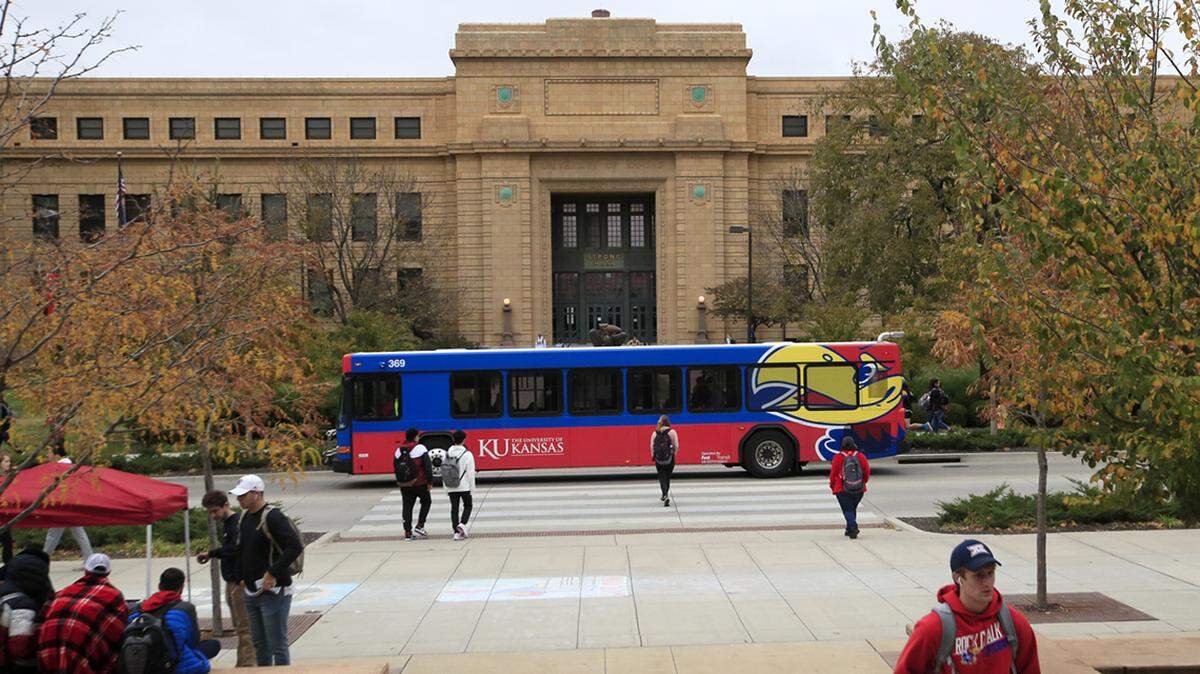
The University of Missouri-Kansas City is down 7% and the University of Kansas 15%. Given the size of their base, this adds up to 4,137 students. The University of Missouri-Columbia freshman enrollment is down by 14%. These numbers are based on the institutions’ report of full-time fall enrollment to the U.S. Department of Education’s National Center for Education Statistics.
The decline is not over. In 2025, the number of high school graduates will dip sharply and remain down until 2037. This is not a guess, since it is based on birth rates that declined around the turn of the century. The net result will be a drop in the applicant pool of potential college students by approximately 25%. The impact of the COVID-19 pandemic on enrollments is not clear, but certainly negative.
The ripple effect as smaller cohort groups progress through the system could result in as much as a 50% decline in enrollment for many institutions. Professor Michael Horn of Harvard University projects that 25% of colleges will fail within the next 20 years. Others project up to 50% closings. All agree that the Midwest will be hit the hardest.
A failing college has an outsize impact on its community. Although industries bring jobs to a community, a college brings jobs along with customers — students — who shop in the stores, eat in the restaurants, bring their parents to town on the weekends and so on. When a college in a small town folds, the community often never recovers. Tarkio College was a major part of Tarkio, Missouri from 1883 until it closed its doors in 1992. The community has struggled since the school’s closure to find an alternative use for the campus. Several education-type institutions have started, but failed. Currently the Tarkio Technical Institute has about 20 students, compared to 900 who enrolled in Tarkio College at its zenith.
At this point, what can be done? Obviously, the birth rate 18 years ago cannot be changed. The only thing institutions can do now is brace for the inevitable. In some cases, that will mean planning for a dignified closure. A better strategy is to search for merger opportunities. For small colleges, this could boost enrollment enough to cover overhead. Both public and private institutions might want to consider focusing on the demand of nontraditional students and for certificates rather than just traditional degrees.
For public institutions, a carefully designed plan to become smaller may be the best strategy. The chancellor at the University of Kansas, Douglas Girod, recently announced such a plan: “To be honest, … we are going to have to get a little smaller and a little bit leaner,” he told The Lawrence Journal-World.