
Afghan refugees have much to give back to generous Kansas Citians who’ve helped them
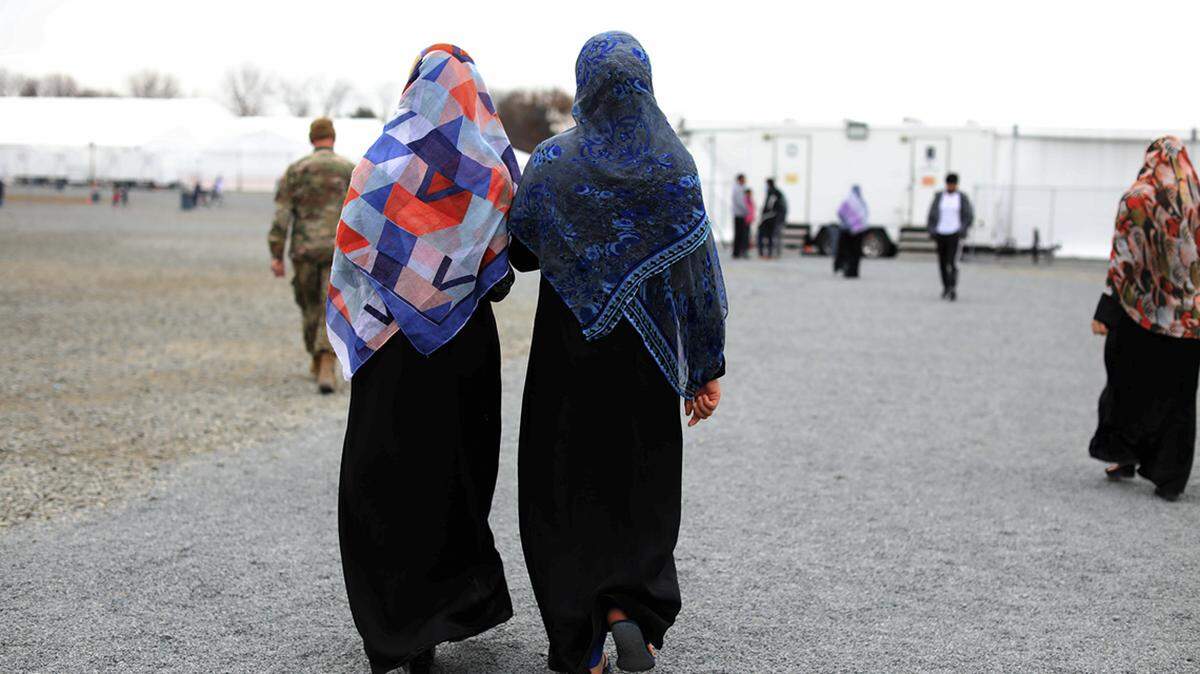
Imagine this: You and your immediate family members are caught in a frantic crowd at the international airport in Kabul, Afghanistan, trying to get on one of the last airplanes out. But you get lucky, catch a flight and end up in a new, unknown American city. When you arrive, the scene still feels chaotic. The crowd is afraid, hungry, and exhausted. The relocation happened so quickly that there was no time to do any planning or prepare. With just the clothes on your back, you’re shuttled — alongside 150 others — to a small hotel where entire families take up residency.
Amid the sudden influx of newcomers after the withdrawal of the United States from Afghanistan, cities and states like ours have been overwhelmed. The sudden surge placed an overwhelming pressure on not just resettlement agencies but also volunteer organizations like ours. Of the 37,000 people arriving to the U.S. in the first wave, Missouri was given 1,200. Here in Kansas City, we’ve already received at least 500 people from this first wave, and at a faster pace than ever before. Yet the challenging situation has a bright silver lining: the goodwill of ordinary Kansans and Missourians has flourished, growing to meet the needs of our new community members.
We’re far from alone. New research from the APM Research Lab shows that the vast majority of Americans want to help displaced people. As the wave of resettled Afghans began to arrive, new volunteers reached out to the organization I founded, KC for Refugees, seeking ways to help out. We began working hand in hand with the three resettlement agencies in greater Kansas City area, two on the Missouri side and one on the Kansas side. We made connections with the Afghan American community because we knew we were going need language support. We also provided cultural orientation our volunteers to help them understand what kinds of items would bring not only sustenance but comfort to the newly arriving families.
Together, we were able to partner up to provide hot meals, grocery deliveries, clothing and welcome baskets with items to help make the initial transition a little bit easier. We discovered a need for green tea, electric tea kettles and traditional clothing. Women especially didn’t want Western clothing. When we couldn’t find Afghan clothes, we found substitutes in traditional Pakistani and Indian attire. One woman volunteered to sew traditional floor mats for seating.
After posting our Amazon wish list on social media, Missourians stepped up to meet the need. When getting food aid from the government took more than 45 days, our volunteers stepped up with sourcing and delivering ethnically appropriate halal meals of meat, chicken and basmati rice alongside a local Muslim food pantry. Our van takes groceries to 20 addresses at a time.
The goal is to also help resettled families feel respected and accepted for who they are, and to make sure no one has any expectations that we want them to transform into “overnight Americans.” They need to know that their culture and religion aren’t under threat, and that we value their background and history just as much as the many economic benefits they will bring to our region.
Kansas City knows that what we pour into arriving families is returned to our community in dividends. In 2019, Missouri was home to more than 26,200 former refugees, according to research from the nonprofit New American Economy. These refugee households earned a total of $752.6 million and paid $183.3 million in local, state and federal taxes. Plus, foreign-born residents tend to start businesses at higher rates than U.S.-born residents. According to data from 2014, immigrants made up 20.6% of all entrepreneurs in the U.S., even though they only made up 13.2% of the overall population.
And in a time when many American businesses are having trouble finding employees, this influx of potential workers is a win for Kansas City. Employers are already lined up waiting for refugees to be ready to work. Even those who don’t yet speak English are able to work when paired with an Afghan American who can show them what to do. The jobs are there — we just need to help these refugees get settled, find transportation and start working on their English skills.
In 2019, Missouri’s Republican Gov. Mike Parson made what amounted to a bold political statement by clearly expressing his support for refugees. In his own words, they’re “vital members of our community.” Parson also noted that displaying “compassion” would help newcomers become “patriotic and productive fellow Americans.” Welcoming Afghan refugees sent to our community by the U.S. government has been a pleasure and is now an accomplishment for Kansas City.
Together, we’ve led and proven how supportive and cohesive our city is. It’s important to demonstrate to our new neighbors that they are welcome and valued here, in a place where it’s possible to rebuild — even if you have just the clothes on your back.