
There’s just one word for the sorry state of Kansas City streets and freeways: trashy
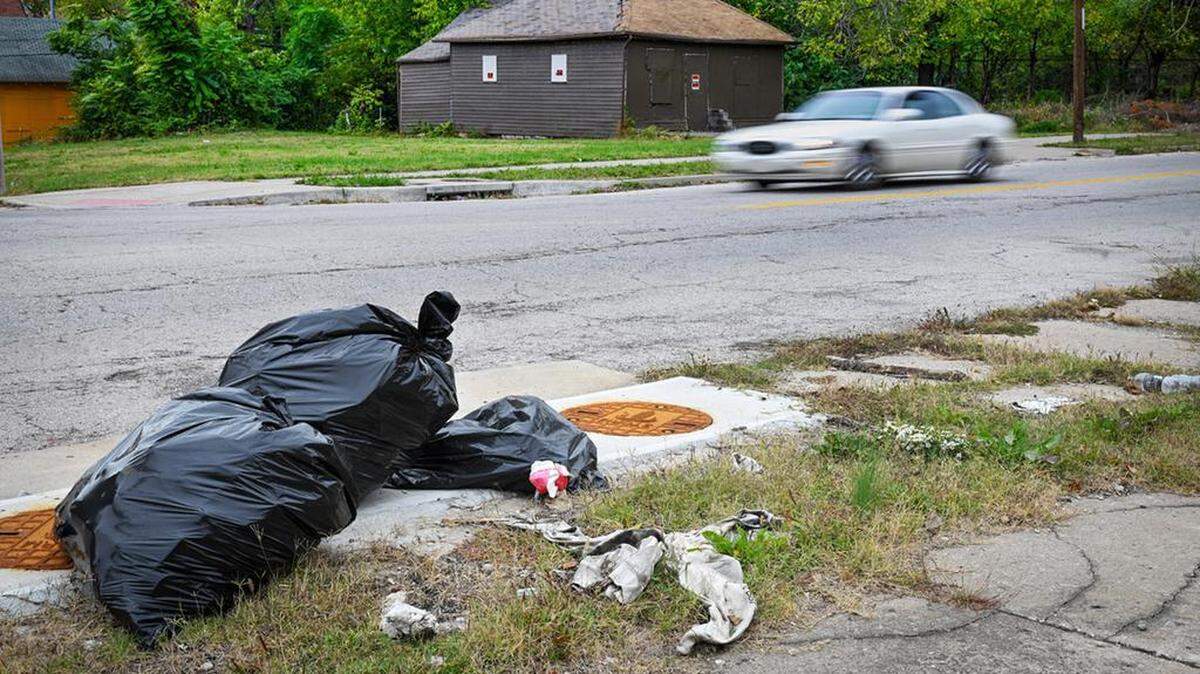
For anyone who drives around the Kansas City metropolitan area, it is painfully obvious that there is a major trash problem along our roads and freeways. The COVID-19 crisis has had a large impact on our daily lives, but it has also affected the governmental services that we have all come to expect. The pandemic has placed unexpected strains on the budgets of agencies tasked with keeping our public spaces clean.
Now, I must say that the city of Kansas City does an admirable job of picking up the trash at my home and in my neighborhood, but when it comes down to the general condition of our roads, the trash problem is only getting worse instead of better.
During the past 18 months, the amount of trash and junk along our highways seems to be increasing. On my drive into work each day, I frequently encounter items such as carpet, wooden skids, car parts, seat cushions, plastic bags, mattresses and more — you get the picture. It seems when junk hits the roadway, it never gets picked up, cleaned up or moved. It just sits there. We should all be embarrassed by this problem.
The issue is getting worse every day, and junk just continues to pile up. While there is no single cause to point to, there is little doubt that to solve this challenge, it will take an effort of individuals, private business and government agencies to make a dent.
Of course, this issue originates with people who litter, but in the hustle and bustle of everyday life, stuff falls from trucks and cars accidentally, too. And too frequently, it just never gets properly addressed.
In general, it is easy to turn a blind eye to the public trash issue. We all care about our families and neighborhoods, and we each want our communities to look as good as possible. It’s easier to police our own individual recycling and trash habits than it is to track the unseen habits of others. Books such as Will McCallum’s “How to Give Up Plastic: A Guide to Changing the World, One Plastic Bottle at a Time” offer individuals earnest, practical advice about how to do their part in combating the trash issue. Any personal effort is a good effort — but the coordinated efforts of many are always better.
Perhaps the passage of the new national federal infrastructure bill will help to make more funds available to address the trash problem. After all, sometimes the cleanup happens as a matter of course when road crews build a new highway or grade a new street. Surely that process will help us to clean up, right?
I’ve often thought about how great it would be if Kansas City could boast that it is one of the cleanest cities in the nation. However, the reality of our situation runs contrary to that narrative. It’s just the plain truth that it can be difficult to keep a sprawling urban area looking good, especially when that area contains a maze of paved roadways and connecting highways covering multiple jurisdictions in two states.
It’s my hope that we can all do our part to solve this issue — start to put our collective efforts together, so that someday, in the not-so-distant future, we can all boast about how clean Kansas City is here in the heart of America.
Some may remember the advertising campaign from the nonprofit Keep America Beautiful that ran on TV in the 1970s, featuring a Native American astride his horse. The ground below him was strewn with garbage. The camera closed in on his face to reveal a tear running down his cheek as he cried in sadness and despair. Litter was fouling his homeland. The narrator reminded us: “People start pollution. People can stop it.”
Let’s all do our part — now — to stop it.
Stephen Hawks is a Kansas City graphic artist and landscape photographer.