
Anti-solar farm forces are organized in Johnson County. Don’t fall for misinformation
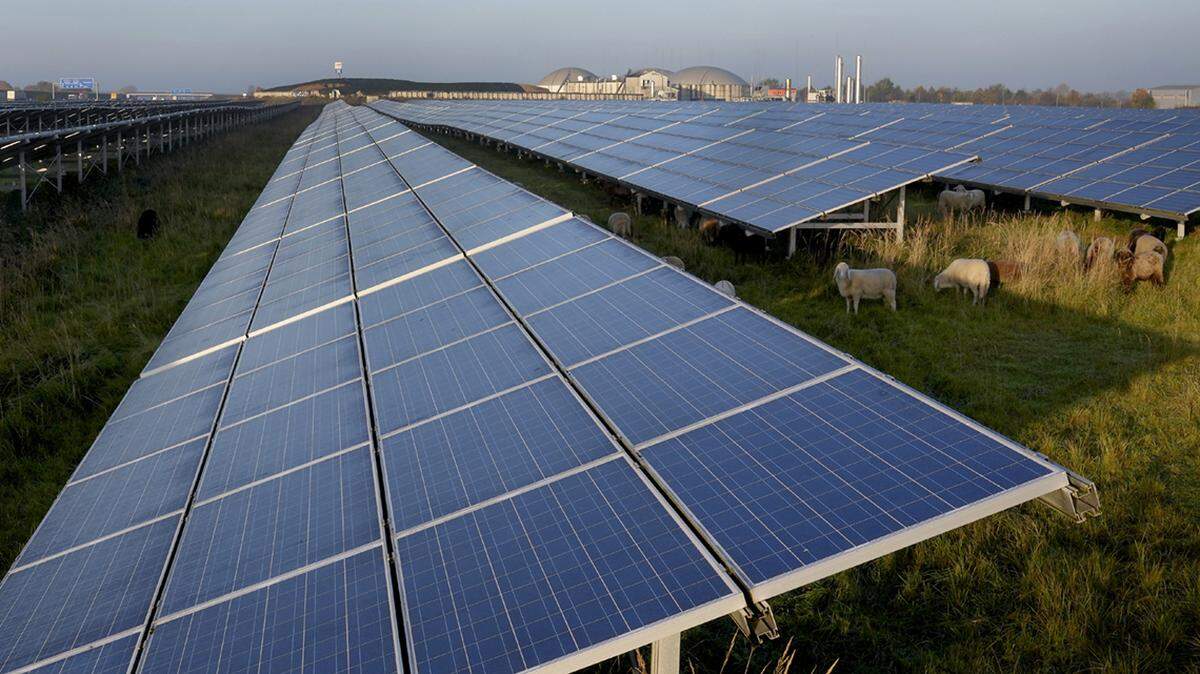
The Johnson County Planning Commission recently voted for restrictive, anti-solar zoning regulations, which threaten to stop beneficial utility-scale solar farms from being built in the county. Its members’ votes at their Nov. 16 meeting overturned reasonable regulations approved by the same commission on Oct. 26. Anti-solar forces prevailed by submitting a questionable, last-minute conflict of interest claim against two planning commissioners who previously supported solar, forcing their recusal. Three other commissioners changed their votes to oppose solar at the November meeting, though no new evidence or rationale was presented.
The Johnson County Planning Commission’s anti-solar vote demonstrates the dangerous strength of anti-renewable local politicians, including Kansas state Sen. Mike Thompson, Johnson County Commissioner Charlotte O’Hara, Planning Commissioner Kelley Rast (appointed by O’Hara), and Conservative Republicans of Southern Johnson County Chair Greg Cromer. These closely-linked politicians strongly oppose renewable energy for purely ideological reasons, and they promote continued operation of 50-year-old coal-fired plants at Lawrence and La Cygne, Kansas — plants their owner, Evergy, would like to shut down. Thompson and his allies appear to be aiming to prevent solar farm construction not only in Johnson County but throughout Kansas.
The anti-renewable politicians have addressed the Johnson County Planning Commission and residents with extreme misinformation and distortions about solar, while acknowledging no environmental impacts from coal-fired plants. They have convinced many people that solar farms would seriously impact them and the environment though an outrageous misinformation campaign. The planning commission’s independent consultant, who drafted the solar zoning regulations, debunked several key claims by solar opponents. He concluded that after mitigation measures are enacted, such as visual screening, neighbors won’t know a solar farm is nearby.
Solar power generation has taken off in the last decade as photovoltaic technology improved remarkably, and costs have dropped an astounding 80%. Nationwide installations have grown to 1,000 solar farms in 43 states, totaling 110,000 megawatts in capacity, roughly equal to 110 nuclear plants. These facilities have proven reliable, without the negatives opponents claim.
The truth is that solar farms generate electricity less expensively than fossil or nuclear plants with much less environmental impact. Solar farms produce no air emissions, wastewater, coal ash or nuclear waste. They are very quiet, have a low visual profile and use little water. Solar farms are built away from wetlands and streams, and meet rigorous stormwater pollution regulations. Soil health and groundwater quality are preserved through existing codes and reasonable regulations. When solar farms’ lives are over, their owners are obligated to completely remove equipment and restore the sites.
Solar farms result in hundreds of jobs, local contracts and tax revenues. Solar farms result in significant economic improvement from their site’s current agricultural operations through electricity sales and payments to landowners.
Despite their enormous benefits, the Johnson County Planning Commission voted for a short 20-year operating permit for solar farms along with other restrictive measures. They disregarded multiple experts’ testimony that solar farms, like other capital-intensive facilities, require a minimum 25- year operating permit to provide acceptable returns for project investors and lenders. They disregarded the fact that solar equipment lasts at least 30 years.
The planning commission also voted to not allow solar farms within two miles of any city limits, against their consultant’s recommendation, without any valid rationale. The remaining areas where solar farms could be built is a tiny 2.5% of the county.
When adopting final solar zoning regulations, the Johnson County Board of Commissioners should disregard misinformation and ideological opposition to approve fair and reasonable solar zoning regulations, including 25-year operating permits and a one-mile buffer from cities. Solar farms are a key component of our smarter energy future.
This story was originally published December 10, 2021 at 5:00 AM.