
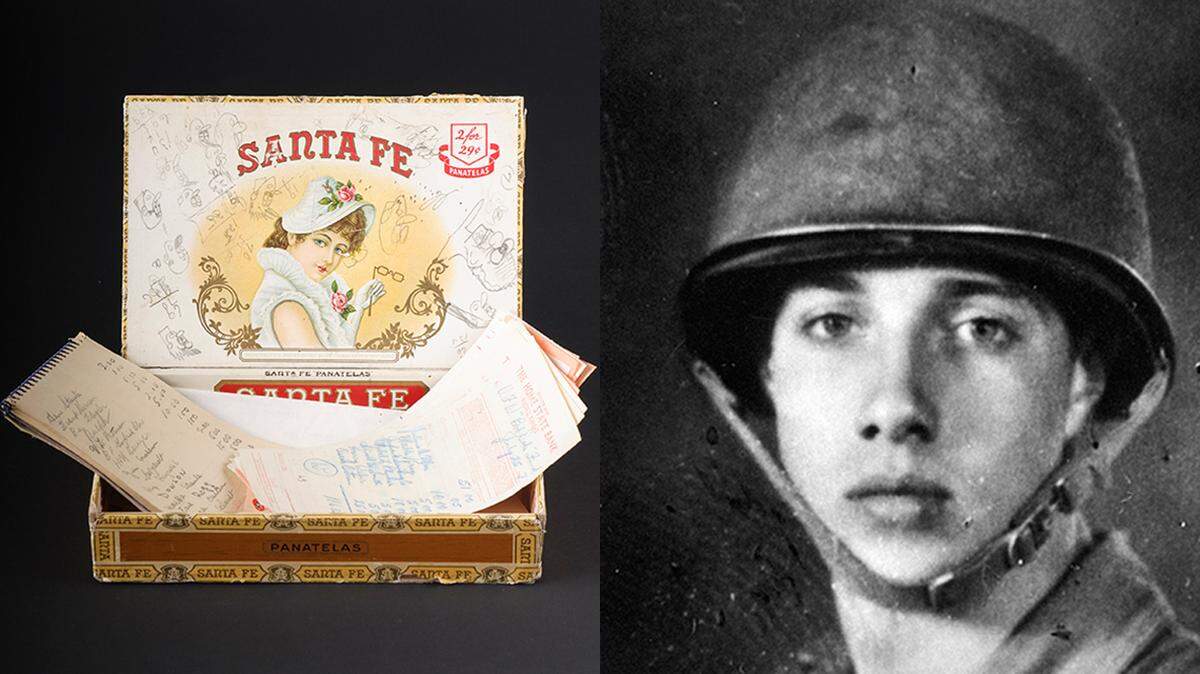
A cigar box tells you everything about how much Bob Dole meant to Russell, Kansas
Look back over the arch of Bob Dole’s amazing life — at the four runs for national office, his long stewardship as Senate Republican leader, his valor in World War II — and you can always find the influence of Russell.
That’s Russell, Kansas, the hardscrabble, wind-strewn town on the railroad tracks out in the middle of the state where the Doles put down roots.
Dole’s hometown propelled him high and far to become the most significant politician in Kansas history, save for Dwight Eisenhower. The town molded him and then stood by him through all those campaigns, and then at one dark point became something else — the place that Bob Dole knew he had to leave.
We remember him today as the wisecracking pol who made more appearances on NBC’s “Meet the Press” than anyone in that program’s long history. He was dashing, handsome, articulate, certain of his views.
But there was a time when Bob Dole was something else — a World War II veteran so shaky about his future that he doubted he had one. Torn up by a barrage of bullets on an Italian hillside just days before war’s end, Dole had to relearn how to eat, how to dress and how to write. And he did this not with his natural right hand, but awkwardly with his left. His right arm would be mostly useless the rest of his life, and Dole would come to appreciate people, such as President Bill Clinton, who would reach out with their left hands for a shake.
“Why me?” he would sometimes thunder when alone.
There’s a story from those days that involves a cigar box. Chet Dawson from the old Main Street drugstore where Dole worked as a soda jerk in high school started a collection for Dole’s hospital bills. He grabbed an empty cigar box, attached a “Dole Fund” label and placed it on the counter. The donations came in nickels, dimes and quarters. Banks pitched in.
The total reached $1,800, a big sum at the time.
The surgeries came in waves. A doctor transplanted tendons from Dole’s leg to his right shoulder. A chunk of scapula was removed, and muscles in Dole’s neck were reconnected to his right arm. “Dr. K” also helped him understand something that Dole was loath to accept, which was that he would be partially disabled the rest of his days.
Dole had wanted to become a doctor, but that dream was gone now replaced by a nightmare he couldn’t shake. Dole worried that he’d wind up an invalid selling pencils in little downtown Russell.
That fear, it’s been said, became the jet fuel that pushed Dole onward, year after year, race after race.
“I don’t remember when it started,” Dole said once on “60 Minutes.” “But one day you get up and say … ‘Let’s start thinking about the future instead of the past and maybe Bob Dole can do something else.”
Kansas lawmaker, attorney, congressman, RNC chair
He was raised by twin maxims: Money isn’t everything and if something is worth doing, it’s worth doing right. The Doles lived on the wrong side of the tracks, but Doran and Bina Dole worked nonstop, endured the terrors of the Dust Bowl and raised four good kids. As a boy, Bob Dole delivered newspapers and mowed lawns, then at 13 got the job at Dawson’s where he honed his trademark wit at the soda counter.
He went on to become a state lawmaker, Russell County attorney, congressman, senator and the chairman of the Republican National Committee. Along the way, he met a key Republican, McDill “Huck” Boyd, who found Dole burning the midnight oil in the prosecutor’s office one spring night in 1960.
“Here was a young man who might someday be president,” Boyd told people about that fateful first meeting with Dole. Boyd became a mentor and Dole’s head cheerleader.
Hard work became Dole’s calling card.
“I guess I was very competitive anyway and even after the disability I was more competitive,” Dole once told then-Star reporter Jake Thompson for his book, “Bob Dole: The Republicans’ Man for All Seasons. “I was trying to prove to myself that I could still make it, still do it.”
About 30 years removed from all those surgeries, President Gerald Ford shot Dole into national prominence by picking him as his 1976 running mate at the Kansas City GOP convention. In what would become a pattern, Dole kicked off his campaign in his old hometown in front of old friends.
More than 10,000 people were said to be in the crowd that August day when the president of the United States and the Doles mounted the stage in front of the courthouse where Dole had toiled. With the smell of hot dogs in the air, Dole told the crowd he never imagined that one day he’d be on a national ticket.
“But it shows you can come from a small town in America, and you don’t need all the wealth and the material things in this world to succeed, if I’ve succeeded, thought some might quarrel with that,” Dole said.
“I want to re-emphasize: If I’ve done anything, it’s because of people I’ve known up and down Main Street. And I can recall the time when I needed help, the people of Russell helped. And I think …”
Dole halted mid-sentence. His left hand flew up to cover his face. The crowd silenced. And Bob Dole cried. He sobbed so hard, in fact, that his shoulders shook. A few claps and cheers came from the crowd. Then President Ford stood up and started to applaud, and the crowd joined in, and for a full half-minute they cheered and shouted and whistled.
“That was a long time ago, and I want to thank you for it again,” Dole said.
Eleven years later, he was back again running for president in what would be his best shot at the White House. This time on a frigid November 1987 day, Bub Dawson, Dole’s old friend from the drugstore, presented Dole with the same cigar box once used to collect the $1,800 for those hospital bills.
This time, the box contained $100,000.
This story was originally published December 6, 2021 at 5:00 AM.