
Two visions for Kansas City’s future: prosperity versus ‘equity’
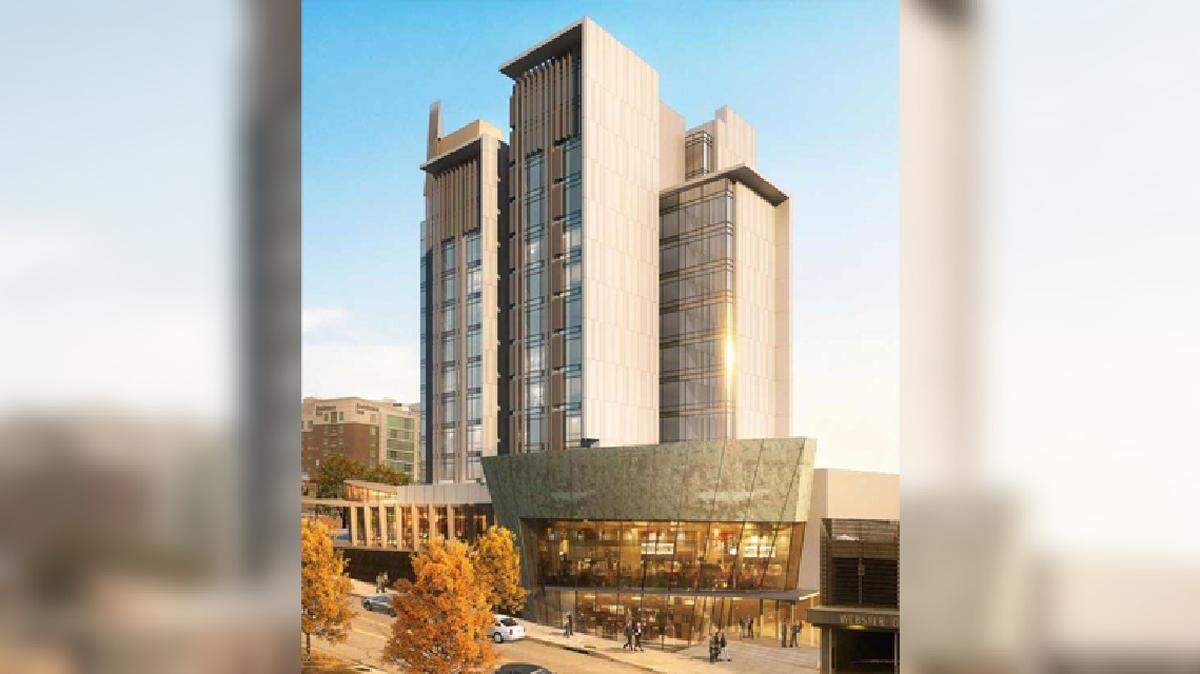
The mayor and City Council have now effectively killed tax increment financing and most other development incentives (with zero TIFs in 2021). They claim they are protecting us from inequitable deals, but actually, they are only driving developers’ taxpaying projects away from our city. Meanwhile, Kansas City’s budget languishes. We at E.J. Holtze Corporation believe that greater prosperity brings more, not less, equity. Future financial success is not a question of politics or optics. It is a matter of being open for business. In order to compete for the World Cup and other national conventions, we must elect leaders with a more practical approach.
If you look at our application process to the TIF Commission and City Council for the proposed Hotel Bravo at the Kauffman Center for the Performing Arts, it was always a contest between two different visions for our city. Our concept was to provide prosperity for all parties. Conversely, Kansas City officials, elites and media focused solely on optics, not productive policy, and the result was a denial of substantial financial and cultural benefits to taxpayers.
We’re confused. Why are these approaches mutually exclusive? A truly reciprocal public-private partnership, or PPP, should be a great way to achieve both visions. What good comes from canceling the Bravo’s projected $31 million of TIF-period payments to city entities and $4 million per year in new tax base? They could be used to treat persistent problems such as education and homelessness, but our leaders, who claim to care about these issues, shun practical solutions.
There is a false narrative about PPPs like the Bravo: “Incentives are racist because they steal money from poor Black children.” Even if true for some projects, it is certainly not true of all. Yes, the Loews Kansas City Hotel took more than $100 million in up-front cash, land, garage construction and no-bid contracts. But there are many projects such as the Bravo that take nothing on a net basis. The City Council’s job should be to discern the best deals. The Missouri state TIF statute was intended to stimulate high-quality real estate development where it might not otherwise occur. This swells the city’s tax base and benefits everyone. Why promote negativity and resentment instead?
City leaders, who cling to this false narrative, are now blocking a citywide study showing the value of TIF projects. We’re calling on the TIF Commission to release it immediately. Currently, there are 250 projects with expiring TIFs in the next 10 years. This truly constitutes our future economic foundation. We should not be casual about discarding tax-producing developments because it damages our future prosperity. Isn’t that the opposite of what we want? Remember, Kansas City voters supported TIF incentives 2-to-1 in the June 2019 elections. And nationally just this month, voters in Virginia rejected counterproductive policies based around optics and wokeness.
Some council members contend that the city has no business supporting high-quality projects, that they should fund themselves regardless of market conditions. We disagree and believe that providing for our city’s financial future should always be job one. Otherwise, we miss opportunities like the Urban Outfitters fulfillment center that would have provided 2,000 well-paying jobs in the Hickman Mills District. Elites labeled it racist, so the developers took those career opportunities from Kansas City’s East Side to Wyandotte County. If Kansas City had a stronger financial position, wouldn’t it have more power and flexibility to improve things for everyone, especially the least fortunate? All it requires is sensible encouragement of quality development.
Recently, Kansas City’s metropolitan area came in at No. 95 among the 501(c)(3) nonprofit Milken Institute’s Best-Performing Cities 2020. Moreover, our examination of U.S. Bureau of Economic Analysis data shows Kansas City’s 2019 economic growth after inflation to be just 1.02%, fully 50% slower than the 2.12% average for all U.S. cities. During 2001–2009, we were much better at 90% of that average. What happened?
Just after World War I, Kansas City was nicknamed “Paris of the Plains” as one of America’s most prosperous cities. We could get back there with practical policy, not political optics.