
Take it from a Missouri science teacher: Don’t fall for semi-quack COVID ‘treatments’
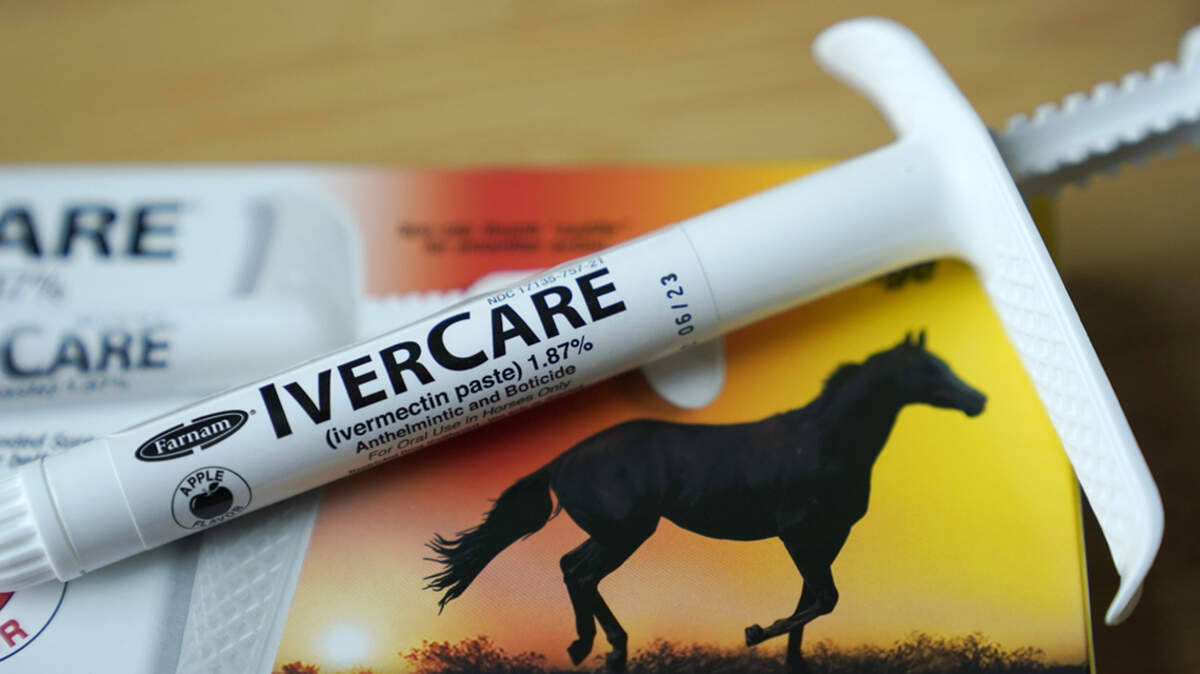
It has been said that the best way to tell a lie is to speak part of the truth and then simply stop. This tactic has been used repeatedly to attack the new COVID-19 vaccines, while promoting semi-quack medicines such as hydroxychloroquine, ivermectin and oleandrin. Let me explain what I mean by semi-quack medicines. These are real prescription drugs with genuine appropriate uses in modern medicine, but are being misapplied to treat other diseases in a manner bordering on quackery. This has continued despite having adequate supplies of effective vaccines because:
▪ These are genuine prescription drugs with appropriate uses, and proven effectiveness.
▪ Doctors are given wide leeway to prescribe such drugs for what’s known as “off-label use” — treating disorders for which they were never intended and have never been tested. An ironic example is the drug thalidomide, the poster child for horrible side effects, and which has been prescribed for years in the United States off-label.
▪ People are not dying in droves because of the toxicity of these drugs. The FDA’s highest priority is testing the safety of medications, and both hydroxychloroquine and ivermectin are mostly well-tolerated.
▪ Many people have no understanding of what viruses are, and how unlike they are from every other form of life on the planet. Humans are far more closely related to bacteria, fungi and protists than these organisms are to viruses. Yet on March 27, 2020, then-President Donald Trump stated about the coronavirus, “You can call it a germ, you can call it a flu, you can call it a virus, you know you can call it many different names. I’m not sure anybody even knows what it is.” The simplistic thinking was that COVID-19 was a “bug”, and could be treated like any other “bug.”
Let’s take a look at these semi-quack medicines, starting with ivermectin, the current flavor of the month. Ivermectin is widely used to treat parasitic roundworm infections in livestock and humans. Its inventors really did win the Nobel Prize in 2015, “for their discoveries concerning a novel therapy against infections caused by roundworm parasites” such as African river blindness. Roundworms, not viruses.
Hydroxychloroquine is far older, and used mostly to treat malaria, an infection caused by a single-celled protist. Not a virus. Plasmodium falciparum, the causative agent in severe malaria infections, is four billion times the size of the COVID-19 virus. In fact, there are entire sets of viruses that prey on the malarial parasite itself.
Oleandrin never quite caught on like the others. I suspect that is because, unlike ivermectin and hydroxychloroquine, oleandrin is not well-tolerated. It’s a poison. Fans of the TV show “NCIS” (Isn’t everybody?) will recognize oleandrin as the poison used to commit murder in the episode “Friends & Lovers.” Yep, it’s available by prescription under the trademark Anvirzel. Rat poison is cheaper and more readily available.
Lastly, I would like to address the mRNA vaccines that have given too many vaccine objectors such hesitation. These vaccines will result in a Nobel Prize within the next 10 years. The prize will not go to Donald Trump. The Nobel will instead likely go to a pair of expatriate Turkish scientists working in Germany. The first successful Ebola vaccines depend on this technology. (Would these same anti-vaxxers refuse an mRNA vaccine in the middle of an Ebola outbreak?) It is the mRNA vaccine breakthrough that has allowed the production of such large quantities of vaccine in such a short period of time, thus saving millions of lives. It’s a good thing.
Pat Ryan of Tarkio, Missouri, is a retired high school science teacher with degrees in molecular biology and chemistry.