
We accept that drunk driving endangers others. Why is not wearing a mask different?
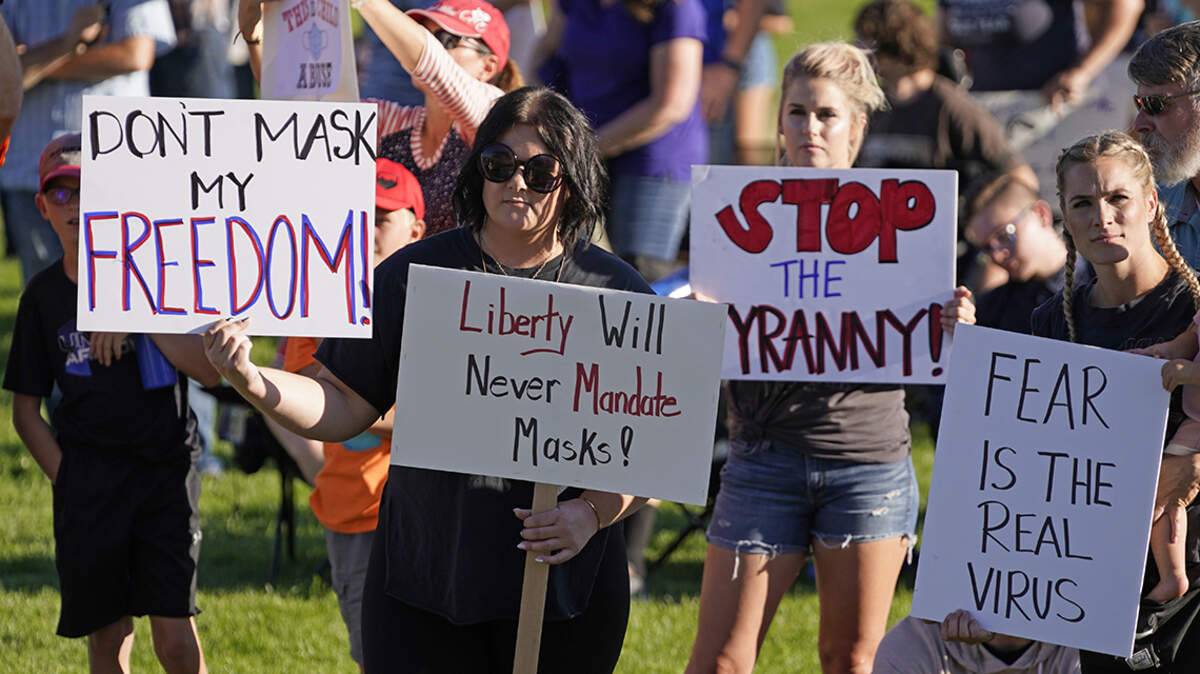
I’m a Kansas therapist who has worked, for decades, with men and women ordered to treatment as part of their diversion in a criminal case, or as a consequence for driving under the influence or driving while intoxicated. I’ve listened to a lot of justifications, rationalizations and excuses for choices that were not malicious, but ended up causing pain, hurting someone or putting others in danger. And I’m now hearing similar language for a choice that could easily, unintentionally, without malice, cause harm and suffering. This choice could even kill.
“I didn’t feel drunk,” clients have explained. “I didn’t mean to hurt anybody. It was an accident.”
“I didn’t feel sick,” the college kid shared. “I didn’t mean to infect anybody. How could I know? It was an accident.”
“It’s a hoax. They’re inflating the numbers to scare us,” I hear on the news as people are interviewed. “It’s no worse than the flu.”
But it is worse. We still don’t understand what lies ahead, long-term, just as we did not understand the impact of asbestos exposure to cause mesothelioma, COPD and cancer until it was too late for so many, or make cause-and-effect connections between contaminated water and birth defects and cancers. We don’t know yet.
From my perspective, refusing to wear a mask in public locations when interfacing with other people is worse than driving while intoxicated. Most people who choose not to mask make that decision when they’re sober. In theory, at least, their judgment is not impaired.
“Intent is a factor in most crimes,” explained David Brown, a Kansas attorney with 30 years of experience in criminal and family law. “For example, we have degrees of homicide, types of sex crimes and levels of other offenses, where the severity of the crime can be measured, in part, by intent. Consider murder. First-degree murder requires a specific intent — intent to kill or intent to commit a dangerous felony when someone is killed.
“Second-degree murder, however, is killing someone ‘unintentionally but recklessly under circumstances manifesting extreme indifference to the value of human life.’ In short,” Brown continued, “under the law, lack of intent is no excuse when someone’s reckless choices harm others. A criminal act may exist regardless of premeditation or intent.”
Not wearing a mask demonstrates an intentional disregard for the safety and lives of others under a philosophical umbrella of personal liberty and individual rights. It’s like playing with fire in a dry pasture and then being bewildered as to how that itty bitty spark ended up causing so much damage. It’s “manifesting extreme indifference.”
This pandemic has been politicized. Had such divisive and medically ignorant policies and attitudes been in place during past public health crises, we’d still be fighting smallpox, tuberculosis and polio. But back then, our government and citizens trusted medical science. Being patriotic was not just waving a flag — it was doing whatever we could to defend and protect our communities and fellow Americans.
“Friends don’t let friends drive drunk” is a slogan that most of us accept. But should friends let friends hurt other people, infect people, or be infected, by not wearing a mask? Do friends bear any responsibility to speak up?
I admit that I do not understand the explanations of why my fellow citizens refuse to mask, their justifications for how this small inconvenience is experienced as an unacceptable intrusion onto their fundamental rights and liberty.
And here is why: Every time you assert your “right” not to wear a mask, or not observe social distancing, you put the health and well-being of my family, friends and community at risk. You endanger nurses and doctors who are now risking their lives in hospitals all over Kansas and Missouri to care for COVID-19 patients. You endanger every store cashier, waiter, teacher, co-worker and friend.
COVID-19 has nothing to do with politics, beliefs or even identity. It doesn’t care about your principles or intentions. You can’t influence it, shout it down, dominate it or hurt it.
But you can spread it. You can infect people. You can get infected and bring it home to your family and friends. You could even, without ever lifting a finger, with no malicious intent, condemn someone to a horrific death. But I believe that if there was a way that viral transmission was ever tracked back to you, you’d feel pretty bad, because you’re not that kind of person. You don’t intentionally hurt people. You’re a decent, hardworking, patriotic American.
I’m 70 years old. I’ve worked hard for 50 years. I deserve a decade or so to enjoy the fruits of all that labor. But I can’t if my health is sabotaged, and I certainly can’t if I’m dead. And the same applies to anyone who has experienced just how bad this virus can be, for everyone who did not intend to die in 2020.
So, while this sounds harsh, for me the choice to not mask is not just selfish, self-righteous, entitled and ignorant.
That choice is criminal.
Susan Kraus is a Kansas counselor and mediator in private practice.