
MU president blocks students on Twitter, forbids dissent. This is teaching freedom?
Earlier this week, the Missouri School of Journalism at the University of Missouri in Columbia celebrated “Founder’s Day” in honor of Walter Williams, the visionary small-town editor who 112 years ago created an international school of journalism — the world’s first — in the middle of America’s heartland.
On the same day, a number of the school’s faculty members took the unusual step of releasing a public letter protesting actions by University of Missouri System President Mun Choi that we believe threaten Williams’ extraordinary legacy.
We did it because as teachers, we believe we must model the values we expect our students to uphold. Speaking truth to power is one of those values.
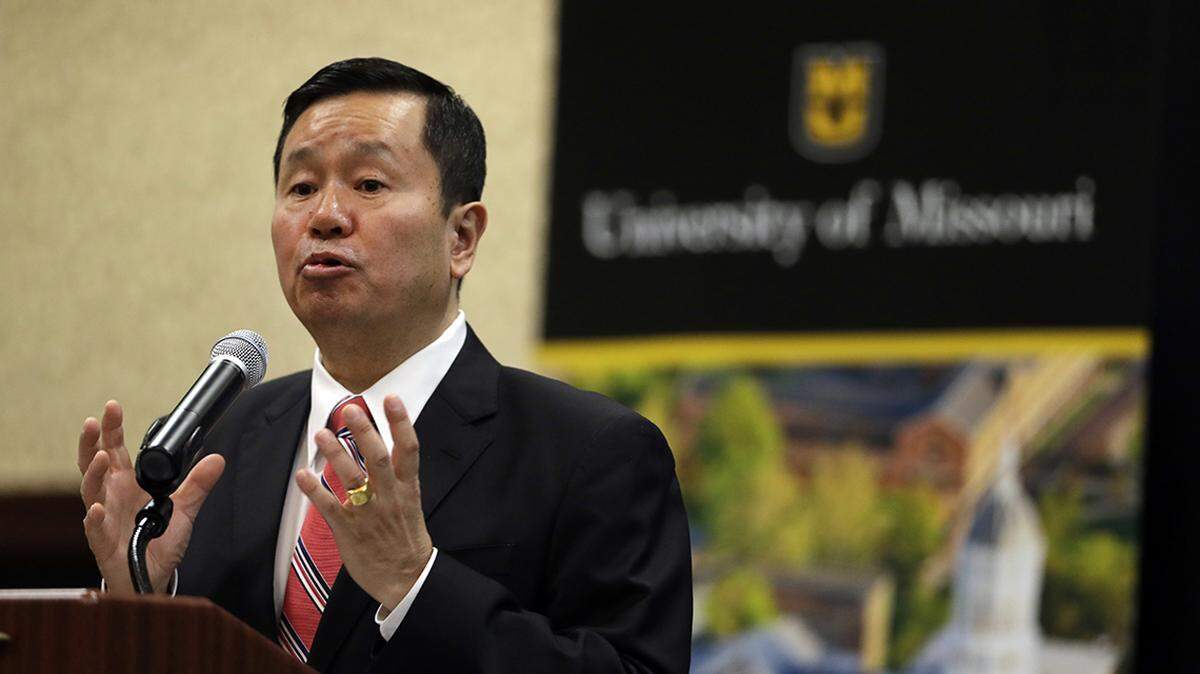
Last week, Choi blocked a number of students from his Twitter account, including some of our journalism students who work for local news outlets, and therefore cover the boss of the biggest employer in our company town. This caps a summer in which the university president peremptorily demoted a well-respected dean with a nothing-to-see-here non-explanation, then tried to browbeat the local paper into giving up a confidentially sourced recording of a meeting in which colleagues expressed dismay. Choi told campus administrators that he would not tolerate public dissent from his decisions and then, in an interview with a local newspaper, singled out two local journalists for failing to comply with that policy.
Those face coverings we are wearing these days to preserve public health are masks, not muzzles.
In all but the case of the dismissed dean, Choi has had to back down in the face of a public outrage. But the clear pattern of his behavior — the knowledge that his first impulse is to strike out at dissenters — has created an unhealthy atmosphere of fear in a place where free speech should be celebrated.
In a time when a pandemic has upended livelihoods and budgets everywhere, it’s all too easy to imagine the need to belt-tighten being used as an excuse to pull a scholarship, eliminate a job or slash a departmental budget. We know, because those fears have been expressed to us in stark terms by students and colleagues.
Let’s hope the university system president did not intend to instill such fear. But the noxious clouds have gathered, and it’s going to take some sustained sunlight — the best of disinfectants, in the words of the great Supreme Court Justice Louis Brandeis — to dispel them.
Choi may feel he has one good reason to want to hit the mute button on pesky campus dissenters: a state legislature that has shown a willingness to use its power of the purse punitively, especially when it comes to educators. Like journalists, teachers are not beloved by defenders of the status quo.
Somehow, Williams seemed to foresee all this. His “Journalist’s Creed,” written at the dawn of the mass media age, today reads like an eerily prescient warning from the past. “Bribery by one’s own pocketbook is as much to be avoided as bribery by the pocketbook of another,” he wrote. “Individual responsibility may not be escaped by pleading another’s instructions.” He also said, in my favorite passage, that the best journalism “is unswayed by the appeal of privilege or the clamor of the mob.”
The excesses of privilege and the mob are hallmarks of our time. Both are threats to free speech.
What better place to launch the fight against both than the home of the world’s first school of journalism?
Kathy Kiely is the Lee Hills Chair in Free Press Studies at the Missouri School of Journalism at the University of Missouri in Columbia.