
Discussion about Todd George’s name on Lee’s Summit roads requires context
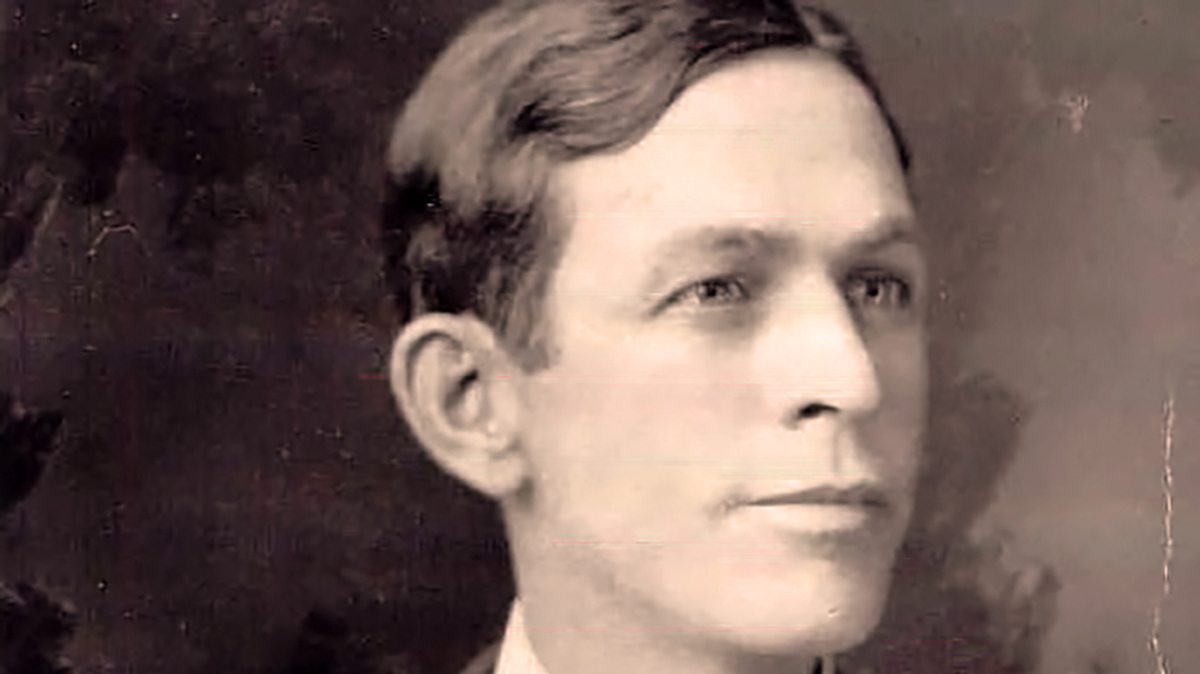
Recent events have led to a close examination of our history, including scrutinizing the views of past leaders who have been recognized with streets and other landmarks named in their honor. Major roads in Lee’s Summit — Todd George Parkway and Todd George Road — are named after my grandfather, and there is an effort underway to remove his name.
Todd George was a longtime resident of Lee’s Summit, a former mayor and a civic leader who played a major role in the early days of a small town outside Kansas City. He was a strong booster of Lee’s Summit and shared his historical experiences with the community until his death in 1969 at age 90.
George was also a leader in one of two Democratic political factions in Jackson County. Members of his group, the Independent Democrats, were strong opponents of the Tom Pendergast machine, which at the time supported Harry Truman. In David McCullough’s prominent biography of Truman, there is a statement indicating George was a local leader of the Ku Klux Klan. McCullough’s assertion was based upon previously unsubstantiated allegations that apparently began with political mudslinging reported by The Star in 1926.
My family has had independent research conducted, and it found there is no evidence of any such affiliation. Indeed, in a 1959 memoir, George stated he wanted nothing to do with the KKK.
Still, I have learned that some of my grandfather’s writings expressed racist views and made statements critical of Martin Luther King, Jr. George’s positions are on the wrong side of history. While he did not actively engage in businesses or enact policies that affirmatively sought to exclude others, he reflected the then-prevalent views of a society that supported the systemic racism we are still seeing today. That is wrong. I am not defending him, but unfortunately, his views were not out of the mainstream in much of white America at that time.
Many recognized historical figures (including Truman) demonstrated racist behaviors. Indeed, the Truman Library website has a section titled, “Harry S. Truman and Civil Rights,” which notes the former president “was known to have the prejudices of his community when it came to views of race. He used racial slurs, told racist jokes, opposed sit-ins and intermarriage and called Dr. Martin Luther King a troublemaker.” One could switch Truman’s and George’s names in the preceding sentence, as it sets forth context for both men.
If not for Pendergast’s support, Truman never would have become the president who ended World War II. Other past leaders have documented character flaws, and reconciliation of the good and the bad in them should be based upon a nuanced conversation about how to recognize and how to “undo” our history. As is the case with Truman, society seems to have concluded that, on balance, the great things he did outweighed his flaws.
In the case of Todd George Parkway and Road, the thoroughfares weren’t named after him because of George’s racist statements. Rather, it was in recognition of his important, non-racist contributions to what is now a thriving part of the Kansas City area. I don’t have a vote on whether to keep or change the streets’ names, but I hope those who do have a say will thoughtfully discuss how we recognize the contributions of historical leaders in the context of today’s norms.
Todd C. Dicus is the grandson of Todd Menzies George Sr.
This story was originally published July 17, 2020 at 5:00 AM.